Here’s a surprising fact: 72% of small business owners see SEO as crucial to their success, yet many make critical local SEO mistakes that cost them valuable customers.
Mobile devices now generate 60% of all searches. The numbers tell an interesting story – only 40% of small businesses have their own website, while a mere 35% keep their Google Business Profiles updated. Your local visibility might be suffering because of this gap. The Local Search Ranking Factors survey points to business miscategorization as the top negative ranking factor.
Local customers actively searching for your services won’t find you if your small business doesn’t appear in local searches. The situation becomes more critical when you consider this: 89% of consumers favor local businesses that engage with both positive and negative reviews. Many small business owners completely ignore this crucial aspect of their online presence.
Most of your competitors make these same mistakes. This creates a perfect chance for you to gain the upper hand. Here, we will reveal the most common local ranking mistakes and provide clear small business local SEO tips to fix them quickly, before your potential customers silently drift away to competitors.
1. Why Local SEO Services for Small Businesses
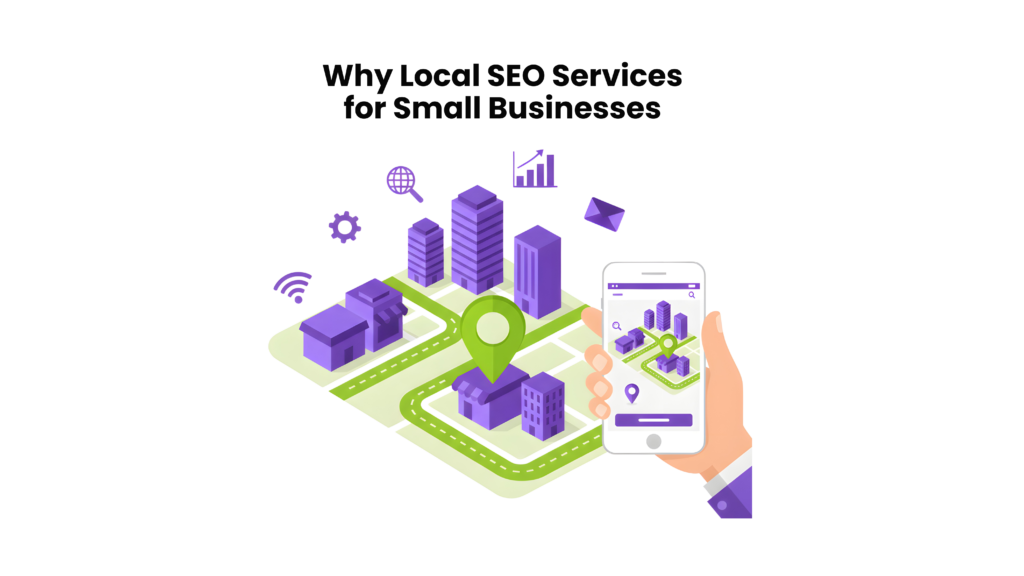
Your business probably doesn’t show up when local SEO services for small businesses. Research shows 46% of all Google searches have local intent. Yet many small businesses remain invisible online. You can fix this by addressing three main visibility barriers that keep you from appearing in local search results.
Lack of a Google Business Profile
Your Google Business Profile is the lifeblood of local SEO success. Nearby customers won’t find you without it. One digital marketing expert puts it plainly: “Unless you’re a prominent brand, if you’re not on the Google map, you don’t exist”. This free tool puts your business information directly into Google Search and Google Maps. It boosts your chances to appear in the coveted Local Pack—those top three map results shown for local searches.
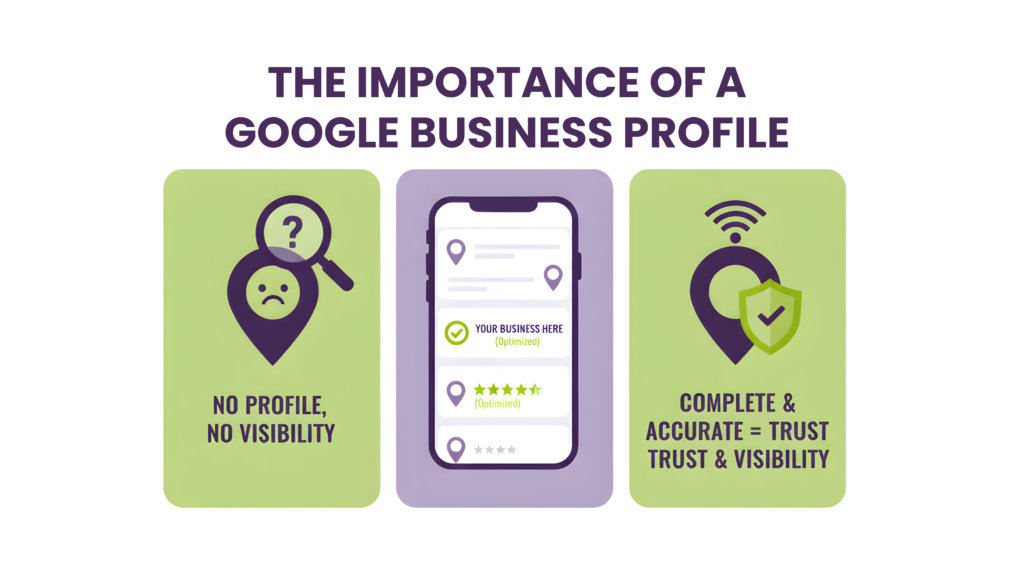
Profiles that are incomplete or outdated rank nowhere near the top in search results. Google makes this clear: “Businesses with complete and accurate info are more likely to show up in local search results”. Businesses with properly optimized Google Business Profiles are twice as likely to earn consumer trust.
No Dedicated Business Website
A website verifies your business exists and gives vital information to customers and search engines. Yet many small businesses skip this essential digital asset.
Your optimized website should clearly show you’re a local business. Put your address, neighborhood, opening hours, and local phone number on your homepage. Technical elements like schema markup (special code that helps Google understand your business information) by a lot affect local visibility.
Mobile optimization matters especially when you have most local searches happening on mobile devices. Google will push you down in mobile search results if your website isn’t fast, clean, and mobile-friendly with clear navigation. This costs you valuable leads.
Low Presence On Local Directories
Local directories’ effect on search visibility often surprises small businesses. These directories give valuable backlinks to your website. Search engines use these to assess your site’s authority. Citations (online mentions of your business name, address, and phone number) help Google verify your business information is accurate and trustworthy.
The biggest problem is keeping Name, Address, and Phone number (NAP) information consistent in directories of all sizes. Small differences like using “St.” versus “Street” can hurt your rankings. Such inconsistency makes Google unsure about your actual location. This seriously damages your chances of ranking in local searches.
Quality matters more than quantity with directories. Managing all these citations takes work, but the visibility benefits make it worth your time and effort.
2. Google Business Profile Mistakes That Hurt Rankings
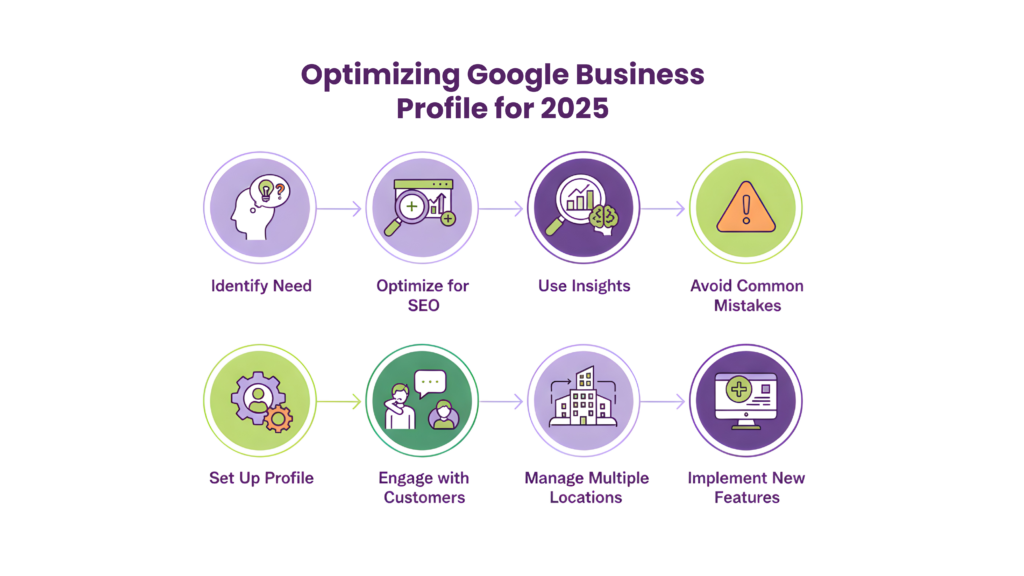
Your Google Business Profile can make or break your local search visibility. Small businesses need this free tool to compete with national chains that have massive marketing budgets. These four mistakes might be quietly hurting your rankings:
Choosing The Wrong Primary Category
Your primary category is the most vital local ranking factor for your business in the local pack. Many business owners pick categories that are too broad. They’ll use “Restaurant” when “Italian Restaurant” would better match what people search for.
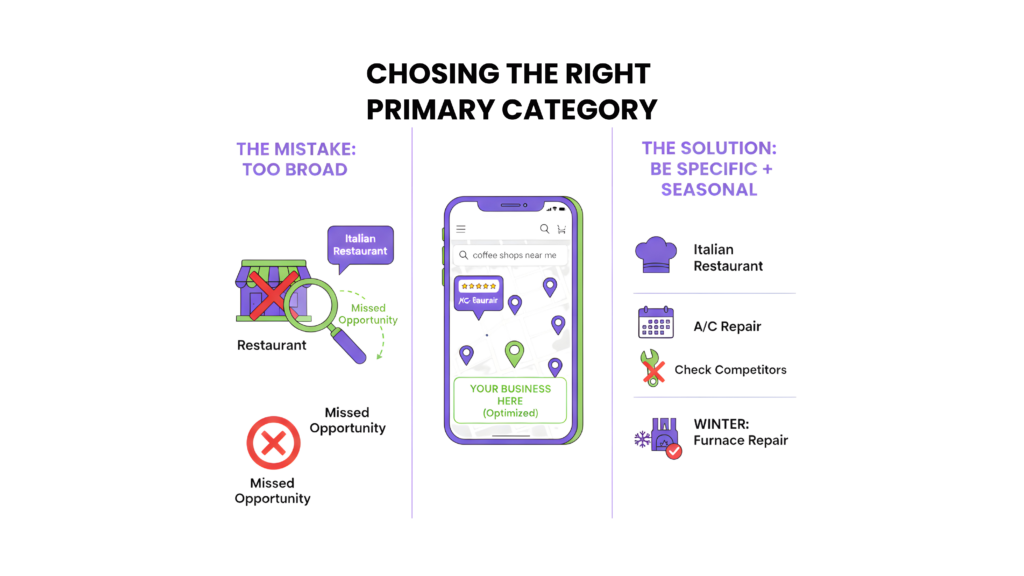
Business owners make this mistake because they:
- Want to appeal to the widest possible audience
- Pick the first category they see without research
- Don’t check what their successful competitors use
Broad categories hurt your chances of showing up in specific searches. Some businesses need to switch categories with the seasons. HVAC companies should change from “Air conditioning repair service” to “Furnace repair service” when fall and winter arrive.
Not Updating Business Info Regularly
Businesses with complete profiles get 70% more visits and 50% more potential buyers. Still, many owners set up their profile once and never look at it again.
Old information drives customers away and tells Google your business might not be active or reliable. Google pulls information from many sources, including what users report. Your profile might get automatic updates if Google thinks your details are wrong.
Business owners often forget to:
- Update their seasonal hours or holiday closures
- Answer customer questions in the Q&A section
- Refresh their business descriptions and service lists
Using Low-Quality Or Stock Images
Profiles with photos get amazing results – 42% more requests for directions on Google Maps and 35% more website clicks. Yet many small businesses skip photos or use generic stock images.
Google’s algorithm likes real, clear photos that show what your business really looks like. Better photos can help you rank higher. The system can even tell if your pictures match what people expect to see in their searches.
Changing Details Right After Verification
Quick changes to your core business information right after verification can cause “profile shock”. Google might see these sudden updates as suspicious and suspend your profile.
Take it slow instead. Make one change at a time. Let Google process each update before you make another one. This approach helps you avoid automatic reviews that could lock you out of editing important business details.
3. Missed Content Opportunities That Limit Visibility
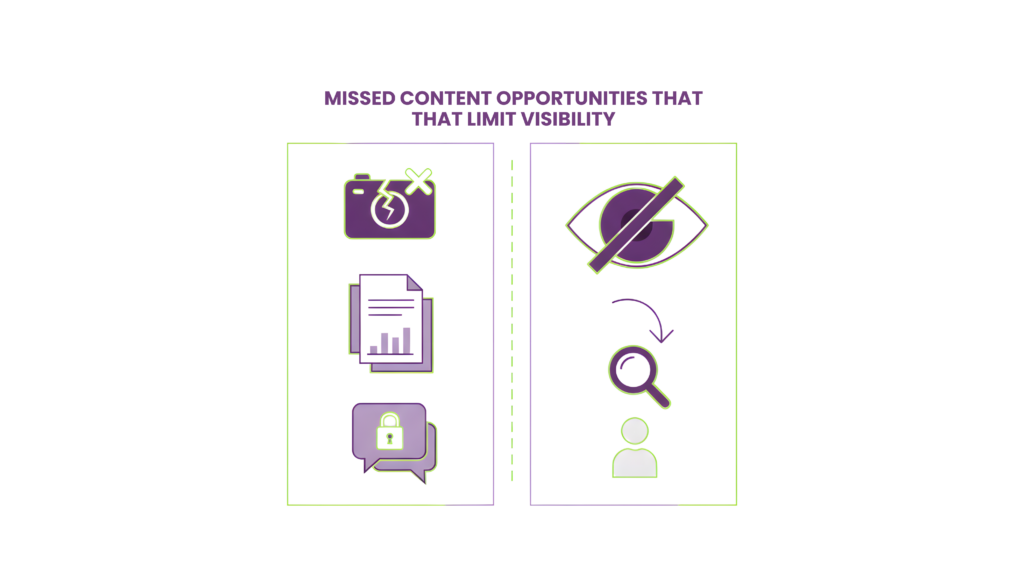
Small businesses often lay simple foundations for local visibility but miss powerful content opportunities that could boost their rankings significantly. Here are three content gaps that might keep your business hidden from local customers.
Not Posting Photos Or Videos
Visual content acts as your digital storefront. Businesses with photos on their Google profiles receive 42% more requests for directions and 35% more clicks to their websites. Yet many small businesses either skip photos entirely or use generic stock images.
Research from Google shows that 90% of consumers are more likely to choose local businesses with photos on their listings. People prefer visuals because they build trust and help them make decisions faster.
To get better results:
- Upload high-quality images of your storefront, team, and products
- Add new photos regularly to show your business stays active
- Include videos that showcase your services in action
- Ensure all visuals match your actual business
Skipping Service Area Pages
Service area pages (SAPs) are dedicated website landing pages that highlight specific locations you serve, even without physical storefronts there. These pages help you reach customers in areas where you don’t have a physical presence.
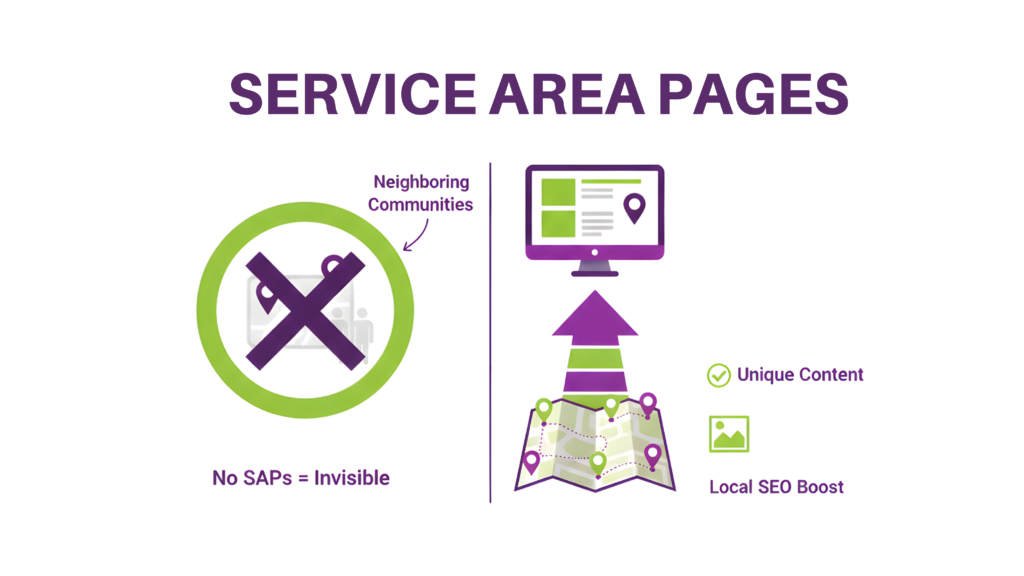
Your business risks becoming invisible to customers in neighboring communities without well-optimized service area pages. You need unique, helpful content for each location since duplicate pages with just changed city names can trigger Google’s doorway page penalties.
A good service area page should have:
- Location-specific content with local landmarks and community references
- Images or case studies of projects completed in that area
- Testimonials from customers in that specific location
No Local Blog Content
Local businesses often overlook neighborhood-specific blog content that creates powerful ranking opportunities. Search engines view websites with locally relevant articles as valuable community resources.
Regular local content builds trust with readers who see that you understand their community. This approach helps you target long-tail keywords naturally while making your business an essential part of the local community.
Try these local blog ideas:
- Guides to local attractions or hidden gems in your area
- Coverage of community events and festivals
- Expert commentary on local developments relevant to your industry
- Customer spotlight stories featuring local clients
4. Ignoring Competitors and Local Trends
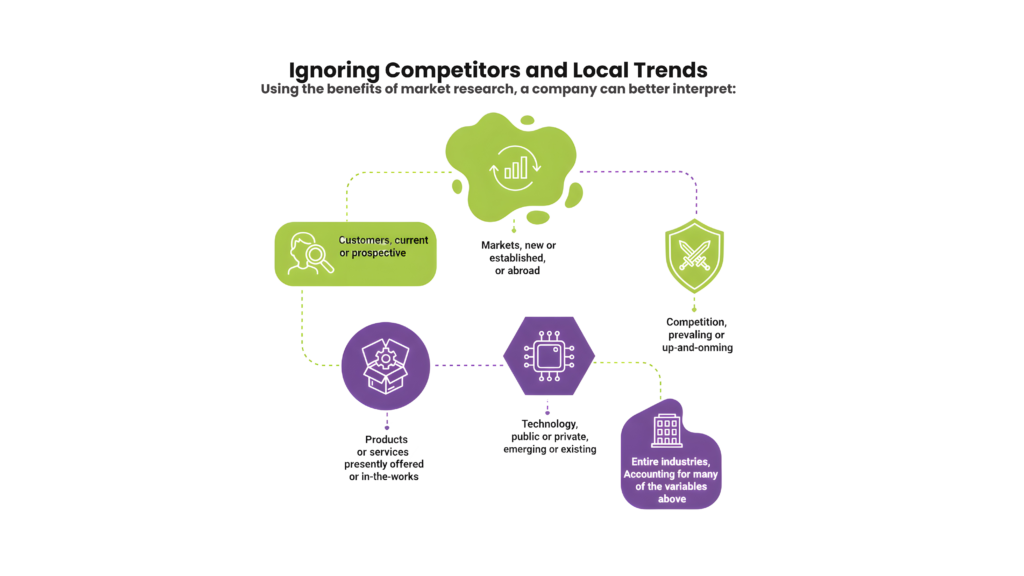
The local search world has become fiercely competitive. Small businesses now compete with national chains that have dedicated SEO teams and big marketing budgets. You need to understand your competition to survive in this space.
Not Analyzing The Top Local Competitors
Small business owners often focus only on their websites and profiles. They rarely try to understand what makes their competitors successful. This leaves valuable ranking insights hidden. A good local competitor analysis should look at examining all businesses that rank for your target keywords in maps and organic results.
You should look at your competitors and analyze their:
- Google Business Profile optimization tactics and categories
- Content posting frequency and engagement strategies
- Backlink profiles and local citation sources
- Service offerings and unique selling propositions
This competitive research isn’t about copying others. You need to understand the digital world well enough to find gaps they’ve missed.
Missing Out On Category Gaps
Your choice of categories affects your local search performance a lot. Many businesses pick categories without looking at what their competitors use. Google Business Profiles let you pick one primary category and up to nine secondary categories. These choices directly affect whether you match what users search for.
The best chances often come from looking at businesses ranked fourth and fifth on Google Maps. These spots are easier targets. With the right content and category choices, you can move into those positions and get more calls.
Overlooking Review Volume And Quality
Reviews revolutionize your local search visibility. Right now, Google Reviews contribute 15% to Local Pack rankings. Businesses with more reviews rank better consistently. About 70% of people just need at least four reviews to trust a business. Google Reviews drive 81% of consumer decisions.
Keep track of how many reviews your competitors get each week. This helps you know how many reviews you need to stay competitive. Businesses that respond to reviews see a 12% increase in customer loyalty and a 15% boost in local search visibility. About 88% of customers prefer businesses that respond to all reviews.
To make your local SEO work better, team up with experts who can watch these competitive factors and use proven strategies to outperform your local rivals.
5. Poor Review Management and Response Habits
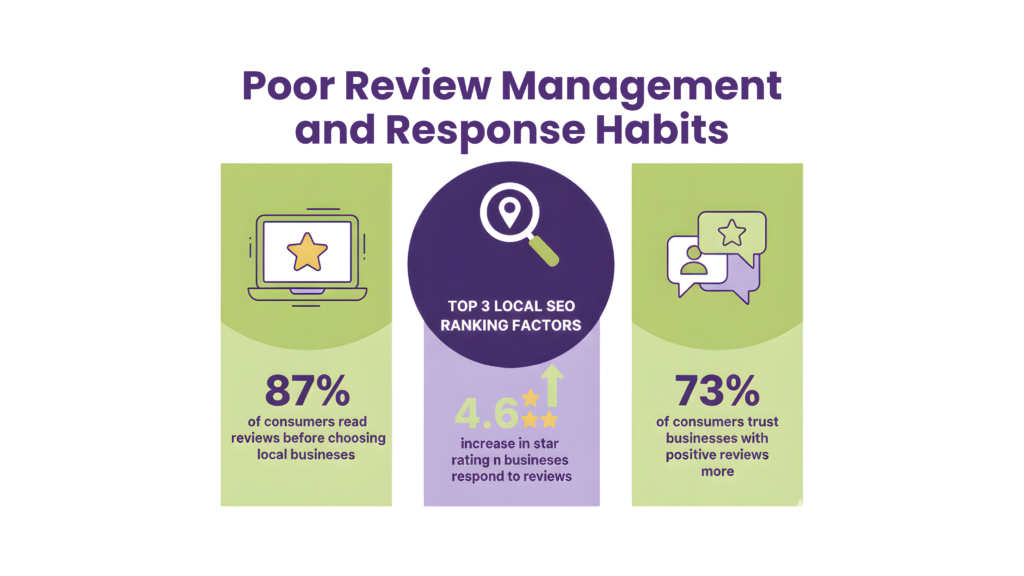
Small businesses often put review management on the back burner, but customers expect responses to their reviews within a week [53% according to research]. Your local rankings and ability to attract new customers can take a big hit because of this oversight.
Not Responding To Reviews At All
Your business loses twice when you ignore reviews – you miss out on visibility and customer trust. Small businesses that don’t participate in review conversations see customer churn increase by 15%. Research shows that 88% of consumers prefer businesses that respond to all reviews. Google has confirmed that your local search visibility depends on how you manage and respond to reviews.
Responding Unprofessionally To Negative Reviews
Critical feedback needs careful handling. Here’s how to address negative reviews:
- Your response should come within 24-48 hours to demonstrate attentiveness
- Use the reviewer’s name and thank them for their feedback
- Say sorry without making excuses about their experience
- Take conversations offline to fix issues privately
About 45% of consumers will visit a business that handles negative reviews well. A poor response can hurt your reputation permanently, as 94% of consumers avoid businesses after reading bad reviews.
Failing to Ask Happy Customers For Feedback
Research shows that only 28% of customers leave reviews after good experiences. Your review profile stays incomplete without actively seeking feedback. The best time to ask is right after a positive experience, while the customer’s memory is fresh. You’ll get better results by providing direct links to make the review process easier.
Why Choose RankFast for Local Business SEO Services?
Expert help becomes essential once you identify the major mistakes limiting your local visibility. RankFast’s small business SEO guide with specialized local SEO expertise to tackle these specific challenges.
RankFast‘s local SEO strategies are custom-built for your business goals and target audience. Their detailed approach has localized keyword optimization targeting terms unique to your area. This dramatically improves your website’s visibility in local search results.
The services go beyond simple optimization to include:
- Google Business Profile optimization that increases local visibility and brings more foot traffic
- Local directory citation management that keeps your business information accurate on all platforms
- Creation of compelling, location-specific content that appeals to your local audience
RankFast distinguishes itself through its focus on measurable outcomes. Their analytics and reporting help you track tangible results and ROI from your local SEO campaigns. Clients have achieved more than 100 keyword rankings on Google SERP and over 20 keyword rankings in the top 10 results.
A partnership with RankFast leads to better local visibility, higher local search rankings, increased foot traffic, and improved customer involvement. These are exactly what you need to overcome your small business’s local SEO challenges.
To get detailed local business SEO services that deliver real results, visit RankFast today.
Conclusion
Your competitors gain new customers daily because of your local SEO mistakes. You now know the key errors that stop your business from reaching nearby customers who search for your services.
A strong Google Business Profile helps you become visible locally. Your business needs the right categories, current information, and quality images to succeed. Service area pages and local blog posts about your neighborhood will boost your local presence by a lot.
These small business local SEO tips help to solve them properly. RankFast provides custom local business SEO services that handle everything – from Google Business Profile optimization to complete review management plans.
The next steps are simple – fix these local SEO mistakes fast and watch more nearby customers find your business. While competitors might keep making these errors, you can now move ahead in local search results.
FAQs
Q1. Why is local SEO important for small businesses?
Local SEO is crucial for small businesses as it helps them become visible to nearby customers actively searching for their services. It improves your chances of appearing in local search results, driving more foot traffic and increasing customer engagement in your community.
Q2. What are some common mistakes small businesses make with their Google Business Profile?
Common mistakes include choosing overly broad categories, failing to update business information regularly, using low-quality or stock images, and making multiple changes immediately after verification. These errors can significantly hurt your local search rankings.
Q3. How can small businesses improve their local content strategy?
Small businesses can enhance their local content strategy by regularly posting high-quality photos and videos, creating service area pages for specific locations they serve, and producing locally relevant blog content. These tactics help signal to search engines that your business is a valuable community resource.
Q4. Why is competitor analysis important in local SEO?
Competitor analysis helps you understand the local search landscape, identify category gaps, and uncover strategic opportunities. By examining successful competitors, you can gain insights into effective optimization tactics and find ways to differentiate your business in local search results.
Q5. How does review management impact local SEO?
Review management is critical for local SEO as it directly affects your visibility and customer trust. Responding promptly and professionally to all reviews, especially negative ones, can improve your local search rankings. Additionally, actively encouraging happy customers to leave feedback helps build a strong online reputation.
Leave a Reply