Google’s AI summaries are causing a dramatic drop in link clicks—down to just 8% for websites featured in these automated overviews. This new reality poses a serious threat to your website’s visibility in the digital world. The numbers tell a concerning story. AI-generated summaries now appear in 58% of Google searches, and users react differently to them. People tend to end their search journey more often with these summaries—the abandonment rate jumps to 26% compared to 16% without them. These changes have transformed how trust and authority work in search results. Your website could lose up to 79% of its traffic if it ranks below an AI overview, which hits especially hard for businesses focused on ecommerce SEO link building. On top of that, getting mentioned in these summaries doesn’t guarantee visitors will click through to your site—a major challenge for BigCommerce SEO agencies and website owners. The stakes are high since one-in-five Google searches now trigger these AI overviews. Here will come to how Google’s AI summaries alter the web’s link building AI era and show you ways to stay visible as these automated overviews appear in 21.1% of searches.
How AI Overviews Are Changing the Role of Links
Google’s AI Overviews are revolutionizing the web’s link economy. Website owners and marketers in the link-building AI era need to understand these changes to retain control of their digital visibility.
Decline in Click-Through Rates from AI Summaries
AI Overviews affect click behavior more severely than anyone expected. Users who see an AI summary click on the linked sources only 1% of the time. The numbers tell a clear story when comparing search results with and without AI summaries:
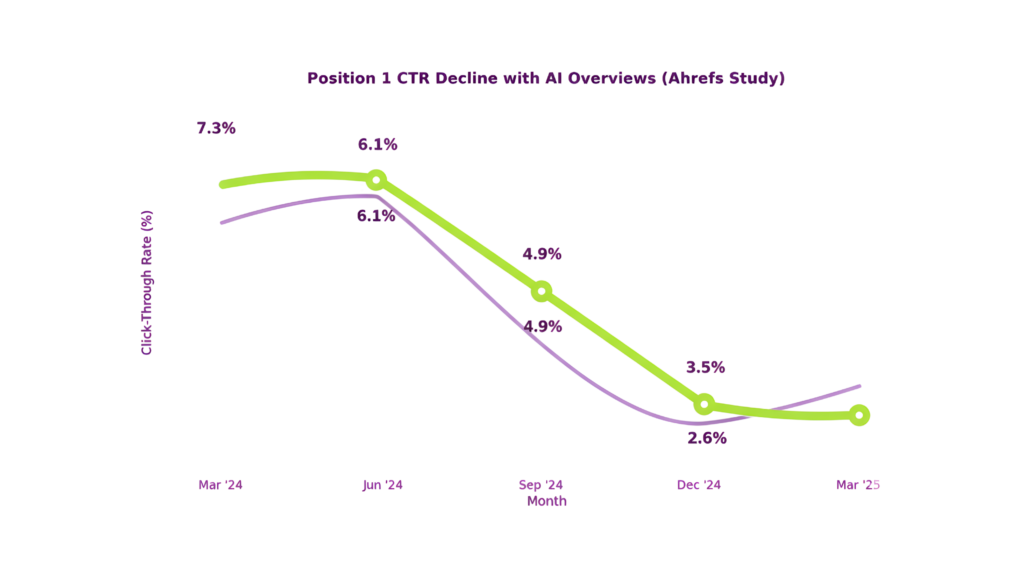
- Organic click-through rates (CTRs) for queries with AI Overviews dropped from 1.76% to 0.61% since mid-2024
- Paid CTRs took an even bigger hit, falling from 19.7% to 6.34%
- CTRs have reached their lowest point in 15 months across the board
The situation looks worse for websites that don’t get cited in these summaries. Brands mentioned in AI Overviews get 35% more organic clicks and 91% more paid clicks compared to those left out. Getting listed as a source has become vital to stay visible.
Session Abandonment After Viewing AI Overviews
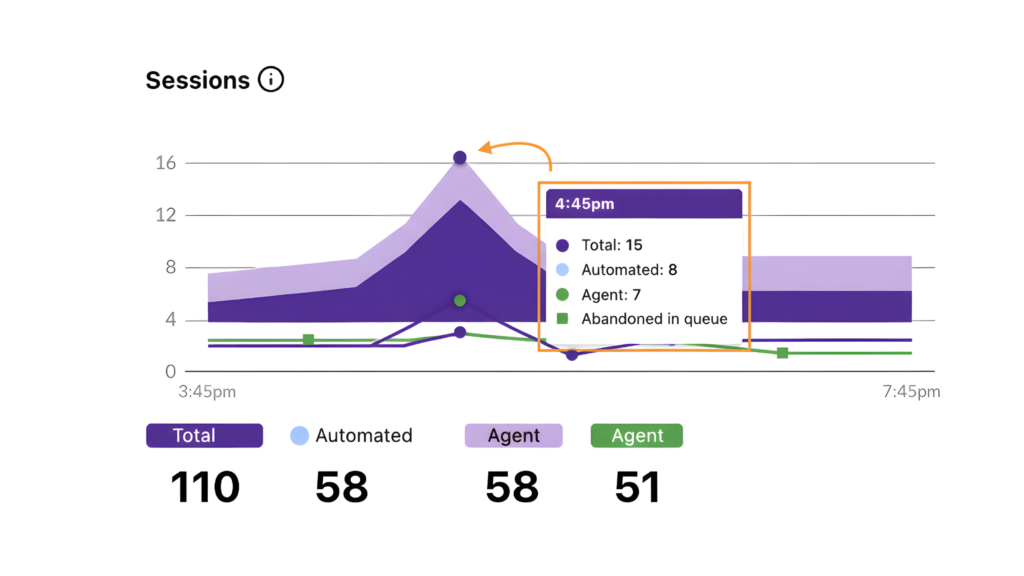
AI summaries don’t just reduce clicks – they change how users complete their searches. About 60% of searches now end without users visiting any website.
User behavior shows some clear patterns:
- Users abandon two-thirds of all Google searches by either staying on Google or leaving completely
- Informational queries that trigger AI summaries see even higher abandonment rates
This trend should worry e-commerce sites. Your well-planned ecommerce SEO link building strategy might not work if users get product details straight from AI summaries instead of visiting your store.
Change from Navigational to Informational Search Behavior
Search behavior has changed at its core. Users now expect instant answers in search results rather than clicking through multiple websites.
This change hits certain content types harder than others:
- Guides and how-to articles feel the biggest impact
- Top-of-funnel awareness content struggles because AI summaries give users what they want right away
- Websites ranking for ‘what,’ ‘when,’ and ‘how’ keywords see notable CTR drops
We have a long way to go, but we can build on this progress. Legal, political, and educational sites actually get more traffic despite AI Overviews. This suggests users still want detailed information for complex topics.
The digital world’s changes require businesses working with a BigCommerce SEO agency to adapt. Your authority signals and trust metrics must work well in both traditional search results and AI summaries. Poor optimization might let AI use your content without giving you credit or traffic—creating a gap between content mentions and actual visits.
To conclude, successful link building strategies must work in this new reality where AI technology helps users interact with your content.
How Google Selects Links for AI Overviews
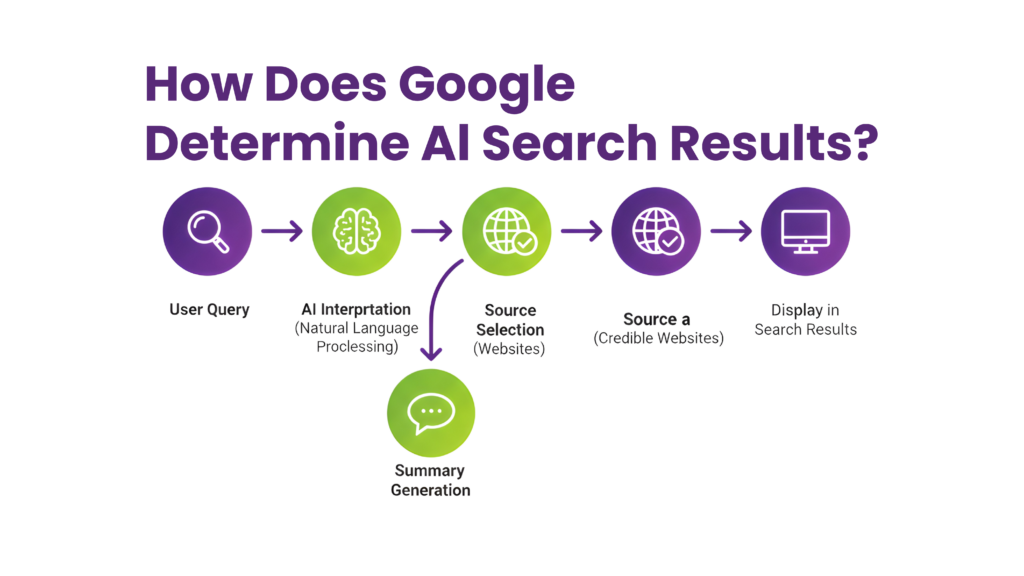
Google’s source selection mechanisms play a significant role in the link building AI era. You can utilize specific patterns to improve visibility as the algorithms choose which sites appear in AI Overviews.
Direct Match Query Link Inclusion (GOA Score™)
The GOA Score™ (Generative to Organic Alignment Score) measures how well AI Overviews match organic results. This score shows how closely AI-selected links align with traditional search results. Search intent creates different correlation levels:
- Transactional queries lead with 53% alignment
- Informational queries follow at 52% overlap
- Navigational searches show 46% alignment
- Commercial queries reach 40-41%
76% of AI Overview citations come from the top 10 organic results. Pages that answer questions directly while connecting to broader search experiences get priority. This matters for your e-commerce SEO link building strategy.
Related Queries from ‘People Also Search For’
Google’s algorithms look beyond target keywords. They analyze related searches through contextual connections rather than simple keyword matching.

The system connects phrases and sentences to understand both content and user intent. Pages that answer related questions perform better in AI Overview inclusion.
Your content should address both direct questions and implied follow-ups from “People Also Search For” sections to optimize effectively.
Reformulated Queries via LLMs
Google uses a smart “query fan-out” technique that turns one search into hundreds of variations. The process works this way:
- The original query expands into multiple versions
- These variations run simultaneously across Google’s web indexes
- Gemini gets a richer evidence base to blend
This method changes how Google handles comparative and evaluative searches. The system keeps user context by tracking previous queries, locations, devices, and behavior.
An LLM starts the process by creating multiple alternate queries from the original search. You now need to optimize for semantic relevance across many hidden queries instead of specific keywords.
Link Attribution After Summary Generation
Google’s attribution system now makes sources more visible. Each paragraph ends with a clickable chevron that shows dropdown links to source websites.
This change addresses previous criticism about hidden sources. The current design balances quick answers with links to authoritative sources, which helps maintain trust metrics and authority signals.
Bigcommerce SEO agency clients should create content that ranks well and signals relevance to AI-generated answers. Wikipedia, YouTube, and Reddit make up 15% of all linked sources in AI summaries. Government websites appear more in AI summaries (6%) than standard search results (2%).
Your content needs clear sections, schema markup, and strong engagement metrics like dwell time and low bounce rates to stand out in the overview AI environment. This approach helps turn your content mentions into actual visits.
What Types of Content Get Linked in AI Summaries

Link building AI era success depends on understanding which sources AI systems favor. Your visibility strategy will benefit from clear patterns about content types that get special treatment in automated summaries.
Preference for Wikipedia, YouTube, and .gov Domains
Wikipedia, YouTube, and Reddit lead both AI summaries and traditional search. These platforms make up 15% of all citations in AI Overviews, which matches their 17% share in standard search results. The numbers tell an interesting story:
- AI summaries feature Wikipedia more often than traditional results
- Government (.gov) websites get much more attention—6% of AI summary links compared to 2% in standard results
- YouTube links appear less in AI summaries than in traditional search
Authoritative institutional sources remain popular beyond these top platforms. AI Overviews reference government sources in about one-fifth of cases, which shows how trust metrics play a vital role in selection algorithms.
Authority Signals and Trust Metrics in Link Selection
AI systems check source credibility through several validation steps. They start by analyzing your brand’s consistency across the web. The systems then review:
- Structured entity data completeness
- Backlinks from respected sites
- Content depth and subject expertise
- Information freshness and updates

The process goes beyond traditional SEO factors. AI systems treat mentions from authoritative websites as expertise endorsements. Users trust AI-generated responses with citations 76% of the time. Source credibility has become essential in the overview AI landscape.
Content Mentions vs. Explicit Backlinks
The ecommerce SEO link building world faces a surprising change. The relationship between backlinks and mentions has taken a new direction:
AI Overview visibility now correlates three times more strongly with branded web mentions than traditional backlinks. Bigcommerce SEO agency experts see this as a radical alteration—brands with the most mentions can get up to 10× more citations than their competitors.
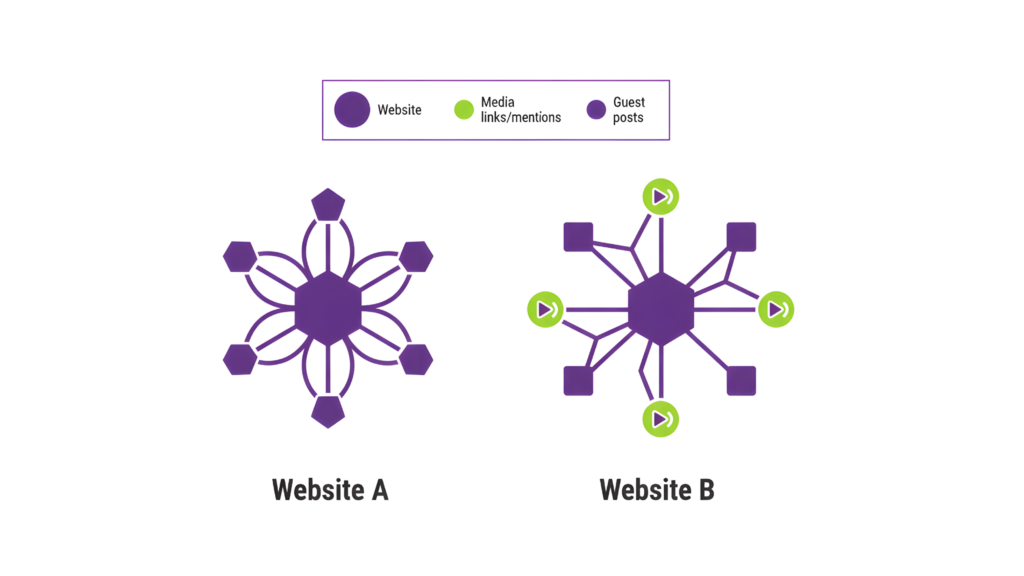
This shift changes how authority signals work. AI systems value mentions in credible outlets, trade publications, and authentic forums like Reddit more than simple link acquisition. The data suggests brands should focus on visibility across multiple platforms. AI systems blend narratives from sources that frequently mention your brand.
How to Optimize for Link Inclusion in AI Overviews
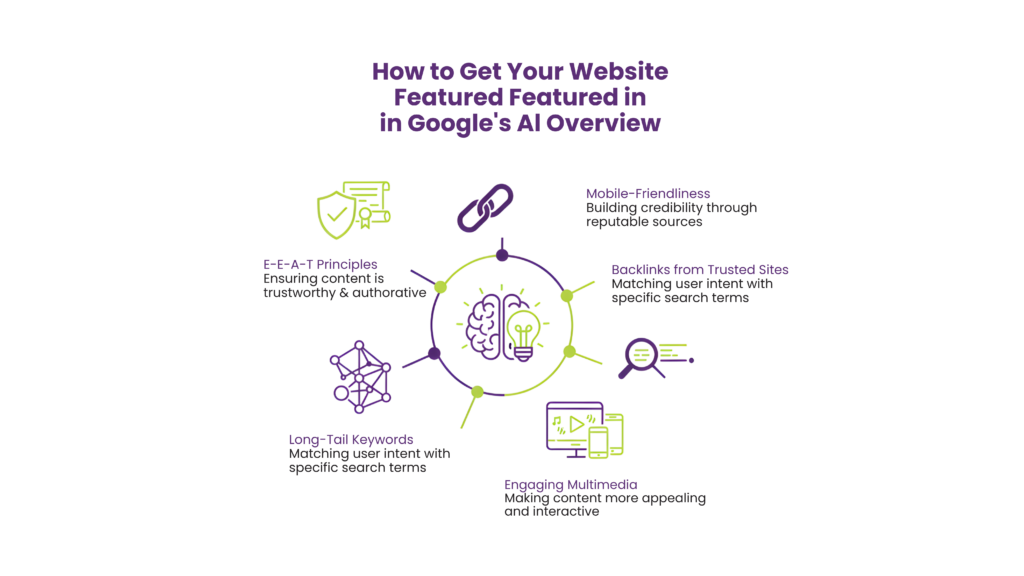
Success in the link building AI era demands practical strategies that boost your visibility in AI-generated responses. Your content needs a well-thought-out approach that targets specific ranking signals to secure a spot in these summaries.
Targeting High-Ranking Direct Match Queries
Your content should target queries where first-page rankings are achievable. Pages at the top organic positions have a much better chance of appearing in AI Overviews. A link in position one shows a 53% chance of inclusion, which drops to about 37% by position ten. Research shows that pages ranking in the top 10 organic results account for 76% of AI Overview citations.
Leveraging Related and Reformulated Queries
Related queries offer better ranking opportunities for competitive terms. Research indicates that content with related queries boosts the chance of appearing in an AI Overview from 46.3% to 60.4%.
This number jumps to 67.3% with reformulated queries. Google’s “People also search for” section helps you find these opportunities. Your content should address both explicit questions and implied follow-ups.
Creating Video Content for YouTube Visibility
YouTube citations in AI overviews show a 25% increase since January 2024. YouTube citations vary by industry:
- Healthcare-related keywords: 41.97%
- E-commerce: 30.87%
- B2B Tech: 18.68%
AI systems frequently cite instructional videos (35.6%) and visual demonstrations (32.5%). Your page HTML should include transcripts to make video content available to AI systems.
Using Structured Data and Clear Content Sections
AI systems rely heavily on structured data to understand your content. Schema.org vocabulary, especially the FAQ schema, proves essential. Your content should also:
- Use semantic HTML tags for better organization
- Keep paragraphs short and focused (2-3 sentences work best)
- Lead with key insights in the opening paragraph
- Use proper H1-H3 headings for structure
Ecommerce SEO Link Building for Product Queries
Ecommerce SEO link building needs a complete product schema that highlights product names, prices, and availability. Product information should match across your website, Google Merchant Center, and third-party marketplaces. This consistency serves as the new PageRank for trust metrics in AI systems, which makes your content mentions more likely to appear in AI-generated recommendations.
Why Choose Rankfast for AI-Era Link Building
The link building AI era has brought new challenges to partner selection. Google searches for SEO services have exceeded one million monthly queries globally. This is a big deal as it means that the numbers are three times higher than last year.
Custom Link Strategies for AI Summarized SERPs
Rankfast blends technical expertise with AI-driven research. This helps boost your visibility in organic search, Google’s AI Overviews, and conversational tools. Their campaigns target high-intent traffic and durable rankings, unlike standard approaches. Their technical audits look at crawlability, schema coverage, and analyze authority signals that influence AI Overview inclusion.
Experience with BigCommerce SEO Agency Clients
A specialized bigcommerce seo agency, Rankfast offers platform-specific optimizations that other agencies often overlook. The team builds data systems that match ground user searches and create clear relationships between content types. These systems are crucial for rich results and AI-generated citations. Their ecommerce SEO link building strategies emphasize product feeds, schema markup, and AI readiness without causing index bloat.
Real-Time Tracking with AI Overview Rank Tools
Rankfast uses dedicated overview AI tracking tools to monitor thousands of keywords at once. These tools examine your brand’s visibility in Google’s AI-generated summaries and track content mentions online. The monitoring shows:
- Keywords that trigger AI Overviews
- Your domain’s appearance as a source
- Your trust metrics compared to competitors
The results are impressive. Clients see improvements within 60-90 days, followed by significant gains between months 3-6.
Conclusion
AI has fundamentally changed how links work online. Google’s AI Overviews create both challenges and opportunities for digital visibility. You’ve seen throughout this piece how website owners must change their strategies because traditional backlinks alone won’t guarantee traffic anymore.
Websites that adapt quickly still find opportunities. Rankfast creates custom link strategies designed specifically for AI-summarized search results. Their team works as a BigCommerce SEO agency and knows how to optimize content for both humans and AI systems. They use immediate tracking tools to monitor your visibility in AI Overviews and adjust strategies based on performance data.
Building genuine authority matters more than collecting backlinks. You can maintain visibility as search evolves by focusing on complete SEO content optimization and creating trustworthy content that AI systems value. The real question isn’t if you should change your link building strategy—it’s how fast you can make these vital changes to remain competitive.
FAQs
Q1. How often do users click on links in Google’s AI summaries?
Users are less likely to click on links when presented with an AI summary. Only about 8% of users who see an AI summary end up clicking on a traditional search result link.
Q2. How are AI summaries affecting website traffic?
AI summaries are significantly impacting website traffic. Sites previously ranked first could lose up to 79% of their traffic when positioned below an AI overview. Additionally, organic click-through rates for queries with AI overviews have dropped from 1.76% to 0.61%.
Q3. What types of websites are most likely to be cited in AI summaries?
Wikipedia, YouTube, and government (.gov) websites are frequently cited in AI summaries. Government websites, in particular, appear more often in AI summaries (6%) compared to standard search results (2%).
Q4. How can websites optimize their content for inclusion in AI summaries?
To optimize for AI summaries, focus on achieving high organic rankings, use structured data and clear content sections, create video content for YouTube visibility, and implement comprehensive schema markup. It’s also important to target both direct match queries and related search terms.
Q5. Are backlinks still important in the era of AI-generated search results?
While backlinks are still relevant, brand mentions across multiple platforms have become increasingly important. Mentions in credible outlets now show a stronger correlation with AI overview visibility than traditional backlinks. Focus on building overall brand visibility rather than just acquiring backlinks.
Leave a Reply