Did you know that in 2024, 60% of Google searches never left the search engine results page (SERP)? SERP AI competition has completely changed how people find your content online. A remarkable 57% of Search Engine Results Pages now show AI Overviews as of June 2025. These features were only introduced in May 2024. The changes affect the entire search ecosystem. Visual SERPs and brand snippets have become crucial for feature optimization.
AI tools will likely drive more traffic than traditional search engines by 2028. This isn’t a far-off prediction. ChatGPT already has 700 million weekly users, while Google’s AI Mode serves more than 100 million monthly active users. Real estate SEO companies and businesses of all types face both challenges and new opportunities.
The silver lining shows that users who click through to websites from search results with AI Overviews, “these clicks are higher quality, where users are more likely to spend more time on the site”. The best SEO company for real estate or any business must focus beyond rankings. Making content available, citable, and machine-readable for AI systems has become essential.
Here, we’ll show you practical strategies to help you excel in this new AI-powered digital world.
Why AI Search Engines Rank Differently

AI search engines work in a radically different way compared to traditional search. They don’t just rank web pages in a list. These engines use innovative technology to understand questions and generate direct answers.
How LLMs Combine And Retrieve Content
Retrieval Augmented Generation (RAG) powers the core of AI search. This technique helps large language models (LLMs) boost their responses with fresh information from external sources. RAG works in several steps:

- Query processing: The system breaks down your search through tokenization and identifies key phrases. AI search engines go beyond matching keywords. They try to understand your real intent and what you actually want to know.
- Information retrieval: The system pulls relevant details from its knowledge base, which contains pre-trained data and live web content. Smart algorithms measure how well your query matches available information.
- Response generation: The AI creates a clear answer after gathering all the information. You get direct, conversational responses instead of a simple list of links with text snippets.
This new approach changes how people find content. The AI blends details from multiple sources to give you detailed answers. Research shows AI Overviews appear in 13% of Google queries, up 6% since January 2025. About 47% of global searches now show some type of AI enhancement.
Why Being First In AI Answers Matters More Than Ever
AI-driven search has raised the stakes for visibility. Here are some eye-opening facts:
- BrightEdge’s May 2025 research shows AI Overviews cut click-through rates (CTRs) by 30% on average. Traditional results show a 15.49% drop in CTR when AI Overviews show up.
- All but one of these AI Overviews skip linking to the top organic result. This breaks the old rules about search position and traffic, forcing a new approach to SERP AI competition.
- AI answers usually come from fewer sources than traditional searches. While people might check 5-10 different results in old-style searches, AI pulls from just two or three main sources.
AI search engines really like authoritative sources. A study of 250,000 citations revealed that sites with higher domain authority get mentioned much more often in AI responses. Getting cited in AI search results might matter more than traditional rankings now.
The old SEO playbook focused on top rankings. Now, with AI search, we ask “Are we relevant enough to be included?” instead of “Are we ranking high enough?”. You need both brand power and well-structured content to succeed – one without the other won’t cut it.
Businesses that rely on search visibility face a complete overhaul in strategy. Creating content that AI systems can easily cite matters more than optimizing for clicks. Google’s advice is clear: “Focus on making unique, non-commodity content that visitors from Search and your own readers will find helpful and satisfying”.
Visual SERPs and brand snippets have evolved from optional features to must-haves in search strategy. Being first in AI answers isn’t just about getting noticed – it’s about staying alive in this new landscape.
Fix Technical SEO to Let AI Crawl Your Site
Technical SEO is the foundation of your site’s visibility to AI search engines. Great content won’t help much if AI crawlers can’t access or understand your pages properly. Your site will stay invisible in this new search world.
Allow GPTBot, Google-Extended, and PerplexityBot
AI crawlers need access to your site if you want your content to show up in AI-generated responses. Recent data shows that among 3,816 domains (from the top 10,000) with robots.txt files, only 14% had directives that target AI bots. GPTBot stands out as the most blocked bot (312 domains said no to it), but it’s also the one most welcome when sites grant permission.
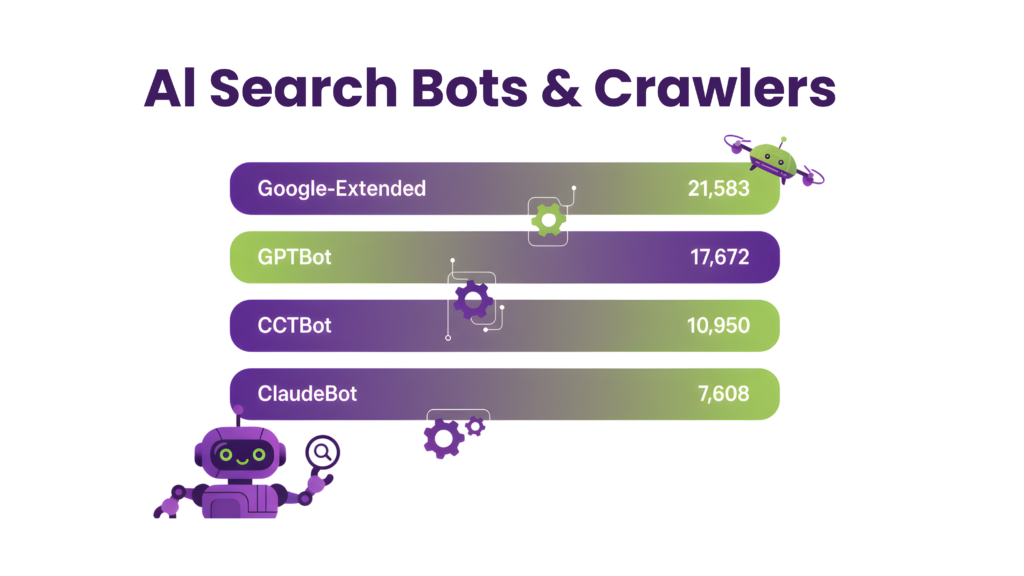
You should add these specific user-agents to your robots.txt file to make it AI-friendly:
- For OpenAI (ChatGPT): ChatGPT-User, OAI-SearchBot
- For Google: Google-Extended (for Gemini)
- For Other AI Search: PerplexityBot, Claude-Web, AndiBot, YouBot
Keep in mind that letting AI crawlers in doesn’t mean you have to let them train on your content. You can set different rules, like this:
# Allow AI search and citation
User-agent: OAI-SearchBot
User-agent: ChatGPT-User
User-agent: PerplexityBot
Allow: /
# Disallow AI training
User-agent: GPTBot
User-agent: CCBot
Disallow: /
Strong bot protection through Cloudflare or AWS WAF might block AI crawlers without you knowing. You might want to allow major U.S. datacenter IP ranges if you care about SERP AI competition visibility.
Avoid JavaScript-Heavy Content
Most AI crawlers can’t handle JavaScript at all, unlike Googlebot, which processes it after the first visit. Your site might have a big blind spot if it depends heavily on JavaScript for important content.
AI crawlers only see the raw HTML from your server. They skip anything that JavaScript loads or changes. This basic limitation means:
- Product information loaded after the page loads stays hidden
- Customer reviews, pricing tables, or specifications added through JavaScript are invisible
- Navigation elements that need JavaScript don’t work
The Home Depot’s website shows why this matters. If they load key product details through JavaScript, AI crawlers won’t see this content when they create visual search results and brand snippets.
You can fix this with progressive enhancement. Put your main content in the initial HTML and use JavaScript just for extra features. This way, your essential information stays visible even if JavaScript fails or isn’t processed.
Use llm.txt and Fast-Loading Pages
A new standard called llms.txt helps you talk to AI systems better than robots.txt alone. This file works like a map for AI crawlers, showing them where to find your best, most quotable content.
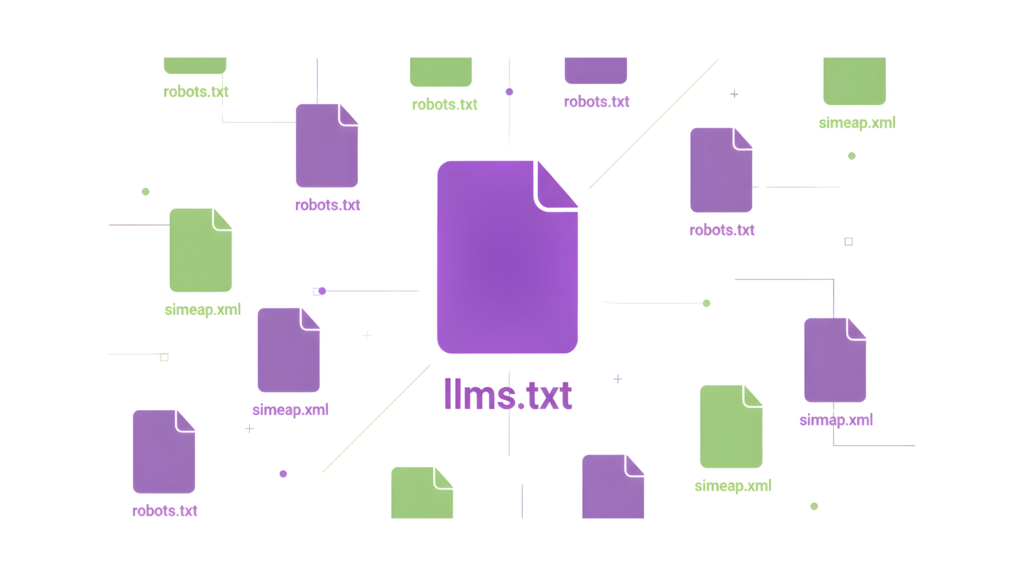
Put your llms.txt file at your domain root (example.com/llms.txt) in Markdown format. You need at least:
- A title with your site/company name (H1 heading)
- A brief description of what your site offers (blockquote)
- Categorized links to your most important content (H2 headings with lists)
This helps because AI crawlers don’t always start at your homepage. Without clear directions, they might miss your best content hidden deep in your site.
Page speed really matters for AI crawling. Studies show that pages slower than 3-5 seconds might get skipped during indexing. Some AI crawlers use up to 30TB of bandwidth monthly from heavy crawling, which can slow things down for everyone.
Your content should load in under a second for the best results. Put important information near the top of your HTML. RankFast’s SERP Rank Checker can show you how these technical changes affect your visibility in both regular and AI-powered search results.
These technical SEO basics for AI crawlers will help your real estate SEO company or any business succeed in the new world of SERP AI competition.
Structure Content for AI Fragment Extraction
Content structure works like a blueprint that helps AI systems pull valuable bits from your pages. Your information organization could mean the difference between standing out or getting lost in SERP AI competition.
Use Clear H2s And H3s For Each Idea
Both readers and AI tools need a clear map to understand your content. AI systems actively map your page layout—H1, H2, H3, and paragraph blocks—before they process the words. This creates a meaning hierarchy that decides which content parts get priority.
Your headings should:
- Match what people search for and use questions where it makes sense
- Lead with keywords instead of vague phrases like “Our Approach”
- Include action words that show the value readers will get
- Flow naturally into the content below each heading
A well-laid-out heading structure boosts your chances of appearing in visual SERPs. Each heading works as a clear marker that shows what readers will find in that section. This clarity helps AI systems group your content by theme and pull out relevant pieces.
Break Content Into Scannable Sections
AI doesn’t grab whole articles—it takes specific bits like sentences and paragraphs it can use to respond. You need self-contained content “chunks” that make sense even when they stand alone.

These principles make your content more AI-friendly:
- Stick to one idea per paragraph or section
- Skip phrases like “as mentioned earlier” or “we’ll explain later”
- Write sections that work on their own
- Keep paragraphs brief (2-3 lines max) so they’re easy to scan
This block-by-block approach works for both humans and AI. Clear topic boundaries help AI confidently extract and cite your material. As feature optimization grows more crucial, breaking long text into scannable sections with bullet lists, tables, and quick TL;DR summaries makes your content more usable.
Add Schema Markup For FAQs and How-Tos
Schema markup labels each part of your page and turns raw text into structured data that AI easily processes. This machine-readable framework helps search engines better grasp and sort your content.
The FAQ schema really shines for AI search visibility. This markup points out questions and answers clearly, making information ready for AI to use. Good implementation can:
- Give you more SERP space by expanding your listing
- Get more clicks from regular search results
- Put your content in voice search results
- Help your answers show up in AI summaries and responses
Adding schema isn’t hard. The FAQ schema needs JSON-LD format in your page’s head or before the body tag ends. WordPress users can use Rank Math or Yoast SEO plugins to handle this automatically.
Google has specific rules: the FAQ schema works only for pages with single answers per question. All marked-up content must be visible to users, and promotional content isn’t allowed.
Clear headings, scannable sections, and proper schema markup set you up for success in SERP AI competition. RankFast’s SERP Rank Checker helps you check how well these changes work for both regular search and AI-powered discovery.
Create Pages That Match Natural Language Prompts
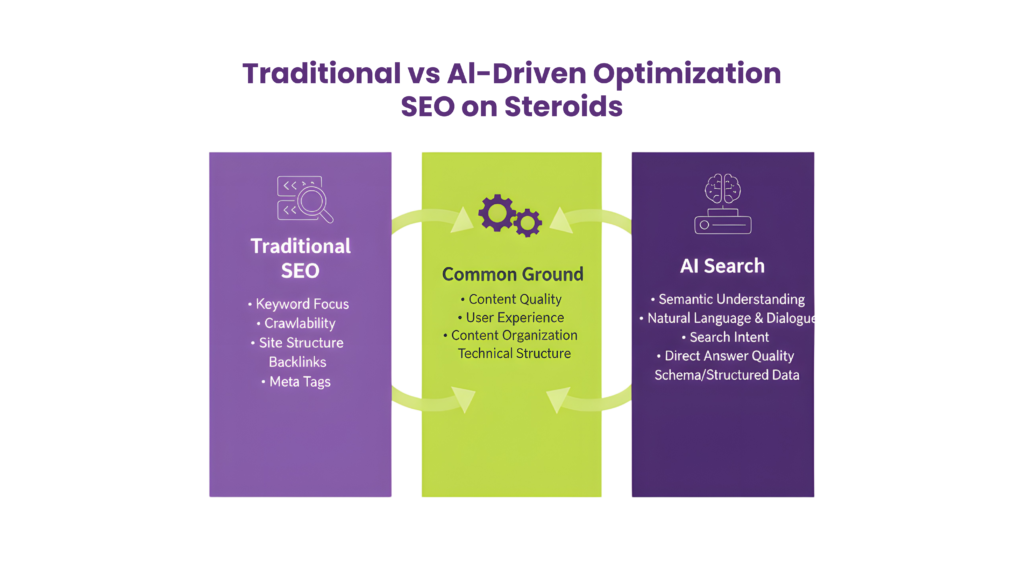
The way users interact with AI search engines should match your content perfectly to boost your visibility in results. A radical alteration in content development and page structure is essential as search becomes more conversational.
Target Long-Tail, Conversational Queries
The digital world is witnessing a transformation in search patterns. Traditional Google searches average just 4.2 words. AI prompts like those used with ChatGPT average a remarkable 23 words. These numbers show why the SERP AI competition needs a fresh approach to content creation.
Users form complete questions rather than keyword fragments while talking to AI assistants. To cite an instance:
- Voice: “What are the pros and cons of installing a new wood floor throughout my entire home?”
- Text: “Pros and cons of wood floors”
Long-tail keywords are now vital – these specific phrases capture exactly what users want. These searches may have lower volume, but they convert at double the rate of broad keywords. Your performance in feature optimization and AI-driven results will improve substantially if you optimize for detailed queries.
A successful long-tail keyword strategy should:
- Use tools like “Answer the Public” to identify specific queries through question research
- Sort keywords by search intent and user experience stage
- Answer these questions directly in content that sounds natural
- Use question-style H2s with immediate answers in the content structure
Build Pages For Each Use Case, Feature, Or Integration
Generic pages don’t perform well in AI search results. The SERP AI competition rewards content that tackles specific needs and use cases. You should create dedicated pages for each major product feature, customer problem, or integration option.

AI systems can pull relevant information easily from this modular approach. Both humans and AI find what they want quickly when content breaks down into purpose-built pages.
A real estate SEO company might create separate pages for:
- First-time home buyer strategies
- Investment property optimization
- Luxury home marketing techniques
- Commercial property SEO approaches
Each page should tackle one clear goal instead of covering everything. Your content will line up naturally with the detailed, conversation-style queries that AI search prefers.
Include Your Brand Name In Context-Rich Sentences
AI overviews and visual SERPs favor brand mentions in relevant contexts substantially. AI systems look beyond keywords – they review how brands fit within meaningful contexts.
Your brand mentions should naturally flow with valuable information. Of course, brand names help consumers identify what they’re getting. The best SEO company for real estate knows that brand mentions work best within useful content.
These patterns work well:
- “[Brand] analysis shows that property listings with virtual tours receive 40% more inquiries.”
- “According to [Brand] research, real estate keywords fluctuate seasonally.”
- “[Brand] clients typically see a 35% increase in qualified leads after implementing these strategies.”
This approach improves brand visibility in search results and builds trust with AI systems and humans alike. RankFast’s SERP Rank Checker helps track your brand’s performance in these vital AI-generated results.
Your success in the evolving SERP AI competition landscape depends on matching your content strategy with natural AI conversations.
Earn Trust Through Off-Site Authority
AI systems assess your brand’s trustworthiness based on your web reputation. Studies show that brand mentions on high-authority sites have become vital signals for large language models in SERP AI competition.

Get Featured In Industry Roundups And Reviews
Users and AI systems recognize industry roundups and product reviews as powerful trust signals. AI-generated answers cite reputable media sources 2-3 times more frequently than brand websites.
These mentions help establish your brand as an authority in visual SERPs, beyond traditional SEO benefits. Your reviewer’s guide should include:
- Clear product terminology, specifications, and setup instructions
- Visuals that help reviewers convey your story effectively
- Certifications or third-party validation details
Publish Guest Posts And Expert Interviews
Your expertise grows stronger across multiple domains through guest content that builds your citation network. Companies with solid PR campaigns experienced 55% more organic traffic growth compared to those without PR efforts.
The right publication matters more than quantity. AI systems and readers value a single mention in The New York Times more than numerous mentions in unknown blogs when evaluating brand snippets
Engage on Reddit, Quora, and Community Platforms
AI citations heavily rely on online communities. Studies reveal Reddit ranks as Google’s second most-cited source in AI Overviews. Quora emerged as the most frequently cited domain overall.

Building authority on these platforms requires you to:
- Target subreddits with 50+ responses or highly upvoted Quora answers
- Write helpful, context-rich answers without promotional content
- Let your company’s subject matter experts participate under their names
Research shows that 88% of social media users consult Reddit for purchase decisions. Additionally, 76% consider Reddit posts more authentic than other social platforms. RankFast’s SERP Rank Checker helps track how these off-site efforts boost your visibility in AI-generated results.
Measure What Matters in AI Search
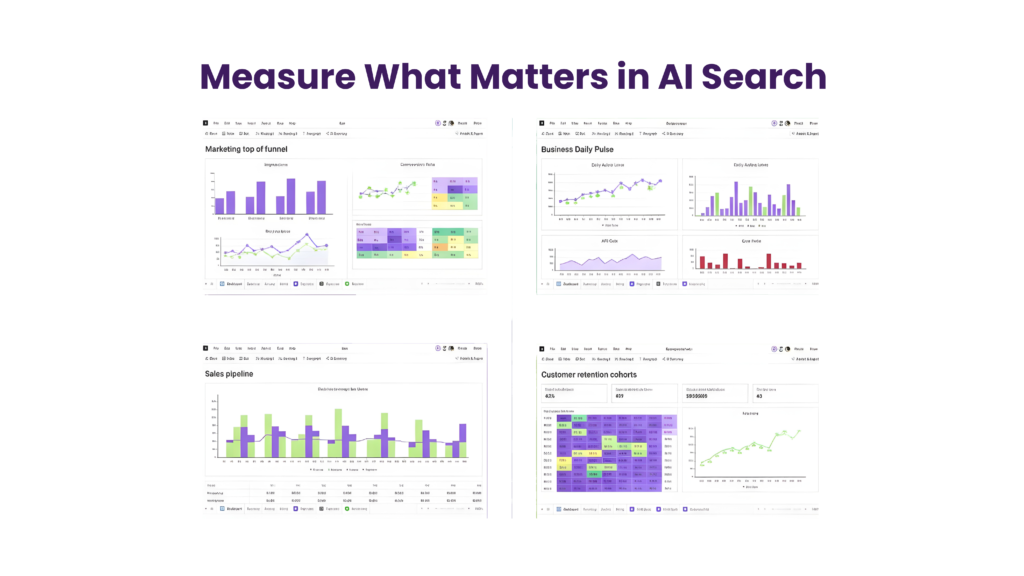
AI search requires different metrics than traditional SEO to navigate successfully. Your true performance in this digital world becomes clear by tracking the right indicators.
Track Brand Mentions In AI Tools
Website visits decrease as AI answers become more common, making traditional metrics like impressions and clicks less relevant. Zero-click searches now make up at least 40% of consumer searches, which has cut organic web traffic by 15% to 25%. Your brand’s presence needs monitoring on platforms like ChatGPT, Perplexity, and Google’s AI Overviews.
These specialized tools can help:
- BrandMentions tracks references across web and social channels and sends up-to-the-minute notifications about new mentions
- Scrunch AI spots your brand in AI-generated search results and helps you identify content gaps and misinformation
- Profound delivers analytics about brand mentions, sentiment, and citations on major AI platforms
Use RankFast’s SERP Rank Checker for Visibility
RankFast’s SERP rank checker is a great way to get insights into your AI search performance. This tool analyzes search engines and gives accurate data about your target keyword rankings. Here’s how to use it:
- Enter your targeted keyword
- Select the appropriate language and geographical location
- Review the detailed report showing domain, URL, rank, title, and description
Your page’s performance needs regular monitoring to optimize content as the SERP AI competition grows stronger.
Monitor Engagement, Citations, And Conversions
AI search’s effect on your business outcomes needs tracking beyond visibility. These metrics matter most:
- Citation frequency – AI systems’ references to your content as a source
- Branded searches – People actively seeking your brand after AI exposure
- Engagement depth – Scroll depth, return visits, and community participation
- Assisted conversions – AI-driven visibility’s contribution to later conversions
A page with fewer visits but frequent AI summary citations might be more valuable than high-traffic content without citations. Traditional analytics combined with AI-specific indicators paint a complete picture of your search performance in visual SERPs.
Conclusion
Your business faces both a challenge and a chance to adapt to AI search engines in today’s digital world. AI Overviews have changed how people search, with 60% of searches now ending right on the results page. Your content creation and optimization strategy needs to go beyond the usual SEO practices.
You need to prepare your site’s technical foundation to work with AI crawlers like GPTBot and Google-Extended. A well-laid-out content structure with clear headings, scannable sections, and schema markup will help AI systems extract and cite your information better. Natural language queries and long-tail keywords will help your pages match the way people talk to AI.
AI search keeps growing, and businesses need to adapt quickly to stay visible to potential customers. RankFast’s SEO services can help you put these strategies into action while the SERP Rank Checker tool helps you learn about your performance in both traditional and AI-powered search results.
Note that success now depends on making your content worthy of AI citations, not just rankings. Start using these strategies today and keep track of your results as AI search evolves. The quickest to adapt will lead the pack in tomorrow’s AI-driven search scene.
FAQs
Q1. How can I optimize my content for AI search engines?
To optimize for AI search, structure your content with clear headings, use schema markup, create scannable sections, and focus on answering specific user queries. Ensure your site is technically optimized for AI crawlers and build off-site authority through reputable mentions and citations.
Q2. What are the key differences between traditional SEO and AI search optimization?
AI search optimization focuses more on natural language processing, long-tail conversational queries, and content structure that facilitates easy information extraction. It also places greater emphasis on off-site authority signals and brand mentions in trusted sources.
Q3. How important are brand mentions in AI search results?
Brand mentions are crucial in AI search. They serve as trust signals for AI systems and can significantly impact your visibility in AI-generated responses. Aim to get featured in industry roundups, reviews, and reputable publications to boost your brand’s authority.
Q4. What metrics should I track to measure AI search performance?
Key metrics for AI search include brand mentions in AI tools, citation frequency in AI-generated answers, engagement depth on your content, and assisted conversions. Tools like RankFast’s SERP Rank Checker can help monitor your visibility across both traditional and AI-powered search results.
Q5. How can I create content that matches natural language prompts?
Focus on long-tail, conversational queries that mimic how users interact with AI assistants. Create dedicated pages for specific use cases, features, or integrations. Include your brand name in context-rich sentences and structure your content to directly answer user questions in a natural, conversational tone.
Leave a Reply