Enterprise SEO services have reached a critical turning point, with 83% of marketers now using AI tools but only 4% leveraging them strategically. This gap between adoption and effective implementation highlights why so many global brands struggle to scale their SEO efforts despite substantial investments.
You’re likely facing similar challenges. With Google Shopping now appearing for up to 80% of e-commerce keywords and top-ranking organic positions seeing traffic drops of as much as 30%, traditional SEO approaches simply can’t keep pace. However, automation SEO solutions are changing this landscape. AI-powered content clustering and predictive keyword research tools now surface hidden opportunities in seconds, while multilingual SEO automation makes global expansion more accessible than ever before.
Whether you’re managing millions of pages like Amazon or seeking to maximize your existing content, these automation trends will help you stay competitive in 2025 and beyond.
The Rise of AI and Automation In Enterprise SEO
The digital landscape has fundamentally shifted, leaving traditional SEO approaches struggling to keep up. According to a study by Ahrefs, 90.63% of pages examined from their Content Explorer tool receive absolutely no traffic from Google. This stark reality illustrates why your enterprise SEO strategy needs a complete rethink in 2025.
Why Traditional SEO Methods No Longer Scale
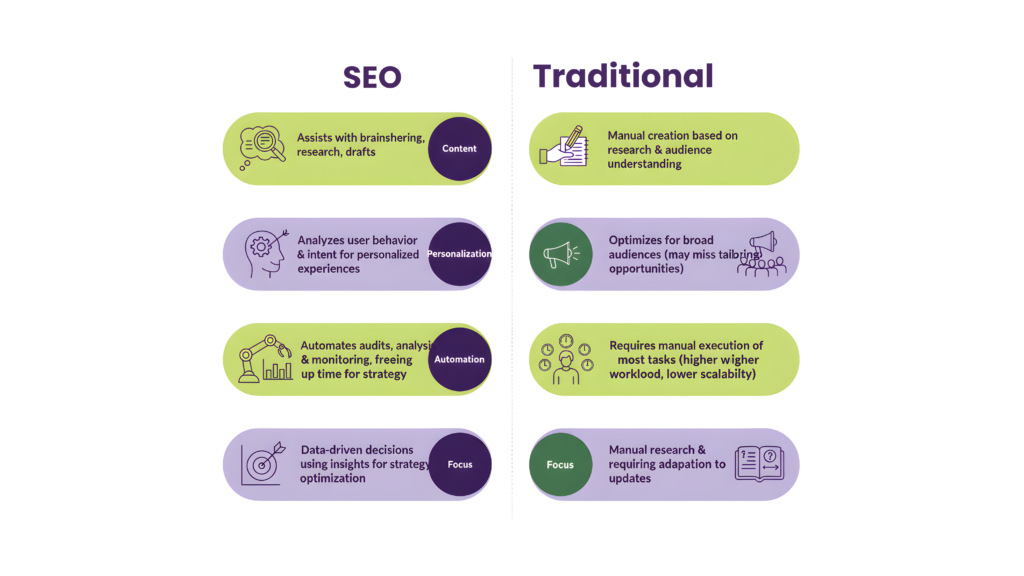
Enterprise websites with millions of pages simply cannot rely on manual SEO audits anymore. The days of emailing websites for backlinks, scraping keywords from forums, and manually auditing thousands of site pages are long gone. Furthermore, traditional SEO methods present a significant drain on resources when generating content, conducting keyword research, and performing data analysis.
For enterprise-level organizations managing large, complex websites with multiple domains and subdomains, the challenge becomes insurmountable without proper tools. Additionally, traditional SEO faces increasing pressure from:
- Competition is intensifying across every niche, creating a sea of content where standing out becomes increasingly difficult
- Google is deploying thousands of minor algorithm updates annually, with major shifts occurring multiple times per year
- Time constraints make it impossible to manually optimize the massive content volumes required for enterprise success
Consequently, what once took weeks of manual effort now requires AI-powered solutions to stay competitive.
How AI Is Reshaping Search Engine Behavior
Artificial intelligence isn’t just influencing search – it’s fundamentally reshaping how users discover information and how search engines deliver results. The rapid progression of AI has redefined approaches from basic keyword matching to prioritizing user intent and delivering conversational, synthesized responses.
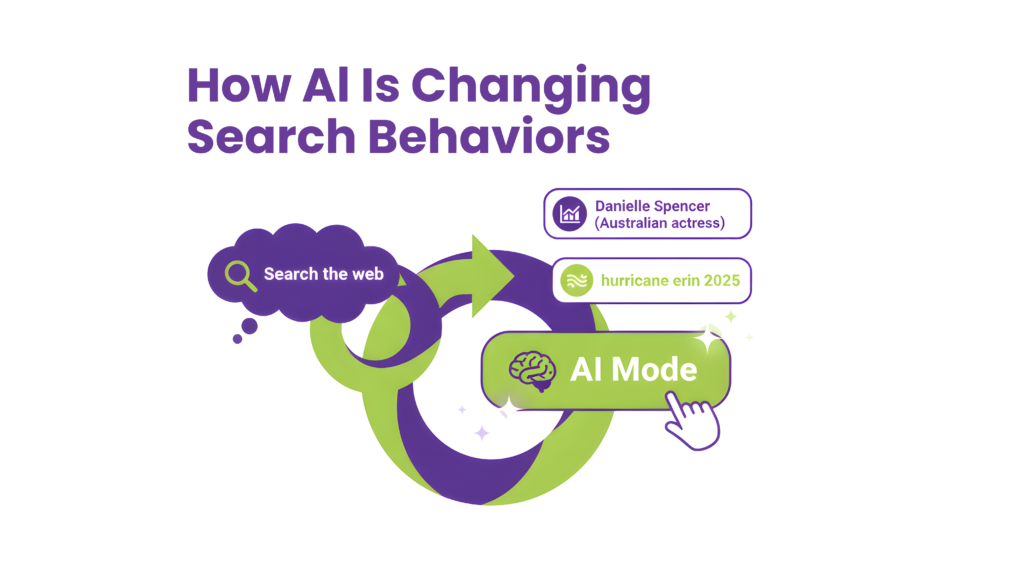
We’re witnessing a fundamental shift from traditional keyword-based search to AI-powered discovery systems that understand and anticipate user needs. Moreover, search engines now routinely generate custom responses rather than just linking to existing content, meaning enterprises need to optimize not just for visibility but for click value.
Consider these transformative changes:
The ability to search using text, images, voice, and even video simultaneously is becoming standard. AI engines can now analyze and understand content in real time, making freshness and authenticity more important than ever. Indeed, 65% of Google searches now end without a click as AI-powered search results provide users with direct answers, reducing organic search traffic.
Automation As A Competitive Advantage
AI integration in enterprise SEO reduces the manual workload of teams dramatically. What previously took days to accomplish – backlink prospecting, technical site audits, keyword research – can now be performed in hours.
Research across 39,486 websites shows automated technical SEO delivers consistent, long-term ranking improvements, especially for larger sites. Enterprise SEO automation enforces quality gates like accessibility and brand compliance, integrates with your CMS, DAM, and CDP, and makes throughput measurable.
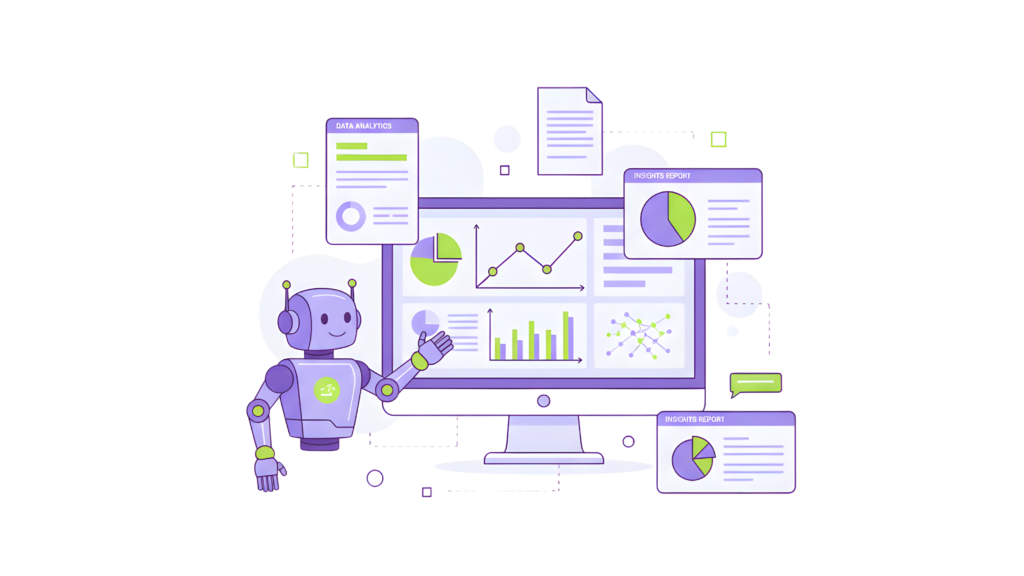
The outcome? Shorter cycle times, higher first-pass quality, defensible audit trails, and predictable growth without adding headcount. Automated crawlers like Screaming Frog can scan your enterprise site’s pages simultaneously, helping teams to prioritize issues quickly. AI-powered tools improve precision by eliminating human errors in tasks like meta tag optimization, structured data implementation, and content duplication checks.
Notably, delayed insights can cost rankings and revenue losses. With AI & automation, you get real-time dashboards and predictive results, providing immediate access to actionable insights that allow decision-makers to react quickly.
Ultimately, automation success depends on combining AI pattern recognition with human strategic oversight. The best automation setup doesn’t replace SEO professionals – it frees them to focus on high-impact strategies like technical improvements, content strategy, and competitive analysis.
Top Automation Trends Driving Global SEO Success
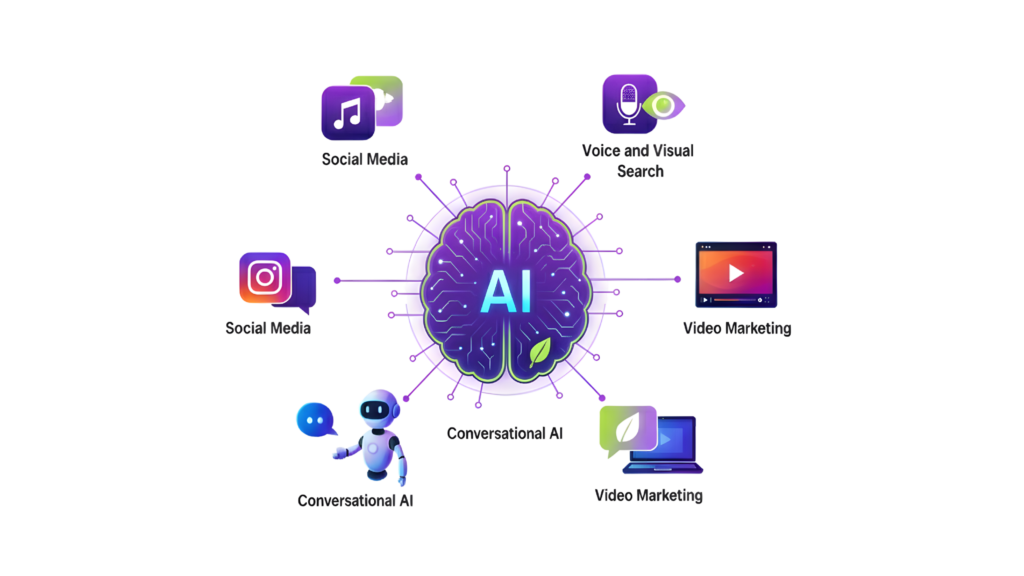
In today’s competitive search landscape, smart automation tools are quickly becoming essential for scaling enterprise SEO services. Major brands are currently embracing four powerful automation trends that deliver measurable advantages in global markets.
AI-Powered Content Clustering And Topic Mapping
AI-driven content clustering revolutionizes how you organize website content, grouping related materials into thematic structures that build authority. This approach transforms scattered content into cohesive topic ecosystems that search engines can easily understand. In fact, AI tools now use natural language processing to analyze existing content and identify semantic connections between topics and subtopics.
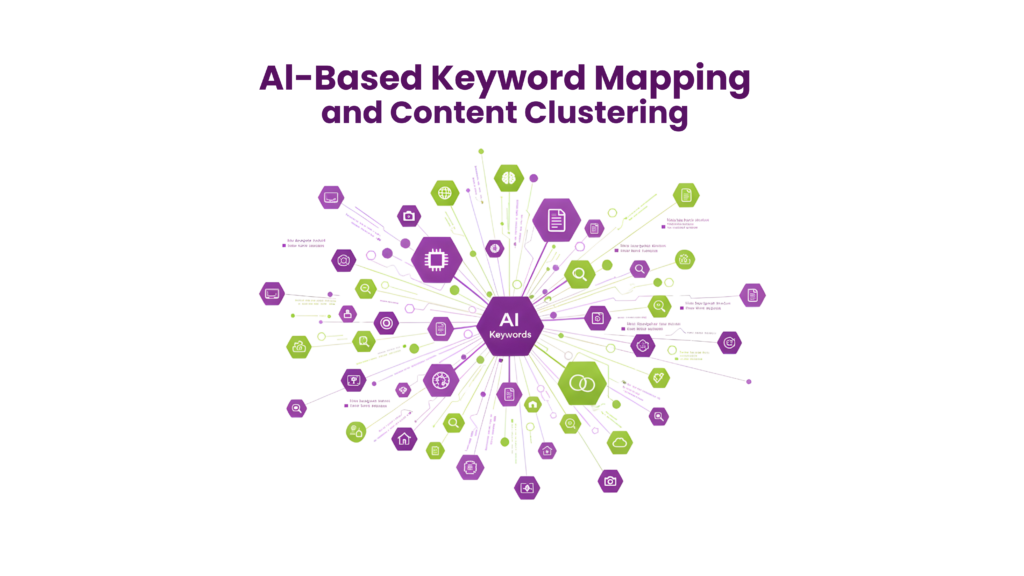
These sophisticated systems evaluate the relevance between content pieces and suggest optimal anchor text that makes sense to both users and search engines. The strategic organization of content through AI-powered topic mapping also helps search engines determine your site’s relevance and authority for specific queries, ultimately leading to higher rankings.
Specifically, AI topic maps can now automatically identify competitors’ keywords and content gaps, revealing opportunities to create valuable, highly relevant content that your competitors may have missed.
Predictive Keyword Research And SERP Forecasting
Predictive SEO represents a significant advancement over traditional keyword research methods. Unlike historical analysis, predictive models allow you to:
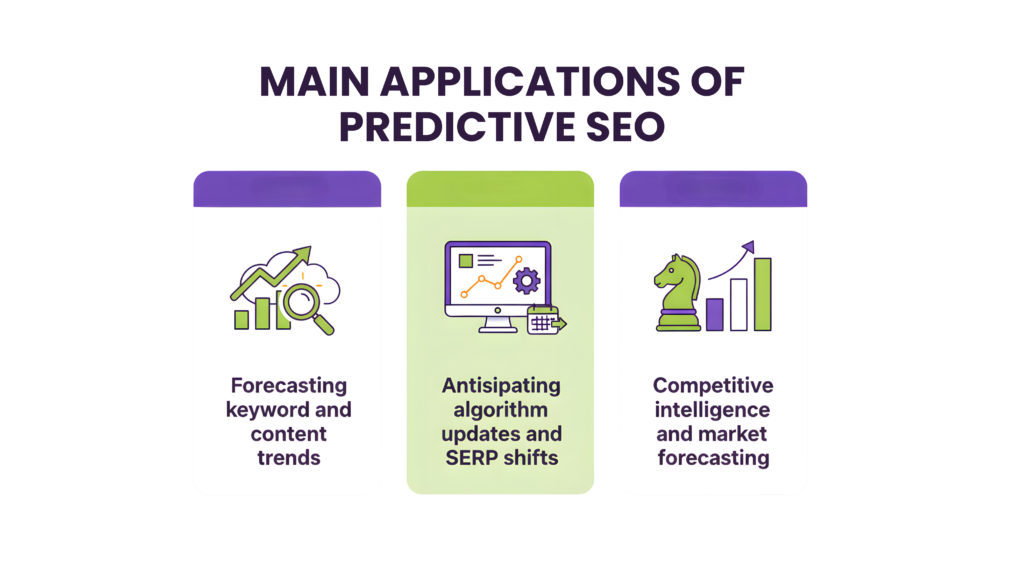
- Identify which search results are unstable and likely to change
- Discover which queries are growing in importance before they become mainstream
- Understand how AI-driven search engines will summarize answers
- Determine when competitors might overtake your visibility
This forward-looking approach gives you a first-mover advantage by positioning your brand as an authority in emerging trends before competitors even recognize these opportunities. Overall, 65% of businesses have noticed significant improvements in their SEO results after adopting AI-driven strategies.
Multilingual SEO Automation For International Markets
For global brands, automated multilingual SEO provides a gateway to capture traffic from international markets. Instead of managing translations manually, multilingual SEO automation tools now help you implement the correct URL structure for different languages and regions.
Google specifically recommends using different URLs for each language version rather than relying on cookies or browser settings. Essentially, automated systems help implement hreflang tags—snippets of code that ensure search engines direct visitors to the most relevant language version of your website.
Real-time SEO Change Tracking And Alerts
At the enterprise level, multiple teams—from developers to merchandisers—constantly make changes to your site. Unfortunately, SEO teams are usually the last to know about site alterations that can harm rankings.
Real-time SEO monitoring tools now crawl and analyze your web pages, alerting you when changes are detected. These systems track over 100 site elements at daily, weekly, or hourly frequencies with custom alerts. Importantly, this immediate notification system helps you mitigate potential damage to your SEO program before losing search visibility.
Through sophisticated custom alerts for key SEO metrics, you can protect your rankings and correlate all site changes with their impact in one comprehensive view. This capability transforms SEO reporting from explaining past losses into providing strategic risk intelligence about potential future disruptions.
Scaling Technical SEO With Automation Tools
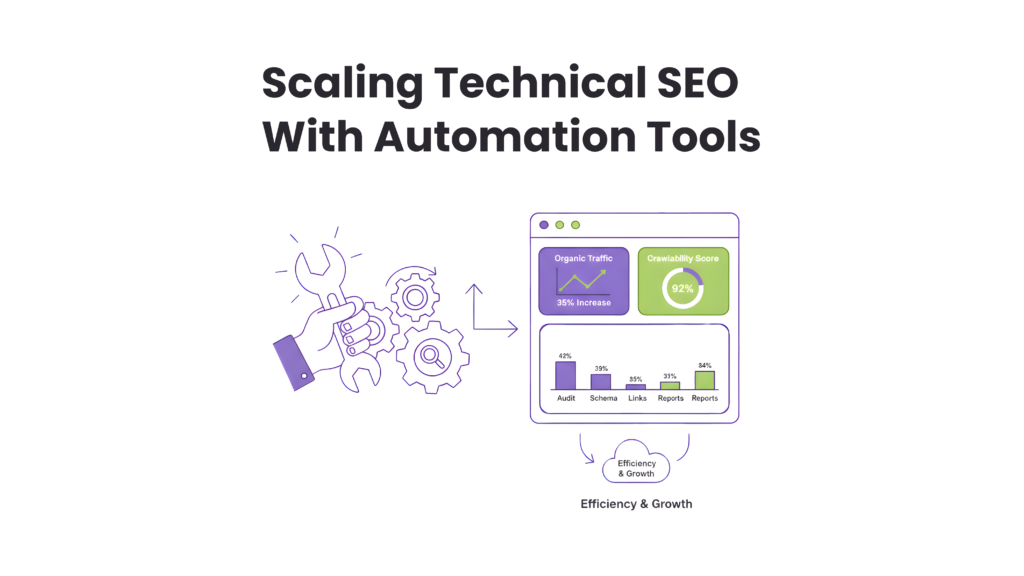
Technical SEO automation represents the backbone of successful enterprise SEO services, enabling you to manage thousands of pages efficiently. Major brands now implement automated systems that handle complex technical tasks, freeing your team to focus on strategy rather than execution.
Automated Internal Linking Strategies
Manual internal linking becomes virtually impossible as your site grows beyond hundreds of pages. Thankfully, automation tools now scan your content, identify relevant connections, and optimize anchor text distribution with minimal human intervention. These systems create semantic relationships between pages based on keyword clusters and topic relevance.
By implementing automated internal linking, you’ll experience several immediate benefits:
- Enhanced crawlability as search engines follow optimized internal pathways
- More efficient distribution of link equity throughout your site
- Identification and repair of orphaned pages that lack internal links
For instance, tools like Link Whisper and custom scripts can automatically suggest relevant internal links as you create new content, ensuring no page becomes isolated from your site’s architecture.
Crawl Efficiency And Log File Analysis
Log file analysis provides a window into how search engines interact with your website. By examining server logs filtered for search engine crawler activities, you gain access to invaluable data about crawl behavior over time.
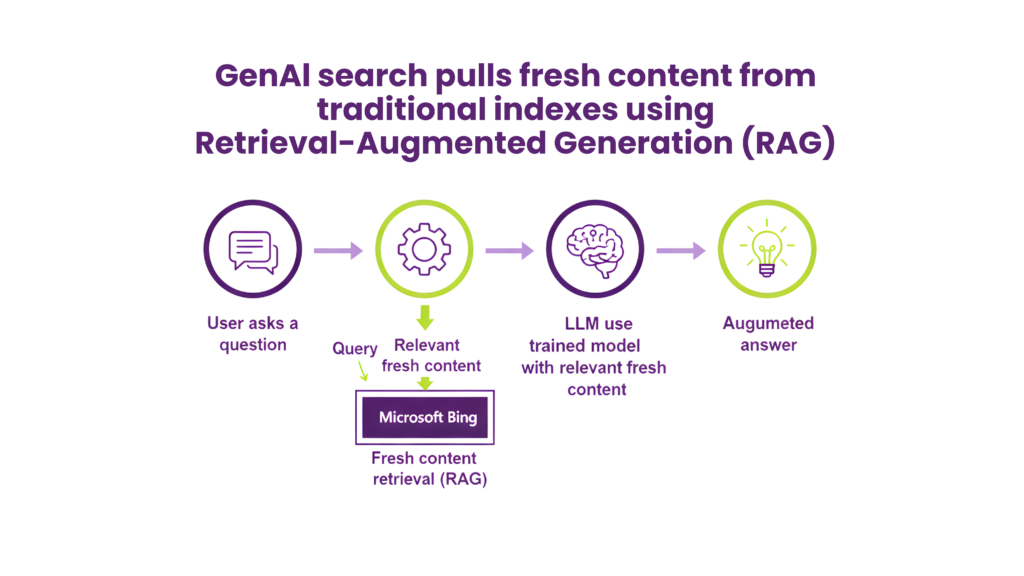
Modern automation tools parse gigabytes of log data to help you:
- Identify problematic pages wasting search engine resources
- Monitor HTTP status codes returned to search engine crawlers
- Optimize crawl budget to ensure efficient indexing of strategic pages
Programs like Screaming Frog can analyze millions of crawl events, verifying search engine bots and identifying exactly which URLs have been crawled, when, and how frequently.
Schema Markup And Structured Data At Scale
Implementing structured data is no longer optional for enterprise SEO services. Google uses this standardized format to better understand your content and potentially display it as rich results, which can significantly impact engagement metrics.
Rotten Tomatoes saw a 25% higher click-through rate for pages enhanced with schema markup compared to those without. Similarly, Nestlé measured an 82% higher click-through rate for pages appearing as rich results versus non-rich results.
Automated schema implementation tools now help you deploy structured data across thousands of pages simultaneously. These systems can automatically generate the correct JSON-LD code (Google’s recommended format) for each page type, eliminating the need for manual coding.
Through automation, you can maintain error-free schemas even as content changes, addressing the “schema drift” problem that occurs when structured data falls out of sync with page content.
Boosting Content Performance With Smart Automation
Content quality remains the cornerstone of successful enterprise SEO services. First of all, smart automation tools now enable you to enhance content performance across your entire website without the manual effort that once made this process prohibitively time-consuming.
AI-Generated Outlines And FAQs
Producing optimized content at scale starts with structure. AI outlining tools analyze top-performing content and user intent to create comprehensive frameworks in minutes instead of hours. These smart systems generate detailed outlines that include key points, subtopics, and suggested headings—ensuring your content covers all relevant aspects while maintaining optimal organization for both readers and search engines.
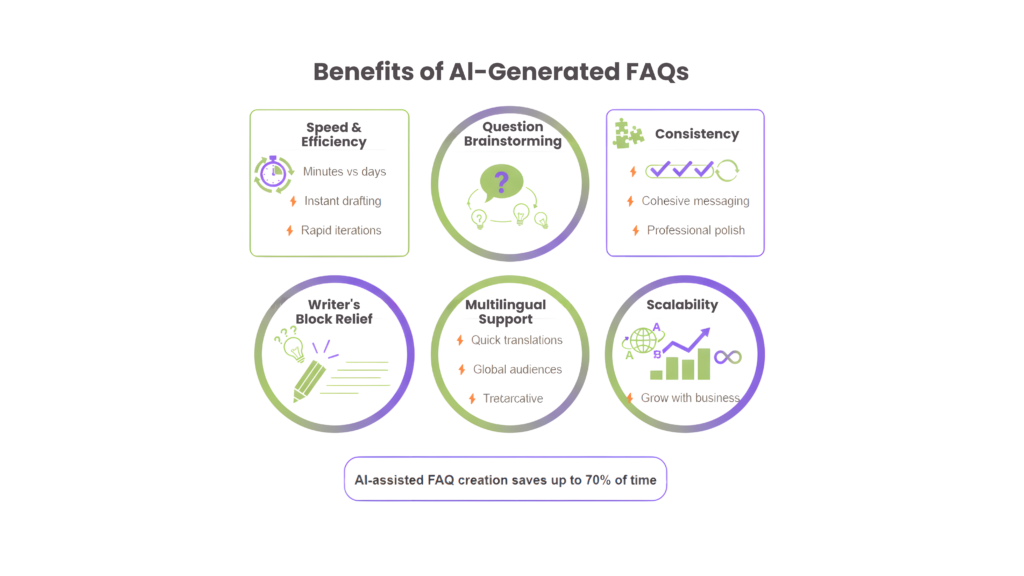
To illustrate this efficiency, traditional outlining methods require extensive research and planning, yet AI-powered tools deliver comprehensive outlines almost instantly. Furthermore, adding AI-generated FAQs can substantially boost your SEO performance by targeting question-based keywords that help you rank for featured snippets and People Also Ask sections.
Content Scoring And Optimization Suggestions
High-quality content requires objective measurement. Content scoring systems evaluate your pages against specific criteria such as relevance, readability, and keyword usage. These sophisticated tools provide numerical scores that offer insights into how well your content will perform and pinpoint areas for improvement.
Through real-time SEO feedback, AI platforms evaluate readability, keyword distribution, topical authority, and internal linking as you write. This immediate guidance ensures each piece is fully optimized before publication, significantly reducing revision time. Yet the benefits extend beyond time savings—content scoring helps identify which pieces aren’t contributing to conversions, allowing you to prioritize improvements where they’ll have the greatest impact.
Bulk Updates For Metadata And On-Page SEO
Manually updating SEO metadata across thousands of pages is virtually impossible for enterprise SEO services. In particular, automated bulk editing tools now allow you to update titles, meta descriptions, and other on-page elements simultaneously across your entire site.

Quality title tags and meta descriptions remain essential for SEO success, but without automation, implementing them for enterprise sites could consume countless hours. Subsequently, tools like the Yoast SEO Bulk Editor enable large-scale updates, though they often have limitations in filtering capabilities and the types of metadata you can modify.
For comprehensive control, advanced plugins integrate with your CMS to provide inline editing and bulk action functionality—dramatically improving workflow efficiency while maintaining consistent SEO standards.
Check out our SEO content optimization tool to automate your content performance.
Why RankFast Is Your Automation Partner For Global SEO
Choosing the right automation partner makes all the difference in your global SEO success. RankFast stands out as the ideal choice for enterprise SEO services through comprehensive solutions that deliver measurable results.
End-to-End Automation For Enterprise SEO Services
RankFast transforms your SEO from a cost center into a powerful revenue driver through end-to-end automation. First, our platform handles everything from technical audits to content optimization, eliminating manual bottlenecks that slow traditional SEO. Our system respects crawl budget and site structure while optimizing on-page elements, reducing technical issues across thousands of pages without manual QA.
Seamless Integration With Your Existing Tech Stack
RankFast seamlessly connects with your current technology infrastructure. Undeniably, successful RPA SEO implementations begin with process mapping and task prioritization. Our platform integrates with your CMS, marketing automation tools, and analytics systems for unified data flows. This integration eliminates silos between teams, ensuring SEO insights inform your entire marketing strategy.
Global Support And Multilingual Capabilities
For global brands, RankFast maintains consistent brand voice across 150+ languages, ensuring your messaging stays recognizable whether published in English, Spanish, or Chinese. This consistency improves user trust and click-through rates, supporting enterprise search strategy across regions.
Proven ROI and Workflow Efficiency
RPA SEO implementations deliver 200-300% ROI within 12+ months. Our automation redirects human expertise from manual tasks to strategic initiatives, with some organizations achieving 50% efficiency gains. Meanwhile, our workflow moves content from draft to live with automated formatting, reducing manual steps that slow publishing.
Try our SEO content optimization tool to see how RankFast can transform your enterprise SEO
Conclusion
Enterprise SEO automation stands at a critical turning point as we approach 2025. Throughout this article, you’ve seen how traditional manual approaches simply can’t scale for global brands managing thousands of pages. Additionally, the rapid evolution of AI-powered search engines demands equally sophisticated solutions to maintain competitive advantage.
Your enterprise can certainly benefit from these smart automation trends – whether through AI-powered content clustering, predictive keyword research, multilingual SEO capabilities, or real-time change tracking. These technologies transform overwhelming manual tasks into streamlined processes that deliver measurable results.
Technical SEO automation specifically offers game-changing benefits for large websites. Automated internal linking, crawl efficiency optimization, and schema markup at scale create the foundation for sustainable organic growth. Meanwhile, content performance tools ensure your messaging resonates with both search engines and human readers across global markets.
RankFast provides the comprehensive solution you need with end-to-end automation, seamless tech stack integration, and multilingual capabilities that power global growth. Experience the difference yourself by trying the SEO content optimization tool or exploring our enterprise SEO services designed specifically for global brands ready to scale their organic search presence.
FAQs
Q1. How is AI transforming enterprise SEO?
AI is revolutionizing enterprise SEO by enabling content clustering, predictive keyword research, and automated technical optimizations. It allows for faster analysis of large datasets, real-time monitoring of search trends, and more efficient content creation, helping businesses stay competitive in an increasingly complex search landscape.
Q2. What are the benefits of SEO automation for global brands?
SEO automation offers numerous benefits for global brands, including improved efficiency, consistent implementation of best practices across large websites, real-time tracking of SEO changes, and the ability to scale efforts across multiple languages and markets. It also frees up SEO professionals to focus on high-level strategy rather than repetitive tasks.
Q3. How can enterprises improve their content performance using automation?
Enterprises can enhance content performance through automation by utilizing AI-generated outlines and FAQs, implementing content scoring systems for optimization suggestions, and using bulk update tools for metadata and on-page SEO elements. These automated processes ensure content is well-structured, optimized, and consistently high-quality across large websites.
Q4. What role does multilingual SEO automation play in global marketing?
Multilingual SEO automation is crucial for global marketing as it enables brands to efficiently optimize content for multiple languages and regions. It helps implement correct URL structures, manage hreflang tags, and ensure consistent brand messaging across different markets, ultimately improving search visibility and user experience for international audiences.
Q5. How does technical SEO automation benefit large websites?
Technical SEO automation benefits large websites by streamlining processes like internal linking, crawl efficiency optimization, and schema markup implementation. It allows for the management of thousands of pages efficiently, ensures consistent application of technical SEO best practices, and helps identify and resolve issues quickly, leading to improved search engine crawling and indexing.
Leave a Reply