Did you know that 77% of marketing agencies now offer SEO services to their clients? Professional white label SEO reporting makes clients willing to pay more for your services—it’s that simple. Companies that switched from simple PDFs to branded interactive dashboards saw a 10% increase in closed deals within months. This makes sense because well-laid-out white label SEO audits build client trust and give practical insights.
White label SEO reporting tools help agencies create detailed SEO reports with their own branding. These tools automate tasks and cut down manual work. The right approach to white label reporting can change how clients see your expertise, whether you want to grow your SEO reseller services or improve your outsourced SEO reports.
Every good report should show the actual work done, not just performance metrics. White label local SEO services seamlessly integrate with your business model when set up properly.
This piece shows you everything you need to create impressive white label SEO reporting that works for your clients and delivers real value.
What Is White Label SEO Reporting and Why It Matters
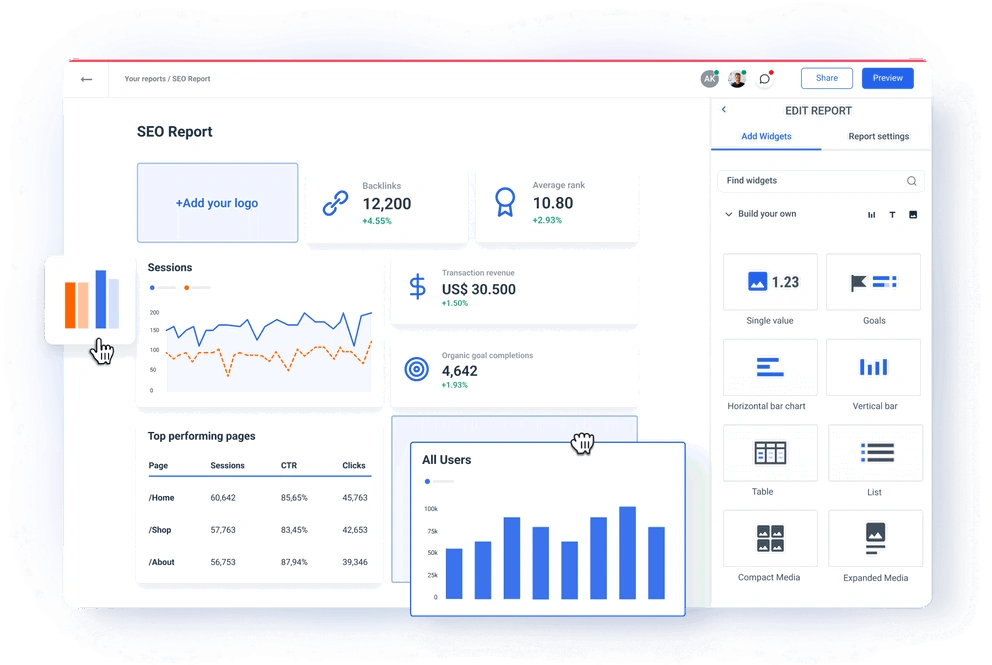
White label SEO reporting changes the way agencies deliver performance data to clients. Your agency can move beyond generic tool exports. You’ll provide detailed, branded reports that seem to come straight from your agency. These reports showcase your agency’s logo, colors, and branding elements while displaying essential SEO metrics like keyword rankings, traffic trends, backlink profiles, and more.
How Is It Different From Standard SEO Reports
Standard SEO reports show third-party tool branding with raw data exports that overwhelm clients. White label SEO reports unite information from multiple sources into a polished, professional document. Your branding stays at the forefront.
The key differences include:
- Branding ownership: Standard reports show the SEO tool’s logo and branding. White label reports display only your agency’s identity.
- Data presentation: White label reports offer clean, story-driven insights instead of scattered screenshots and spreadsheets. They paint a complete performance picture.
- Client readability: White label reports turn technical data into clear visualizations. Non-SEO professionals can understand practical recommendations easily.
- Customization options: White label reports adapt to each client’s specific goals and priorities, unlike rigid tool exports.
Benefits For Agencies And Clients
White label SEO reporting gives agencies substantial advantages:
Agencies using branded reporting solutions see up to 35% higher client retention rates. On top of that, automated reporting saves 5-10 hours per client each month. Your team can focus on strategy rather than manual data compilation.

The core team can serve more clients without increasing their workload. One reporting expert explains, “Serving five clients manually is one thing. Serving fifty is entirely different”.
Clients receive these benefits:
- Transparent performance tracking: Regular, easy-to-understand updates show campaign progress.
- Increased accountability: Detailed reports show how your work affects their business.
- Strategic guidance: Reports include practical recommendations, not just data points.
- Consistent communication: Automated scheduling gives clients timely updates without manual effort.
The Right Time To Think Over White Label SEO Reporting
You should implement white label reporting at the time:
- Your team wastes hours creating manual reports instead of focusing on strategy and results.
- You must scale your client base without increasing reporting workload.
- You aim to strengthen your brand identity as a complete service provider.
- Clients just need more transparency into campaign performance.
- Your competitors offer more professional reporting solutions.
White label SEO reporting tools help agencies, especially when they manage multiple clients at once. These platforms automate operations. Your team can focus on high-level analysis and strategic consulting.
Clients today want informed decisions. Agencies without professional, open reporting might lose accounts to competitors who provide better solutions. A reliable white label reporting solution will position your agency for growth through improved client satisfaction and operational efficiency.
Step 1: Define Your Reporting Goals and Audience
Your white label SEO reporting setup needs clear goals and a deep understanding of your audience. A solid foundation of SEO reporting depends on how well you arrange expectations and identify your clients’ priorities.
Understand Client Expectations
Building strong client relationships starts with open communication about SEO goals. The first step involves a detailed discussion with clients about their priorities. What matters most to them? More website visitors? Higher conversion rates? Better rankings? Focusing on a few key goals brings better results than trying to do everything simultaneously.

Goals are important, but clients also need to know the reality of SEO timelines. Most clients want quick wins, but SEO takes time to show results. The best way to make decisions with clients involves a clear outline of:
- Goals and objectives
- Scope of work
- Schedule and timeline
- Workflow processes
- Deliverables and reporting frequency
This strategy reduces stress for everyone and creates the right environment for teamwork. Note that your agency remains responsible to clients even when you use white label SEO services.
Identify Key Seo Metrics To Track
The metrics you monitor should link directly to your client’s business goals. Avoid vanity metrics that don’t show real business impact. Your client’s goals help determine which SEO KPIs matter most:
- Organic Traffic – People who find the site through unpaid search results which indicates how many users see and click your page in SERPs
- Organic Conversions – Actions that unpaid search visitors complete, like purchases, newsletter sign-ups, or downloads
- Search Visibility – The website’s appearance frequency in search results for target keywords, showing performance across multiple terms
- Keyword Rankings – The site’s position in SERPs for specific search terms
- User Engagement Metrics – Data points like bounce rate, engagement time, session duration, and pages per session
- Backlinks – Links from other websites that boost content authority and trust
- Click-Through Rate (CTR) – The percentage of users who click your website after seeing it in search results
Local SEO clients definitely need metrics about their Google Business Profile performance, too.
Set Clear KPIs For Each Report
The relevant metrics become specific, measurable KPIs that show progress toward business goals. Each KPI must:
- Link to revenue, leads, or measurable outcomes
- Stay within your team’s control
- Make sense to stakeholders
- Have someone responsible for results
- Include target achievement deadlines
To cite an instance, see a client who wants to boost online sales. The SEO objectives might target higher organic traffic to product pages that convert well, better conversion rates from organic visitors, or top rankings for commercial keywords.

Historical data helps set realistic growth targets. Clear goals create focus by defining success and its timeline. White label SEO reporting tools track these KPIs without revealing your use of external platforms.
Step 2: Choose the Right SEO Reporting Tool
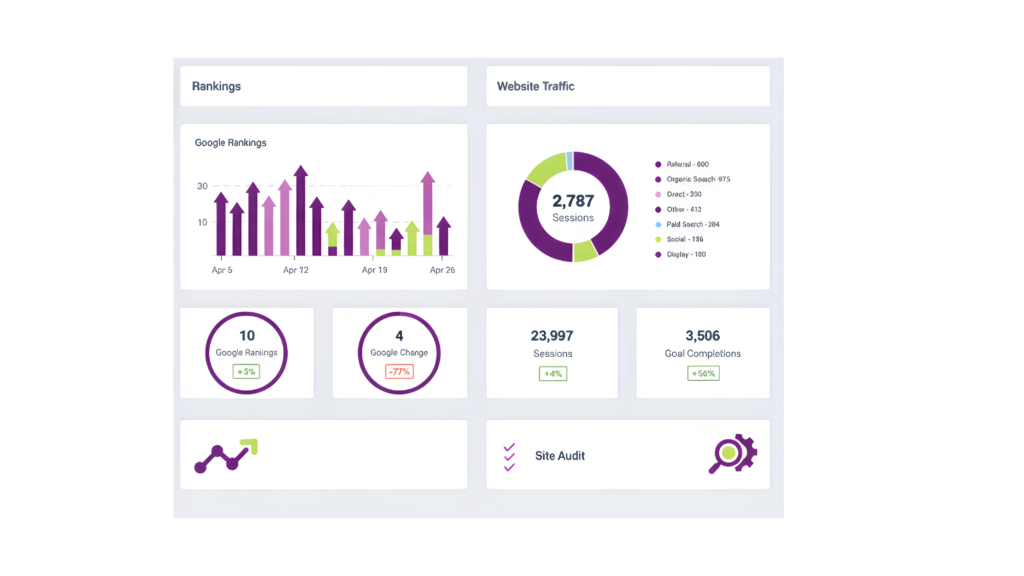
Your white label reporting strategy depends on choosing the right SEO reporting tool. Recent industry data shows agencies can save 5-10 hours per client monthly by implementing suitable reporting tools. Let’s look at what makes a reporting tool work for your agency.
Top Features To Look For In A Tool
These essential capabilities should be your priority when evaluating SEO reporting tools:
- Detailed integrations – Tools should connect directly with Google Analytics, Google Search Console, Ahrefs, SEMrush, and other platforms you use regularly. The best options pull data reliably without relying on unstable third-party connectors.
- Data accuracy – The tool must provide reliable, current information, especially for vital metrics like keyword rankings, backlink profiles, and website traffic.
- Customization options – The platform should let you adapt reports to each client’s needs with white-labeling features. Knowing how to add your logo, adjust colors, and customize templates helps maintain consistency in client communications.
- Scalability – Your reporting tool must grow with your agency and handle multiple domains or client accounts from a single dashboard.
- Accessible interface – Your team should create reports without extensive training on the platform.
Comparison of Popular Platforms
Leading platforms offer unique advantages for white label SEO reporting:
SEMrush excels with powerful keyword suggestions, workflow optimization, and an interactive visual interface. This platform combines standard reporting with detailed campaign management tools.
AgencyAnalytics shines at handling multiple clients and produces fully white-labeled reports. Their client management dashboard helps track progress efficiently across accounts.
Whatagraph updates data every 30 minutes and includes an AI-powered theme builder that creates branded reports from uploaded logos. Their dashboard combines an overview of all client accounts.
Ahrefs delivers exceptional backlink analysis and includes many free tools. Their reporting features suit agencies that focus on link-building strategies.
Looker Studio (previously Google Data Studio) gives you a free option to create interactive dashboards when combined with other data collection tools. This platform works well for agencies starting with white label reporting, though it has fewer features than paid options.
Automated vs. Manual Reporting Options
Your choice between automated and manual reporting will substantially improve your operational efficiency.
Manual reporting involves data exports from analytics tools and their combination in spreadsheets or presentations. This method offers unlimited customization but takes too much time and resources. Industry experts often say manual reporting “wastes valuable time”.
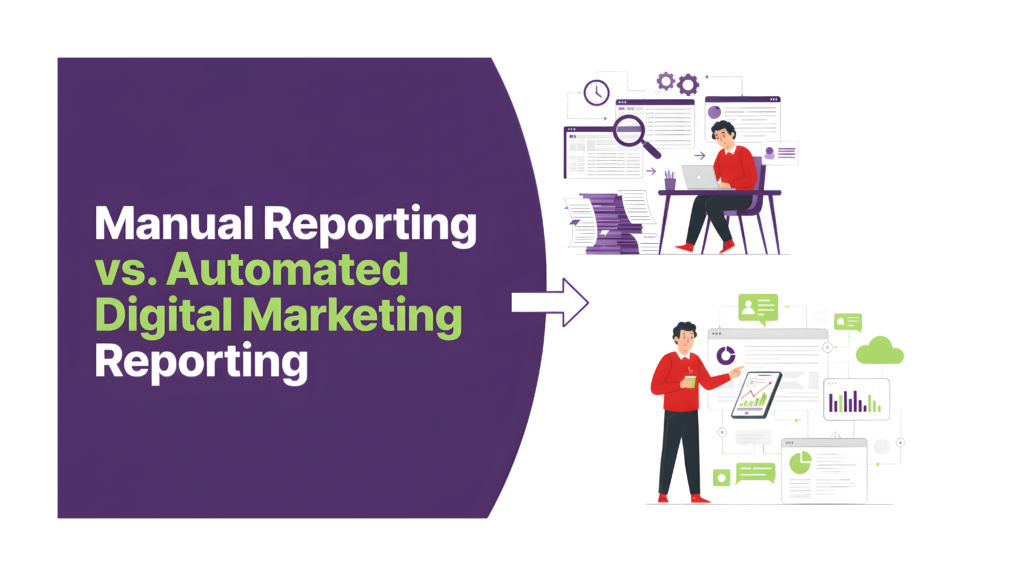
Automated reporting brings several benefits:
- Data uploads automatically from integrated platforms
- Reports are generated consistently on set schedules
- Results compare easily across time periods
- Reports are available on any device
Automated solutions help your team focus on analysis and strategy instead of data compilation. Some agencies prefer mixing both approaches by automating data collection while adding their insights and recommendations.
Agencies managing multiple locations or complex reporting needs benefit most from fully automated systems. Check out Rankfast’s white label SEO services to find reporting solutions designed for growing agencies.
Step 3: Customize Your Reports with Branding

Professional branding turns simple SEO data into compelling client presentations. Your reports prove your agency’s expertise and attention to detail. Many agencies have found that branded reports affect how clients see their service value and justify higher rates for the same work.
Add Your Logo, Colors, And Fonts
The cover page of your white label SEO report makes the first impression, so professional branding matters. Your agency’s logo should replace the default reporting tool logo to establish ownership of the work. The color scheme throughout all charts, graphs, and header elements should match your brand palette.
Your brand identity needs these key elements:
- A report header that matches your style
- Fonts matching your marketing materials
- Email headers for electronic report delivery
- A custom domain to keep brand consistency in report hosting
Your branding should stay consistent in all client communications—not just SEO reports. This approach extends to dashboards, emails, and even the browser favicon that clients see in online reports.
Create Branded Templates For Consistency
A standardized template saves time and delivers a professional presentation to all client accounts. You should start with a master template and create variations based on client types:

- E-commerce clients need conversion metrics and product rankings
- Service businesses want lead generation metrics
- Local businesses care about Google Business Profile performance
Most white label reporting platforms let you save these templates. You can add custom text sections that provide context for data or showcase important achievements. These notes help clients understand what the numbers mean for their business.
Use White Label Local SEO Services For Regional Clients
Clients targeting specific geographic regions need specialized local SEO reporting. White label local SEO services offer complete reports with:
- Local keyword rankings by city or region
- Google Business Profile metrics and performance
- Local citation consistency
- Regional competitor analysis
These reports need the same quality branding as your standard SEO reporting. Your white label local SEO provider should deliver reports that merge naturally with your agency’s branding. This creates consistency in whatever services you offer.
White label local SEO providers typically offer full branding customization. You can upload your company’s logo, details, and preferred colors to create professional reports that clients understand easily. This natural integration protects your agency relationship while giving specialized expertise to your clients.
Step 4: Build and Automate Your First Report

Creating good reports needs connected data sources and visual information. You need to build your first report and set up automation after setting reporting goals and picking the right tool.
Connect Data Sources Like GA And GSC
Good SEO reporting starts with reliable data sources. Your first step is to link Google Search Console and Google Analytics accounts to your chosen reporting platform. This setup gives you detailed organic search data that includes clicks, impressions, keyword rankings, and user behavior metrics.
Most white label SEO reporting tools follow this connection process:
- Access your reporting platform’s admin or integration section
- Select the data sources you want to connect (GSC, GA4)
- Authenticate your accounts through Google’s verification process
- Select specific properties and data streams to monitor
Your reports can show everything in organic search queries, landing page performance, and conversion data from one dashboard after connecting these sources. This setup helps you analyze how organic search affects actual user behavior on the website—which gives clients valuable insights.
Use Visualizations To Simplify Insights
Raw data rarely tells a good story. Visual elements turn numbers into applicable information. A good data display should reveal patterns, help make decisions, and show what needs attention instead of just showing data.
These visualization types will improve understanding:
- Line graphs: Show performance trends over time, but add annotations for algorithm updates or website changes
- Bubble graphs: Display multiple metrics at once and make outliers easy to spot
- Word clouds: Group and rank terms to find content gaps and cannibalization risks
- Funnel charts: Show conversion sequences where data decreases after each stage
Choose visuals based on specific questions you’re answering for clients when creating visualizations. Don’t display data just because it’s available. Note that your visuals should explain not just what happened, but why it happened.
Schedule Recurring Reports For Clients
Automation is the quickest way to handle white label SEO reporting. You can schedule automatic generation and delivery once your report template is ready:
- Access your reporting platform’s scheduling options
- Set your preferred frequency (weekly, monthly, quarterly)
- Add recipient email addresses
- Customize delivery messages with your agency’s branding
Most platforms let you preview reports before sending them. This feature gives you a chance to add custom insights or recommendations. The personal touch stays while making use of automated efficiency.
Automated reporting will give a steady stream of updates to clients without manual work. Your team can focus on analysis and strategy instead of putting reports together repeatedly.
Step 5: Avoid Common Mistakes in White Label Reporting
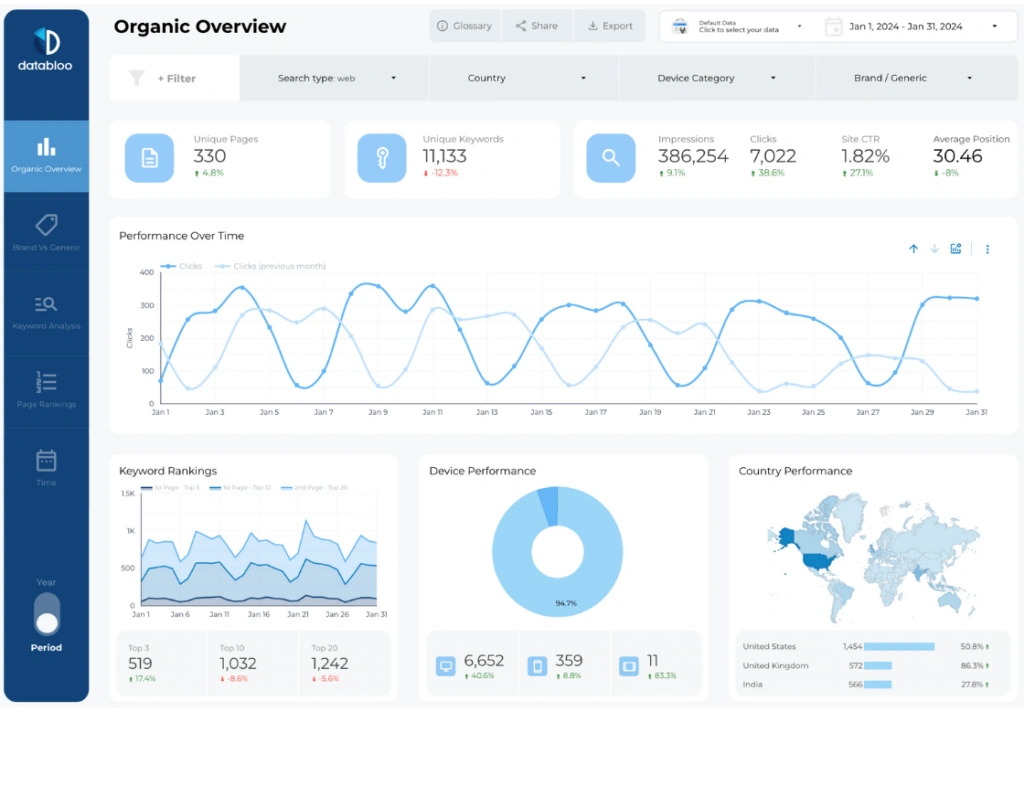
White label SEO reports need a well-planned approach to avoid mistakes that reduce their value. Even seasoned agencies make these errors sometimes. Avoiding them can boost client satisfaction and retention rates significantly.
Overloading Reports With Too Much Data
Many agencies wrongly think that complete reporting means adding every metric available. This “data dumping” overwhelms clients and hides valuable insights. The focus should be on 3-5 metrics that directly affect business decisions for each client type. E-commerce clients need conversion rates and average order value. Service businesses should see lead generation and cost per acquisition metrics.
Client onboarding should identify KPIs that line up with their goals. A reporting expert points out, “Clients get lost in the numbers and miss the key takeaways when presented with excessive data.” Clean, consistent design templates and color-coded performance indicators make information easier to understand.
Forgetting To Update Branding Elements
Branding inconsistencies catch your clients’ attention quickly. Pixelated logos and mismatched color schemes hurt your agency’s credibility. A single “Powered by” footer in an otherwise well-branded report shows your white label setup. This mistake happens most often during quick template setups or when the core team lacks proper training on white label protocols.

A pre-submission checklist for every report should verify:
- Logo quality and placement
- Consistent color schemes
- Removal of third-party tool references
- Custom domain implementation for online reports
Not Including Actionable Recommendations
Raw data without direction offers little value. Reports should guide clients toward SEO improvements through specific, doable recommendations. Each data section should end with a clear “next step” or applicable information.
Vague suggestions like “improve your SEO” don’t help. Better options include “optimize page titles for your top five keywords” or “increase backlink acquisition by 15% next quarter.” These specific recommendations show your strategic value beyond numbers and justify your agency’s fees and expertise.
Choose Rankfast For White Labeled SEO Agency
The right white label SEO provider can transform your agency’s capabilities. Rankfast proves to be a trusted partner for agencies that need complete white label SEO services without an in-house team.
Your agency can scale without doing all the work yourself with Rankfast. Their service package has link building, blog outreach, local citation building, on-page SEO, technical website optimization, and user-friendly SEO reports—all under your brand.
Each project receives a customized approach from Rankfast because every business needs something different. Their SEO experts and creative designers apply extensive marketing knowledge to every campaign.
Rankfast’s project onboarding sets them apart. They want more than basic information—they need to understand your sales drivers, vision, and target audience completely.
Client satisfaction proves their effectiveness:
- “Since working with Rankfast, my search engine visibility has greatly improved” – Connell, CEO at TALS
- “Rankfast is the reason we’re crushing it on Google right now” – Notify Visitors Team
Your agency can offer premium SEO services under your brand. Visit Rankfast’s white label SEO services to boost your agency’s growth today.
Conclusion
White label SEO reporting changes how you deliver value to clients and deepens your agency’s reputation. This guide shows that professional, branded reports save 5-10 hours per client monthly and help justify premium pricing for your services. On top of that, agencies that use these solutions see up to 35% higher client retention rates.
Your white label SEO reporting setup needs careful planning. You should understand client expectations first and define clear KPIs that connect directly to business outcomes. The right reporting tool with complete integrations lets you create custom-branded templates. These templates keep your client communications consistent.
Many agencies make crucial mistakes with white label reporting. You now know how to avoid common pitfalls like overwhelming clients with too much data or missing branding element updates. Your focus can stay on delivering practical advice that shows your strategic value.
Want to take your agency to the next level? Rankfast’s white label SEO services give you everything needed to grow your business without building an in-house team. Their complete solutions include professional reporting, link building, on-page optimization, and technical SEO—all under your brand.
These white label SEO reporting strategies will improve your client relationships quickly. You’ll see better retention rates and smoother operations that let your team focus on strategy instead of compiling data.
FAQs
Q1. What is white label SEO reporting, and how does it benefit agencies?
White label SEO reporting allows agencies to provide branded, customized performance reports to clients without revealing third-party tools. It benefits agencies by saving time, increasing client retention, and positioning the agency as a comprehensive service provider.
Q2. How do I choose the right SEO reporting tool for my agency?
Look for tools with comprehensive integrations, data accuracy, customization options, scalability, and a user-friendly interface. Compare popular platforms like SEMrush, AgencyAnalytics, and Whatagraph to find the best fit for your agency’s needs and client base.
Q3. What are the key elements to include in a white label SEO report?
Focus on 3-5 key metrics that directly impact business decisions, such as organic traffic, conversions, keyword rankings, and user engagement. Include clear visualizations, actionable recommendations, and ensure all branding elements are consistent with your agency’s identity.
Q4. How can I automate my SEO reporting process?
Connect data sources like Google Analytics and Search Console to your chosen reporting platform. Create branded templates for different client types, then set up automated scheduling for report generation and delivery. This saves time while ensuring clients receive consistent updates.
Q5. What common mistakes should I avoid in white label SEO reporting?
Avoid overloading reports with too much data, forgetting to update branding elements, and not including actionable recommendations. Focus on presenting clear, relevant insights that guide client decisions and demonstrate your agency’s strategic value.
Leave a Reply