Most businesses track irrelevant SEO metrics in 2025, with 68% wasting valuable time and resources on vanity numbers that don’t affect their bottom line. Google processes over 5 trillion searches annually — more than 13 billion each day.
Your actual search performance suffers if you focus on the wrong metrics. The numbers tell an interesting story – 53.3% of all web traffic comes from organic search, and the top organic result gets a 39.8% click-through rate. Education businesses need a specialized higher education SEO agency that understands these modern metrics. AI citations have become valuable indicators of content quality, especially for organizations working with an SEO agency for educational institutions.
Here, we will help you identify the SEO metrics 2025 that matter the most. You’ll learn how these metrics affect your search rankings, and why measuring the right data points can boost your conversion rates by up to 20% while reducing bounce rates by up to 15%.
User Engagement Metrics That Matter in 2025
SEO metrics 2025 demand tracking the right user engagement signals. The old days of counting backlinks to guarantee search success are gone. Search engines now give priority to visitor interactions with content. User engagement metrics serve as the lifeblood of working SEO strategies.
Bounce Rate vs Engagement Rate in GA4
GA4 has changed the way website visitor interactions are measured. The standard bounce rate metric looks completely different now. It works as the inverse of the engagement rate.
The engagement rate shows the percentage of engaged sessions on your website. The bounce rate represents sessions without engagement. This change shows Google’s focus on meaningful interactions rather than exit counts.
GA4 requires an engaged session to meet at least one of these criteria:
- Lasts longer than 10 seconds
- Has one or more conversion events
- Has two or more page or screen views
An 83% engagement rate automatically means your bounce rate stands at 17%. This connection helps you see how well your content keeps visitors interested. GA4’s “is_engaged_session_event” parameter now gives more precise calculations for both metrics.
Why this matters for SEO metrics 2025: Poor engagement rates point to problems with content relevance, page design, or marketing strategy. Your rankings might suffer from a high bounce rate (above the industry’s 45% average). Google now uses click data as a ranking factor.
Dwell Time and Session Duration Explained
Dwell time measures visitor time on your site between arriving from search results and returning to the SERP. Time on page tracks duration from any traffic source, but dwell time specifically measures search visitor satisfaction.
Google hasn’t officially confirmed dwell time as a ranking factor. However, leaked internal Google documents from 2024 showed the company tracks “long click” behaviors—the time users spend on pages before clicking elsewhere. This suggests dwell time plays a role in rankings.
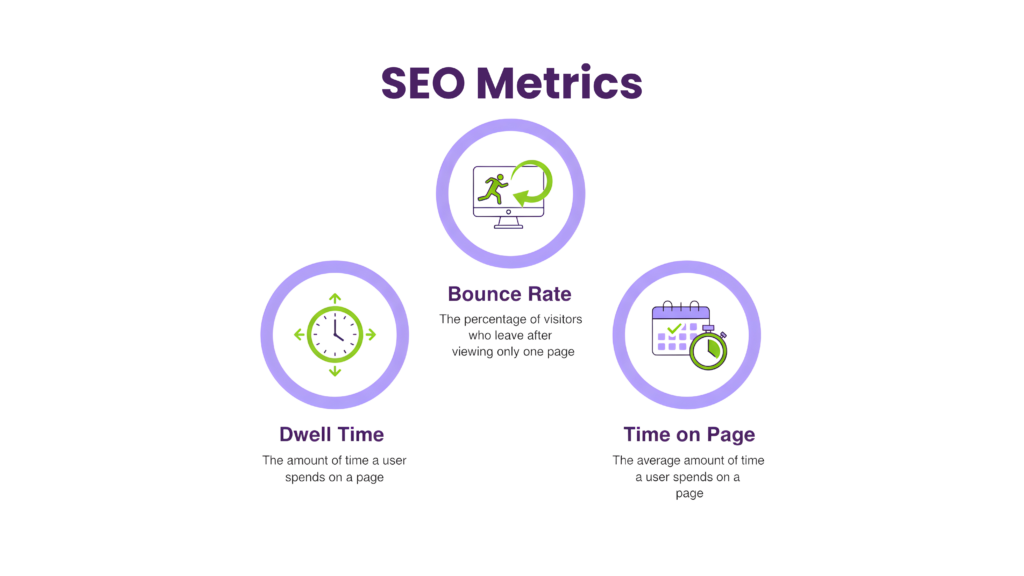
Searchmetrics research revealed top 10 URLs average 3 minutes and 10 seconds for time on site. Longer sessions usually mean better content quality and search query relevance.
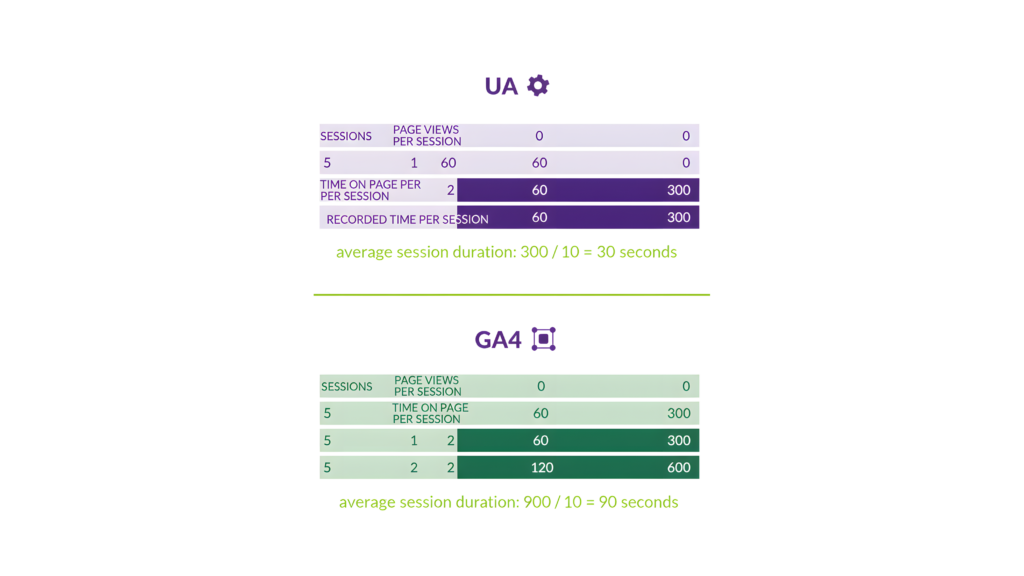
Session duration measures the total time across multiple pages on your site. GA4 lets you track “average engagement time per session,” which shows your website’s active time in a user’s browser. This metric helps you assess the overall site experience rather than single-page performance.
Engaged Sessions Per User: What It Tells You
Engaged sessions per user show how often visitors interact meaningfully with your website. This key metric combines session quantity with engagement quality to reveal your content’s true appeal.
The calculation divides total engaged sessions by active user count. To name just one example, 50,000 engaged sessions from 20,000 unique users would give you 2.5 engaged sessions per user.
This metric reveals more than basic traffic numbers:
- It shows user satisfaction and content value
- It demonstrates visitor retention strength
- It identifies marketing channels bringing quality traffic
More engaged sessions per user often lead to better conversion rates. Visitors who dive deeper into your site tend to complete goal actions more often.
SEO metrics 2025 require tracking these engagement signals to improve your strategy based on real user behavior instead of old vanity metrics. This approach works particularly well for niche markets where a higher education SEO agency might value deep engagement over visitor numbers.
Conversion Metrics That Outrank Backlinks
Traffic numbers alone don’t tell the full story of your SEO success. Your SEO strategy’s value in 2025 depends on turning visitors into customers. Let’s get into how conversion metrics have become more important than backlinks to show if your search engine optimization works.
Organic Conversion Rate by Funnel Stage
The organic conversion rate shows how many search visitors take desired actions on your site. The average ecommerce organic conversion rate stays between 2-3%, but this number changes based on funnel stages and industries.
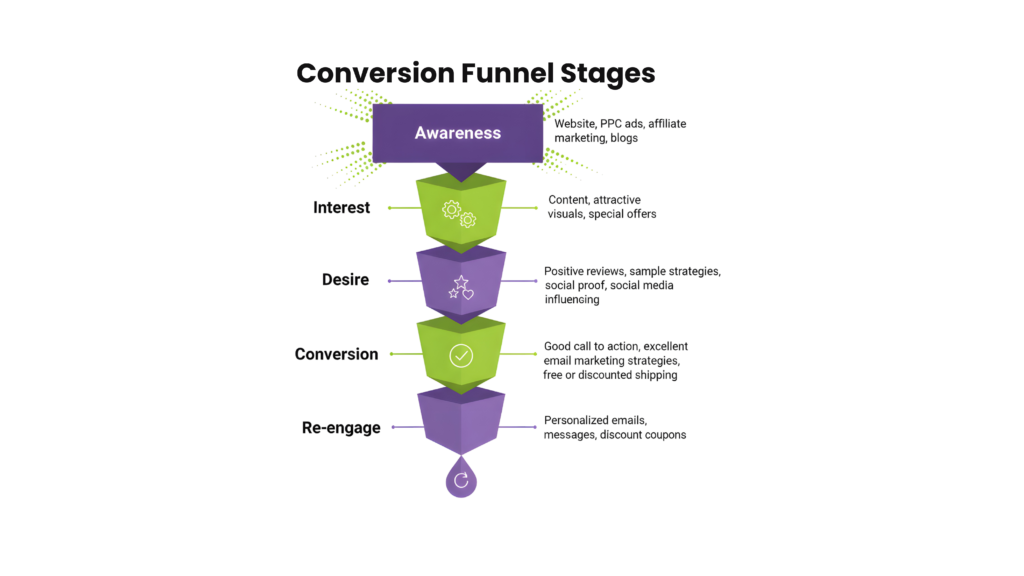
Top-of-funnel metrics show visitor-to-lead conversion typically reaches 1-3%. These rates change as users move deeper into your funnel:
- Visitor to trial conversion: 9% average (12-15% considered exceptional)
- Trial to paid customer: 8-12% average (25%+ considered exceptional)
- With a credit card required during signup: Up to 50% conversion
Your business model affects conversion rates. Product-led growth companies see higher top-of-funnel conversion rates because users can try the product first. Sales-led models might convert more slowly but aim for higher contract values.
Your SEO metrics 2025 strategy should segment organic traffic by intent instead of treating all visitors the same. To cite an instance, blog readers (informational intent) don’t convert like product page visitors (commercial intent).
Tracking Goal Completions in GA4
GA4 uses goals to represent completed activities (conversions) that help your business succeed. GA4 improves on its predecessor by counting every conversion instance within a session, which gives more accurate data.
Goals come in four main categories:
- Destination goals: Track when users reach specific pages, like “thank you” pages
- Duration goals: Show sessions exceeding a specific time threshold
- Pages/Screens per session: Count when users view a certain number of pages
- Event goals: Track specific actions like video views or form submissions
GA4’s funnel visualization shows where users drop off before converting. This helps higher education SEO agency clients understand complex enrollment paths.
GA4 lets you assign monetary values to conversions. If 10% of newsletter subscribers become customers with an average $500 transaction, each signup conversion might be worth $50. This helps measure how your SEO efforts affect business beyond brand mentions and engagement metrics.
Ecommerce Transactions and Revenue Attribution
Online stores can see SEO’s clearest impact by linking organic search to revenue. In GA4, you can find conversions from organic traffic in Reports > Engagement > Conversions by filtering “Session Default Channel Group = Organic Search”.
Revenue attribution models show how credit spreads across customer touchpoints. These models include:
- Single-touch attribution: Gives all credit to either the first or last touchpoint
- Multi-touch attribution: Spreads credit across multiple touchpoints, including:
- Linear: Equal credit to all touchpoints
- Time-decay: More credit to touchpoints closer to conversion
- U-shaped: Most credit to first and last touchpoints
The advanced SEO metrics 2025 analysis should compare assisted conversions with direct conversions. This shows how organic search supports purchases completed through other channels. You’ll see how AI citations and other emerging factors affect the full conversion path beyond the final click.
Note that GA4 usually shows fewer conversions than actual due to privacy tools and cookie consent limits. Cross-reference your analytics data with CRM information to get the most accurate picture of organic search’s impact on business results.
Content Performance Signals for SEO Success
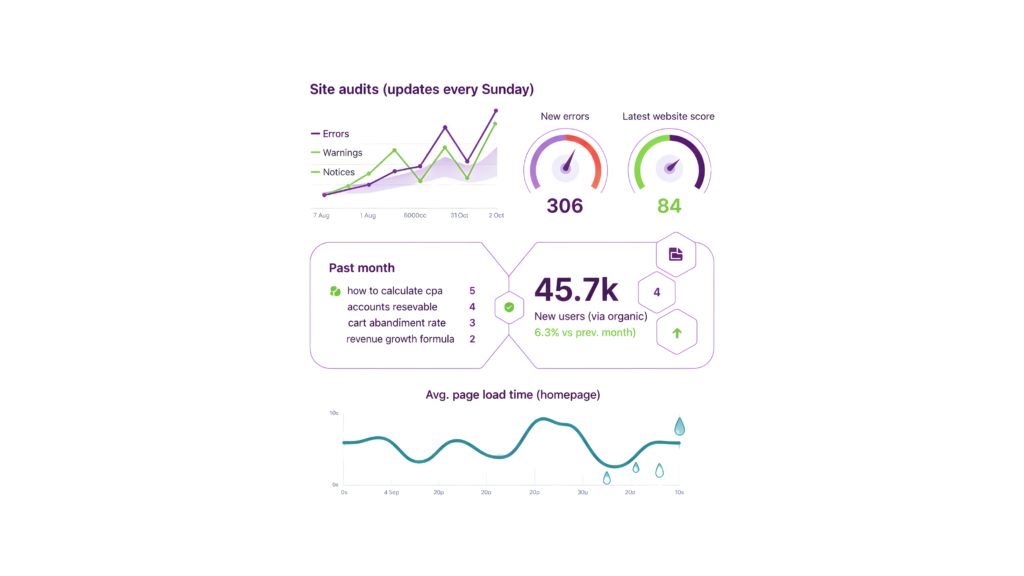
Content performance signals now play a vital role in determining search visibility, going way beyond the reach and influence of traditional SEO measures. Research shows this is a big deal as it means that these metrics give deeper insights into how your audience connects with your material. These insights are a great way to get data for your SEO metrics 2025 strategy.
Content Engagement via Scroll Depth and Clicks
Scroll depth tracking shows exactly how far visitors read through your content before leaving. This metric shows the percentage of your page that users view and gives direct feedback on content quality and relevance. Research shows that getting scroll depth above 50% is good, while hitting 75% means your content really connects with readers.
These points matter when tracking scroll depth:
- Clear objectives should match your page’s purpose
- Pages focused on content should hit 75%+ scroll depth
- Heatmap tools help visualize scroll patterns across devices
Scroll tracking helps B2B websites identify whether visitors see key elements like client testimonials or call-to-action buttons. In fact, many visitors miss your most valuable content—experts call it “false bottoms” where users think they’ve reached the end of a page.
Organic clicks are another key content signal that shows actual traffic from search results rather than just impressions. Unlike rankings or backlinks, clicks show real user interest in your content. This matters more now as click-through rates influence future rankings through Google’s RankBrain algorithm.
Brand Mentions and Social Shares as Ranking Signals
Brand mentions such as references to your company without hyperlinks—have become powerful ranking factors, especially in AI-powered search environments. Search specialists explain that AI search results now favor sites that others mention often. Building brand mentions has become as important as creating backlinks for your SEO metrics 2025 strategy.

Studies show that over 70% of consumers trust brand mentions more than traditional advertisements. These unlinked references help search engines understand your entity status, defining who you are and whether your content belongs in results.
Higher education SEO agency clients benefit from these mentions because:
- Domain authority grows without formal link-building
- Entity recognition improves in specialized academic fields
- Visibility increases in featured snippets and AI overviews
Social shares indirectly help SEO through increased visibility and potential backlink creation. A Chartbeat study revealed an interesting disconnect between shares and reading time—the most-shared content isn’t always the most-read content.
Backlink Alternatives: User Interaction Metrics
User interaction signals have become as important as traditional backlinks for rankings. Key behavioral indicators include:
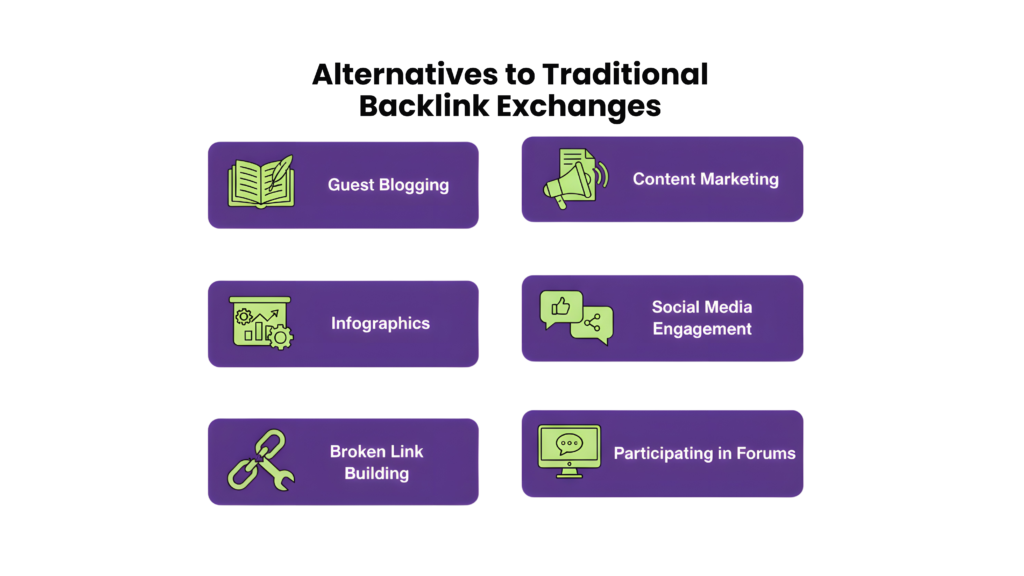
- Dwell time – The Time visitors spend after clicking on search results. Google’s internal documents confirm they track “long click” behaviors as quality signals.
- Content consumption velocity – Reading time versus word count shows whether users engage or just skim.
- Bounce rate vs. engagement rate – Patterns like “pogosticking” show when users quickly return to search results to try different listings.
- Comments and direct interaction – Pages with active comments show user engagement that Google values as quality indicators.
These user interaction metrics paint a clearer picture of content quality than backlinks alone. Some pages with fewer backlinks outrank competitors because their superior user experience makes up for fewer inbound links.
An SEO agency for education clients can track these content performance signals to showcase their expertise and subject matter knowledge in specialized academic fields.
Technical SEO Metrics You Can’t Ignore
Technical foundation metrics power successful SEO strategies in 2025. These metrics determine whether your content shows up or stays hidden in search results. User interaction metrics track audience behavior, while technical SEO metrics ensure search engines can access, index, and display your content properly.
Crawl Errors and Indexation Status in GSC
Google Search Console (GSC) helps you spot technical SEO issues that could hurt your site’s performance. The Coverage report shows which pages Google can index and explains why some pages fail indexation.
Unresolved crawl errors can stop Google from finding or indexing your content properly. GSC groups these errors into distinct categories:
- Server errors (5xx): Indicate your server couldn’t complete Google’s request
- Not found errors (404): Pages that don’t exist but are still linked internally or externally
- Access denied errors (403): Pages Google can’t access due to permission restrictions
- Soft 404 errors: Pages returning 200 status codes that should actually return 404s
Your indexation rate serves as a basic SEO metric standard for 2025. Most sites average around 75% of submitted pages getting indexed. A rate substantially below this suggests technical problems that need quick fixes.
Core Web Vitals: LCP, CLS, and INP Benchmarks
Core Web Vitals now directly influence rankings. Google confirms these metrics affect position in mobile search results. They measure real-life user experience in three key areas:
- Largest Contentful Paint (LCP): Measures loading performance—ideal is under 2.5 seconds
- Cumulative Layout Shift (CLS): Measures visual stability—ideal is less than 0.1
- Interaction to Next Paint (INP): Replaced First Input Delay (FID) in March 2024—ideal is under 200ms
INP measures your site’s response time to clicks and taps. This metric shows overall responsiveness better than before, which matters especially to higher education SEO agency clients who use complex features like course catalogs and application forms.
CrUX data shows only 39% of websites pass Core Web Vitals assessments across all metrics. This creates a competitive edge for sites that focus on technical optimization.
Site Speed Impact on Mobile and Desktop Rankings
Mobile speed now weighs more heavily than desktop speed in Google’s algorithm. This change matches Google’s mobile-first indexing approach, which ranks sites based on their mobile version.
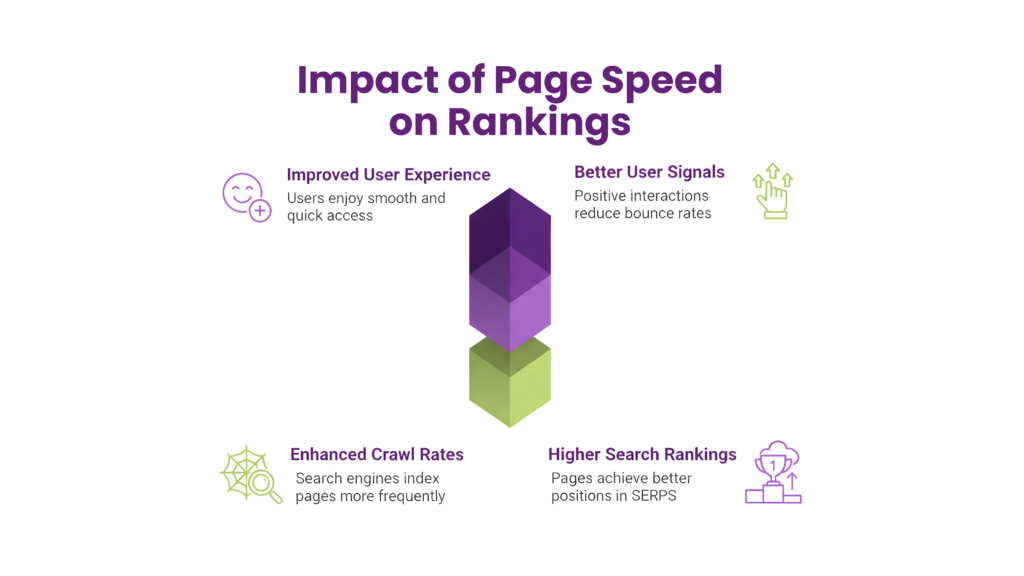
Key speed benchmarks show:
- Pages should load within 3 seconds on mobile devices
- Faster pages keep visitors 70% longer
- Each second of delay cuts conversions by 7%
Mobile optimization matters more since 63% of Google searches happen on mobile devices. Education SEO agencies should prioritize mobile performance because students often research schools on their phones.
PageSpeed Insights helps find specific issues affecting Core Web Vitals scores. After fixes, you should track improvements using both lab data and field data to confirm real-life performance gains.
Better technical performance boosts other SEO metrics for 2025, including engagement rates and brand mentions. This creates a positive cycle where technical excellence drives content performance and user engagement.
Traffic Quality Over Quantity
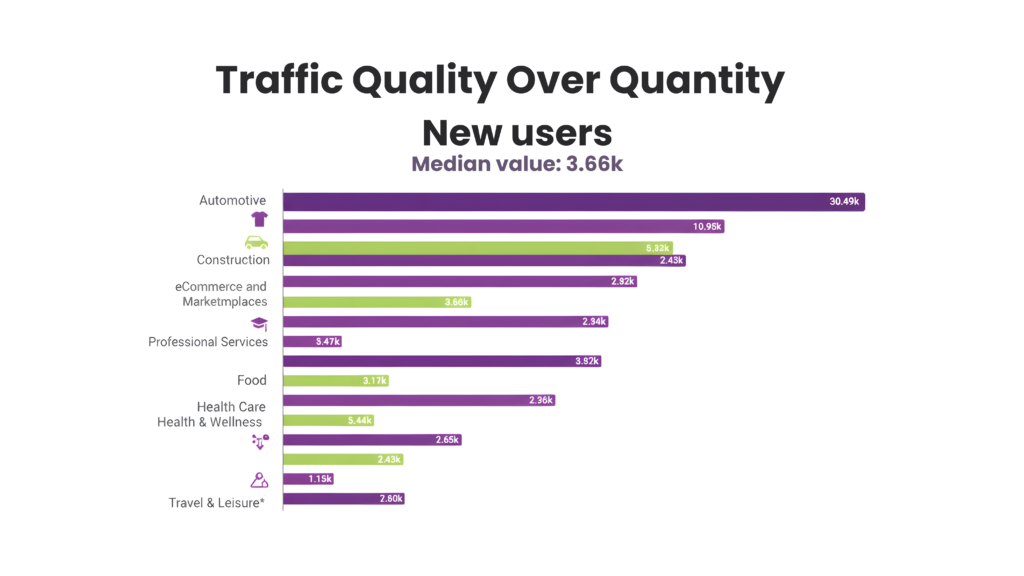
The landscape of SEO success has changed dramatically. Quality and value of visitors to your site matter more than raw traffic numbers in SEO metrics 2025.
Organic Traffic Volume vs Organic Traffic Value
Google Analytics makes it easy to measure organic traffic volume by selecting “Organic Traffic” in the Audience Overview segment. This number tells only part of the story. Organic traffic value gives you a better picture – it shows how much you would spend on Google Ads to get the same traffic.
Let’s look at a real example. Your site brings in $386,665 worth of organic search traffic each month. You’ll see positive ROI if your SEO costs stay below this amount. This helps you show stakeholders the financial benefits of SEO investment.
The value calculation uses this simple formula: Estimated monthly value = Total monthly searches × CTR[Position] × Value per visit
Segmenting Traffic by Funnel Stage and Intent
Business value varies among visitors. Low conversion rates despite high traffic often mean you rank for the wrong queries or fail to meet user needs. Your SEO metrics 2025 will work better if you break down organic traffic into:
- Buyer journey position (awareness, consideration, decision)
- Search intent (informational, navigational, transactional)
- Account value (for B2B organizations)
These segments show that targeted visibility matters more than random traffic. This insight proves valuable for a higher education SEO agency that deals with complex student enrollment experiences.
AI Citations and LLM Traffic as Emerging Metrics
ChatGPT and Perplexity now give instant answers and create brand visibility without clicks. This transformation requires tracking new SEO metrics in 2025:
- AI visibility – your brand’s presence in AI-generated responses
- Share of voice – your position in AI platform mentions
- AI referral traffic – website visits from AI platforms
These metrics help SEO agencies for education clients understand their true brand mentions beyond traditional analytics. AI platforms verify your expertise by citing your content.
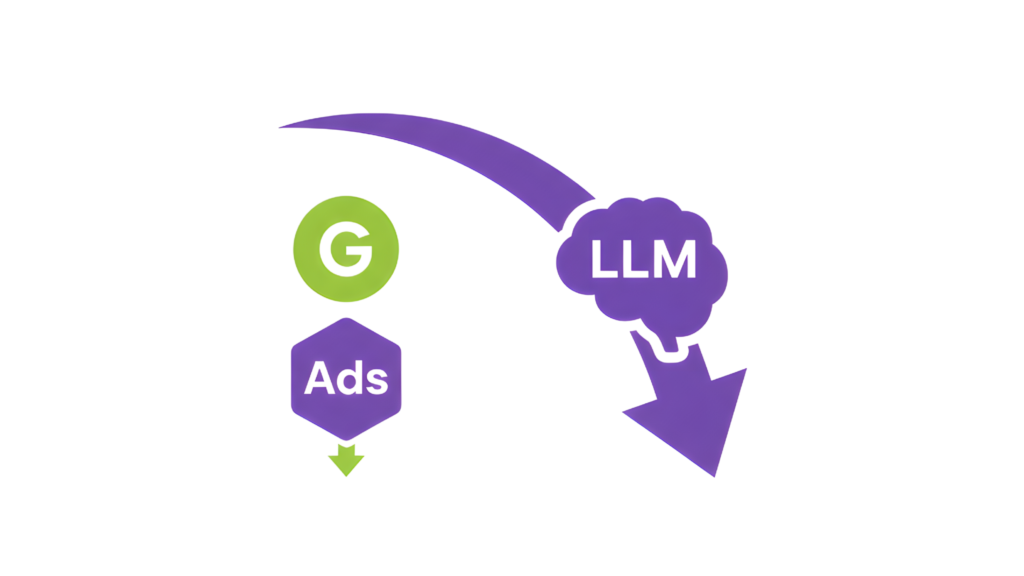
AI mentions can reach thousands more users than direct clicks. This makes AI visibility crucial even without immediate traffic gains.
Why Choose Rankfast as Your SEO Agency
The right SEO partner should show real capabilities rather than just make promises. Rankfast differentiates itself by focusing on measurable outcomes instead of traffic numbers alone.
Custom Reporting for Higher Education SEO Agency Clients
Rankfast creates customized SEO strategies that match your educational institution’s goals. Their reporting has these advantages over generic approaches:
- Analytics that reveal keyword performance and user behavior
- Technical audits that identify ways to improve infrastructure
- Weekly content updates that match your institution’s style
As a higher education SEO agency, Rankfast knows that enrollment growth—not just rankings—matters most. They connect SEO metrics 2025 with student acquisition goals in their reports.
Proven Results for B2B and Education Verticals
The numbers tell Rankfast’s success story:
- Over 100 keyword rankings on Google search results pages
- More than 20 keywords in the top 10 positions
- Results show up within the first 30 days
Rankfast’s team adapts to each institution’s requirements. They maintain your academic voice while improving engagement rates and brand mentions.
Transparent Metrics That Line Up With Business Goals
Rankfast builds custom success plans based on your goals:
- ROI-based plans that measure sales against investment
- Brand Awareness plans that track impressions and clicks
- Growth-focused plans that combine traffic, ROI, and awareness metrics
Their approach looks at every digital channel to find gaps and opportunities. You can see real results from your SEO metrics 2025 strategy through transparent reporting that links improvements in AI citations to business outcomes.
Rankfast becomes your partner who focuses on metrics that drive your institution’s success when you choose them as your SEO agency for education.
Conclusion
Search algorithms keep getting smarter, so your SEO strategy must go beyond just focusing on backlinks. Your success in modern SEO relies on an all-encompassing approach that puts user engagement, conversions, content performance, and technical excellence first. These metrics paint a clearer picture of your website’s actual performance than the number of links ever could.
The metrics we discuss in this piece – engagement rate, dwell time, conversion funnels, content interaction signals, and Core Web Vitals – directly affect your profits. Quality traffic that converts should be your focus rather than just higher visitor numbers. This method brings real business results instead of flashy metrics that look good but add little value.
Strong technical foundations make all the difference. Even excellent content won’t perform well without proper indexing, quick loading times, and mobile optimization. Your 2025 strategy should give equal weight to technical SEO health since it supports all other metrics.
Effective SEO today needs tracking the right metrics at every funnel stage. This becomes crucial, especially when you have specialized industries where you just need more than basic optimization. You’ll want an SEO partner who gets these detailed metrics and can turn them into business growth.
Rankfast brings exactly this expertise with custom reports that link SEO performance to your business goals. You can achieve lasting search visibility that drives actual results through targeted strategies that focus on meaningful metrics instead of vanity numbers. Ready to reshape the scene of your SEO metrics? Contact Rankfast today to build a strategy based on metrics that truly matter to your business growth.
FAQs
Q1. How has the importance of backlinks changed in modern SEO?
While backlinks are still valuable, modern SEO focuses more on user engagement metrics, content quality, and technical performance. Factors like dwell time, conversion rates, and Core Web Vitals now play a more significant role in determining search rankings.
Q2. What are some key engagement metrics to track in 2024?
Important engagement metrics include engagement rate (as measured in GA4), dwell time, session duration, and engaged sessions per user. These metrics provide insights into how users interact with your content and can significantly impact your search performance.
Q3. How do AI citations affect SEO strategies?
AI citations are emerging as valuable indicators of content quality. They represent mentions of your brand or content in AI-generated responses, which can influence visibility and authority even without direct website traffic. Tracking AI visibility and share of voice is becoming increasingly important for comprehensive SEO strategies.
Q4. What are Core Web Vitals, and why are they important?
Core Web Vitals are a set of specific factors that Google considers important in a webpage’s overall user experience. They include Largest Contentful Paint (LCP), Cumulative Layout Shift (CLS), and Interaction to Next Paint (INP). These metrics directly impact mobile search rankings and overall site performance.
Q5. How can businesses measure the true value of their organic traffic?
Instead of focusing solely on traffic volume, businesses should calculate organic traffic value – an estimate of how much they’d pay for equivalent traffic through paid advertising. This approach helps justify SEO investments and provides a clearer picture of SEO’s financial impact on the business.
Leave a Reply