AI-driven search is fundamentally changing the way you measure your SEO success. Google AI overviews now appear in 13.14% of all US desktop searches, up from just 6.49% in January. This dramatic change has altered the map of visibility metrics in the digital world. Your traditional SEO metrics could be giving you wrong signals. Recent data shows nearly 60% of Google queries end up as zero-click searches. Automated traffic has surpassed human activity for the first time in a decade and now accounts for 51% of all web traffic. Publisher search traffic has plummeted 26% since the rollout of AI Overviews – that’s one in four visits vanishing. Your content still gets seen—people just consume it differently now. Modern SEO performance measurement needs fresh approaches to tracking engagement and user signals that show how AI systems interact with your content. You’ll find the key metrics to monitor your visibility in AI-generated responses. Here, we will cover ways to implement zero-click reporting coverage and specific strategies that optimize your content for both human readers and AI SEO analytics.
The Shift from Clicks to Context in AI Search
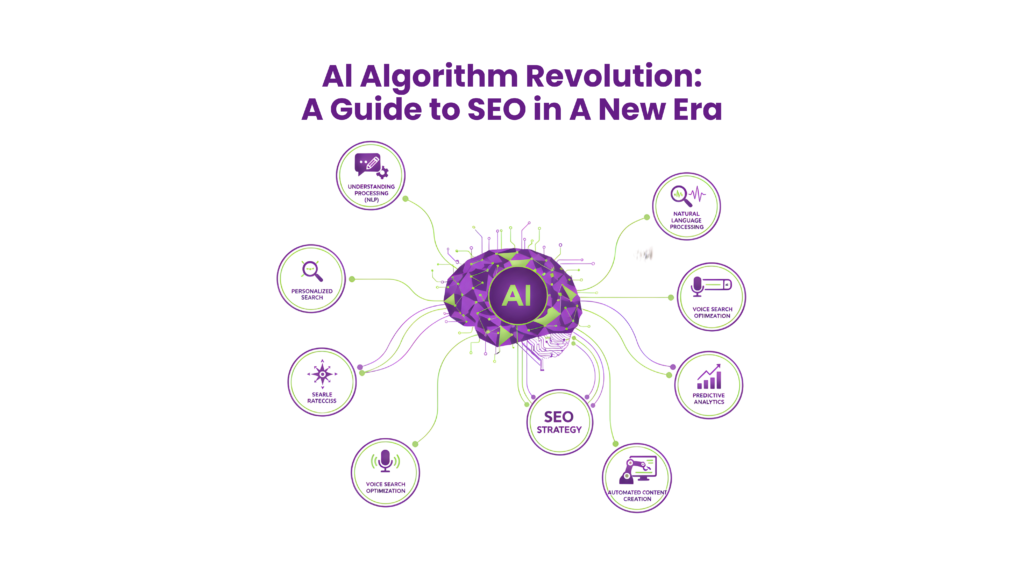
The link between search visibility and website traffic is breaking apart faster than ever. Recent data reveals a big gap between what users see and what they do, which changes how you should handle AI SEO analytics.
Why Impressions No Longer Equal Engagement
Today’s digital world makes impressions misleading. A clear example comes from Search Console data that shows impressions more than doubling while click-through rates dropped from about 1.5% to less than 0.5% after AI Overviews launched. This trend shows up in all industries, and SEO experts report higher impression numbers but far fewer clicks.
Impressions in AI search show algorithmic relationships, not user actions. Your content gets impression credit when it appears in an AI-generated answer, even though users experience it differently. These impressions happen before users decide to leave their AI environment, making them quite different from regular engagement metrics.
Your business needs to rethink what success means. Impressions aren’t just vanity metrics anymore; they show your content’s authority and relevance in AI knowledge graphs.
How AI Overviews and Chatbots Change User Behavior
User behavior changes significantly when AI-generated summaries appear in search results:
- Users click traditional search results only 8% of the time with AI summaries, compared to 15% with standard results
- Just 1% of users click sources cited in AI summaries
- 26% of users end their search after seeing a page with an AI summary, versus 16% with traditional results
These numbers show a major change in how people find information. Users get complete answers right in the search results instead of visiting websites. People make decisions before clicking, and those who do click are usually further along in their buying journey.
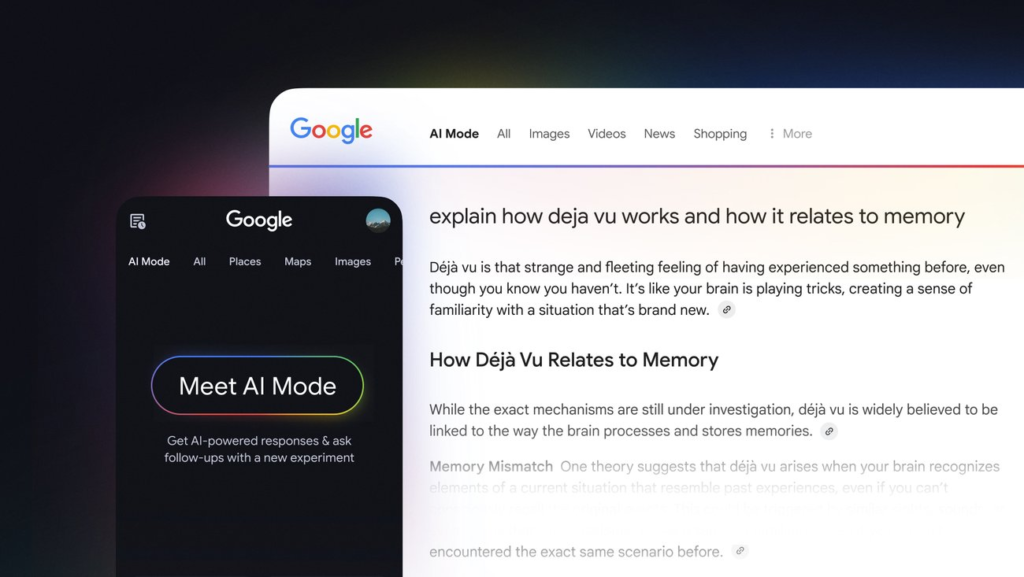
This shift goes beyond Google. Half of all consumers actively look for AI-powered search engines, and most call it their main source for buying decisions. ChatGPT users spend about 7 minutes and 46 seconds per session, showing they prefer AI platforms but click fewer external links.
The Rise Of Zero-Click Search And What It Means For You
Zero-click search has become the norm. Nearly 60% of Google searches end without a click, and experts predict this number will pass 70% by 2025.
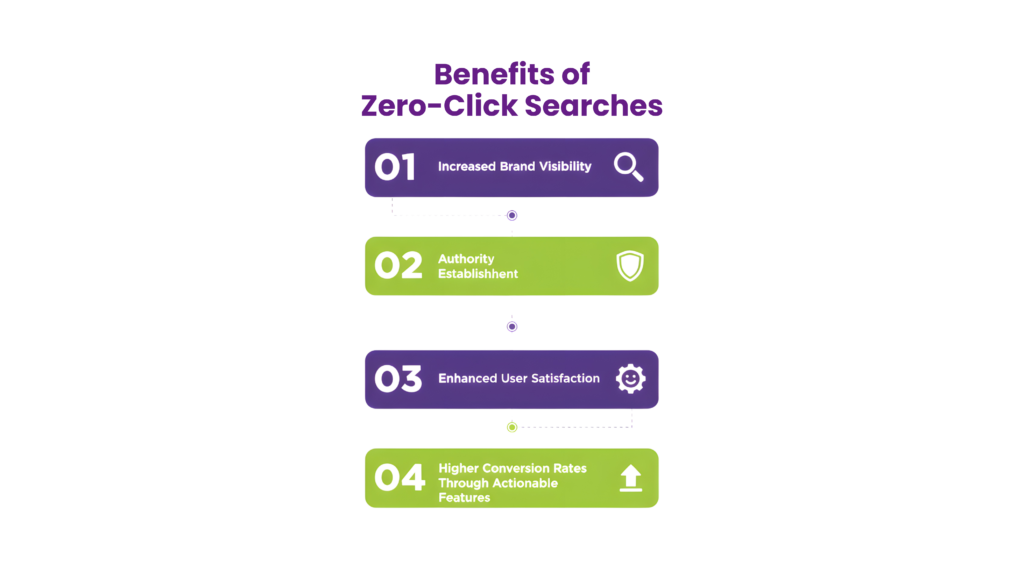
This creates both challenges and opportunities for your business. While organic traffic might drop by 15-25%, zero-click doesn’t mean people won’t see your content. Your information might reach more people than before, just not on your website. One expert explains, “When your insights inform the answers people read, your healthcare brands SEO services recognition in durable ways.”
You need to change from tracking clicks to measuring new metrics that show your presence in AI-generated content:
- AI citation frequency: How often AI-driven responses use your content
- Source authority score: How algorithms rate your content’s trustworthiness
- Entity presence index: How well AI environments recognize your brand
The right engagement tracking and user signal monitoring will help you measure your actual reach in today’s search ecosystem, even as direct traffic decreases.
Core AI Visibility Metrics You Should Be Tracking

The AI-dominated search world needs new metrics to track your digital presence. You can’t rely on traditional analytics anymore because they don’t show how AI engines process and present your content.
AI Citation Frequency In Generative Answers
Your brand and content’s appearance as references in AI-generated answers now drives AI presence tracking. You should focus your fundamental metrics on mentions and citations within AI responses. These indicators tell you if AI models think of your content as a trusted source for specific queries.
AI models see your brand as a reliable authority when you have high-quality, accurate citations. This view directly affects how well your content strategy works. The “AI referral traffic” shows you the number of visitors who found you through AI platforms.
The frequency of citations shows visibility trends over time and proves if your AI optimization efforts work. SE Ranking’s AI Results Tracker helps monitor these brand mentions for your target keywords and tracks your ranking evolution.
Share Of Voice In AI Summaries Vs Competitors
AI Share of Voice (AI SoV) tells you how often your brand shows up in AI-generated responses compared to your competitors. ChatGPT now has nearly 800 million weekly active users and handles over 1 billion queries daily, making it vital to dominate this space.
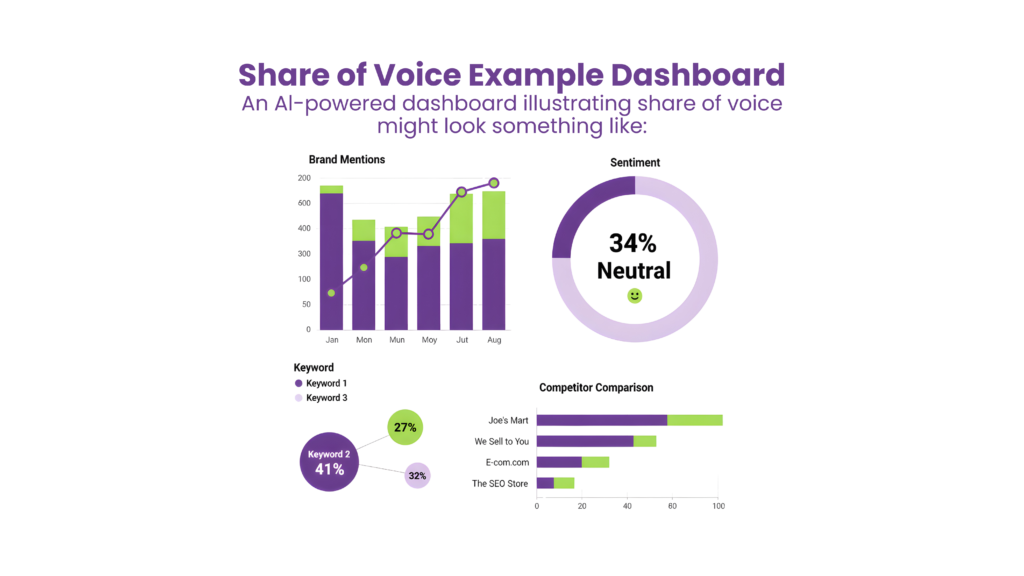
A strong AI SoV will give you:
- Visibility in ChatGPT, Perplexity, and Google’s AI Overviews
- Trust through consistent mentions and citations
- An edge over competitors who haven’t optimized for AI responses yet
You can find your AI SoV by dividing the number of AI responses that mention your brand by the total prompts tested, then multiplying by 100. HubSpot’s Share of Voice Tool can look at queries across GPT-4, Perplexity, and Gemini at once to measure your complete digital share of voice.
Brand Sentiment Analysis In AI-Generated Content
Brand sentiment in AI goes beyond simple mentions. It measures how AI-generated responses talk about your brand. AI sentiment analysis differs from traditional tracking because it looks at how AI models describe your products, services, and company when they answer user questions.
Users see AI-generated information as more objective than individual reviews. A negative brand description from ChatGPT often gets treated as fact rather than opinion.
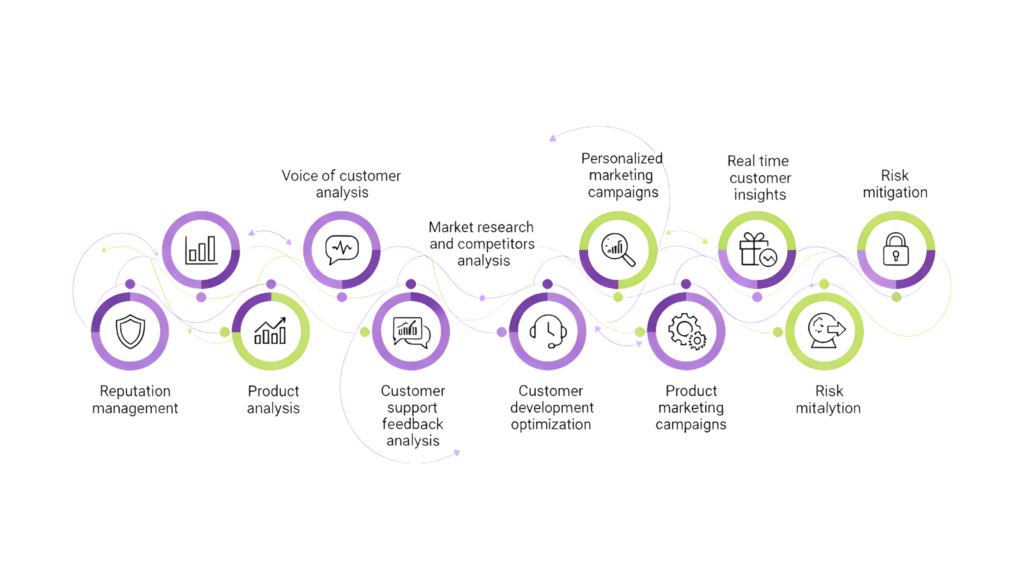
Good sentiment analysis looks at the full response context, platform-specific patterns, sentiment trends over time, and attribute accuracy. You need to check sudden sentiment changes right away, while better sentiment shows your content strategy works.
Semantic Coverage Across Topic Clusters
Search engines and AI systems understand your content better through semantic coverage. You build stronger AI visibility by covering topics completely instead of focusing on individual keywords.
Topic clustering builds a network of connected content that shows your expertise. This method proves to AI systems that you know your subject well and keeps users engaged by answering related questions.
Semantic SEO techniques can boost organic traffic by 40-60% when done right [link_2]. You want complete coverage that feels natural and helpful, covering all aspects of your topic to match different search intents.
Look at your performance beyond target keywords. Check semantic variations you didn’t target specifically, this shows your semantic coverage strategy works.
How to Measure and Improve AI SEO Performance
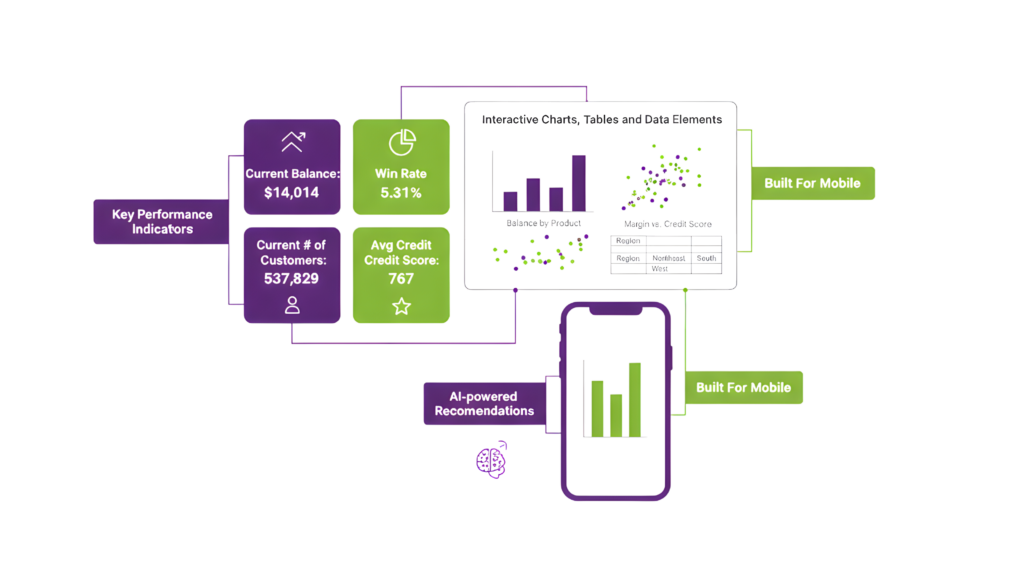
You need practical ways to measure your digital presence to make AI SEO analytics work. Traditional metrics don’t tell the whole story anymore. You should find better ways to track and improve how visible you are to AI systems.
Using Prompt Testing To Simulate AI Queries
A test matrix helps turn guesswork into measurable experiments. You can compare different models (GPT-4, Claude 3, etc.) against various prompt versions to review response quality. This helps you see which prompts give accurate results across platforms.
The best results come from treating prompts like “versioned, first-class objects” that you can write, update, and track with your code. You should set up automated tests (“autoevals”) that score responses based on specific criteria instead of just looking at them. This method shows which content formats get cited most often.
Tracking Brand Mentions Across ChatGPT, Claude, and Perplexity
Keeping an eye on AI platforms gives you crucial information about your online presence. Tools like SE Ranking’s AI Results Tracker show when and how AI engines mention your brand. You can see if your brand shows up in AI answers for specific queries, where it ranks, and how visibility changes.
Looking beyond just the number of mentions helps. Track how often you’re cited, your average position, and likely traffic from AI results. Looking at how you stack up against competitors helps you find ways to outrank them and see which content gets cited more.
Monitoring User Engagement After AI Exposure
People who come from AI platforms act differently from other visitors. By February 2025, AI-driven traffic generated 12% more page views, and sessions lasted 41% longer than non-AI traffic. These differences show that AI platforms help users make decisions before they visit your site.
Behavioral analytics show how AI visitors use your site compared to other channels. This analysis reveals if they scroll more, convert faster, or enter your funnel differently. You can use this information to customize experiences with product teasers or signup prompts.
Evaluating Conversion Quality From AI-Driven Traffic
AI traffic shows impressive conversion rates compared to traditional channels:
- AI traffic converted 43% less than non-AI traffic in July 2024, but the gap shrank to 9% by February 2025
- AI visits matched traditional visits in revenue per visit by December 2024
- AI traffic converts especially well for research-heavy purchases like consumer electronics
Advanced attribution modeling helps measure this performance by connecting AI citations to eventual conversions. This means tracking longer customer journeys since users might find your brand through AI but convert later through direct visits.
The best way to measure user signals is to combine engagement tracking with surveys about how people found you. This approach gives you the right information to calculate ROI over time.
Building a Future-Proof SEO Strategy with AI in Mind
AI systems now determine which content people see online. Your SEO strategy needs a complete rethink to stay relevant. Success depends on optimizing content that appeals to both human readers and machines simultaneously.
Creating Content For Both Humans And Machines
Generic content barely registers on AI’s radar anymore. Your content should cover topics thoroughly and answer common questions while exploring related concepts. Content backed by solid data, research, and expert opinions helps AI systems recognize your expertise. The reader’s experience remains your top priority. You need clear headings and a logical structure that delivers real value.
Structuring Internal Links For Topic Authority
Internal linking has evolved beyond basic SEO into a powerful visibility tool. These connections help AI systems understand how your content fits together in the age of AI SEO analytics. The best results come from:
- 3–5 internal links per 500 words
- 2–3 contextual links to supporting topics
- 1 upward link to main pillar or parent pages
This approach builds a knowledge network that strengthens your authority on specific topics.
Implementing a Schema For AI Visibility
Schema markup bridges the gap between your content and AI systems. Content with a detailed schema has a 36% higher chance of appearing in AI-generated summaries. The JSON-LD format works best for implementation. Your schema, internal links, and metadata should align perfectly to help AI systems verify relationships and minimize confusion.
Using Engagement Tracking To Refine Content Strategy
Engagement tracking gives you vital user signals about content performance. Time on page, scroll depth, and interaction hotspots reveal valuable insights. These metrics show what resonates with your audience and why. You can spot patterns in successful content and adjust your approach. Focus on content formats and topics that consistently deliver strong results.
Why Choose Rankfast for AI-Driven SEO Services
Your choice of an AI SEO analytics partner will shape your success in this changing landscape. Rankfast excels with solutions that boost visibility in AI-driven search.
Custom AI Visibility Dashboards For Your Brand
Rankfast builds custom dashboards that gather vital AI visibility data through APIs and SERP simulators. These dashboards track your brand mentions on ChatGPT, Claude, Perplexity, and Google AI Overviews. You get immediate updates about your position against competitors. Their custom solutions give you useful visibility metrics adjusted for your industry.
Expertise In Healthcare Brands’ SEO Services
Rankfast shines as a leader in healthcare brands’ SEO services and knows what medical businesses need for compliance. The team creates custom marketing plans because each business is different. They follow YMYL (Your Money Your Life) principles strictly to ensure your medical content meets the high trust standards that AI systems need.
Integrated Analytics For User Signals And Sentiment
Rankfast blends user signals with structured data, digital behavior, and sentiment tracking. The platform spots warning signs through shifts in tone or behavior. You can fix problems before customers leave. This complete view shows how experiences develop and where they fall short.
Dedicated Support For GEO Implementation
Rankfast goes beyond metrics to provide complete Generative Engine Optimization support. They adjust models to match brand-specific prompt language. Their implementation methods boost AI visibility while creating authentic, value-driven content.
Conclusion
SEO strategy must adapt as AI reshapes the search landscape. Clicks and impressions now tell just part of the story. Your digital visibility needs a complete picture that has AI citation frequency, share of voice, brand sentiment, and semantic coverage.
Numbers prove this change affects your business by a lot. Publisher traffic has dropped 26% since AI Overviews launched, and 60% of searches result in zero clicks. You need new ways to measure your true effect in this space.
Your success depends on content that works for both humans and AI systems. You need complete topic coverage, smart internal linking, proper schema implementation, and constant improvements based on user data.
Getting good at these new metrics takes expert knowledge. Rankfast’s custom AI visibility dashboards track how you perform on major AI platforms. Their website traffic analytics are a great way to get the knowledge needed in this new search world.
Brands that know how to measure and improve AI visibility will own SEO’s future. Smart analytics today will help for all businesses, including seo services healthcare, and technologies come next.
FAQs
Q1. How can I measure the success of AI SEO efforts?
To measure AI SEO success, track metrics like AI citation frequency, share of voice in AI summaries, brand sentiment in AI-generated content, and semantic coverage across topic clusters. Also, monitor referral traffic from AI platforms and use prompt testing to simulate AI queries.
Q2. What are some key AI visibility metrics to track?
Important AI visibility metrics include AI citation frequency in generative answers, share of voice in AI summaries compared to competitors, brand sentiment analysis in AI-generated content, and semantic coverage across topic clusters. These metrics help gauge your digital presence in AI-driven search environments.
Q3. How does AI search behavior differ from traditional search?
AI search behavior shows higher engagement but fewer clicks. Users who encounter AI summaries are less likely to click through to websites, with nearly 60% of searches now ending without a click. However, AI-referred visitors tend to have longer sessions and higher conversion rates when they do visit sites.
Q4. What strategies can improve my content’s visibility to AI systems?
To improve AI visibility, create comprehensive, authoritative content that covers topics in-depth. Implement strategic internal linking to establish topic authority, use schema markup to help AI systems understand your content, and continuously refine your strategy based on engagement data from AI-referred traffic.
Q5. How can I adapt my SEO strategy for the AI-driven search landscape?
Adapt your SEO strategy by focusing on creating content for both humans and machines, structuring internal links to demonstrate topic authority, implementing schema markup for better AI interpretation, and using engagement tracking to refine your content strategy. Consider partnering with specialized agencies for custom AI visibility dashboards and analytics.
Leave a Reply