Google’s organic search results drive 43% of all ecommerce traffic. The catch? About 75% of users never look beyond the first page of search results. Your BigCommerce store might be losing valuable traffic if you haven’t optimized it properly. SEO for ecommerce gives your business exceptional returns compared to other marketing channels. The numbers speak for themselves – almost 90% of personalization efforts lead to positive ROI. Site speed is a crucial factor in your success. A one-second delay in loading time reduces conversion rates by 7%, and a three-second delay leads to a 20% drop in completed purchases. A specialized BigCommerce SEO agency can significantly improve the performance of your store. This can help you reach and go beyond the baseline 3% conversion rate that every online store needs. The right technical optimization and content strategy will help you climb search rankings and double your store’s conversions.
Understanding SEO for E Commerce Success
Online commerce requires more than just an attractive storefront. Search engine visibility has become the lifeblood of e-commerce success. This visibility determines whether potential customers will find your products.
Why Organic Traffic Matters More Than Ever?
The numbers tell a compelling story. Organic search guides approximately 53% of all website traffic. More than half of potential customers find businesses through search engines rather than paid channels. Mobile devices now account for 53% of all e-commerce traffic. This highlights why search optimization and mobile responsiveness must work together.
Your BigCommerce store gains several clear advantages from organic traffic:
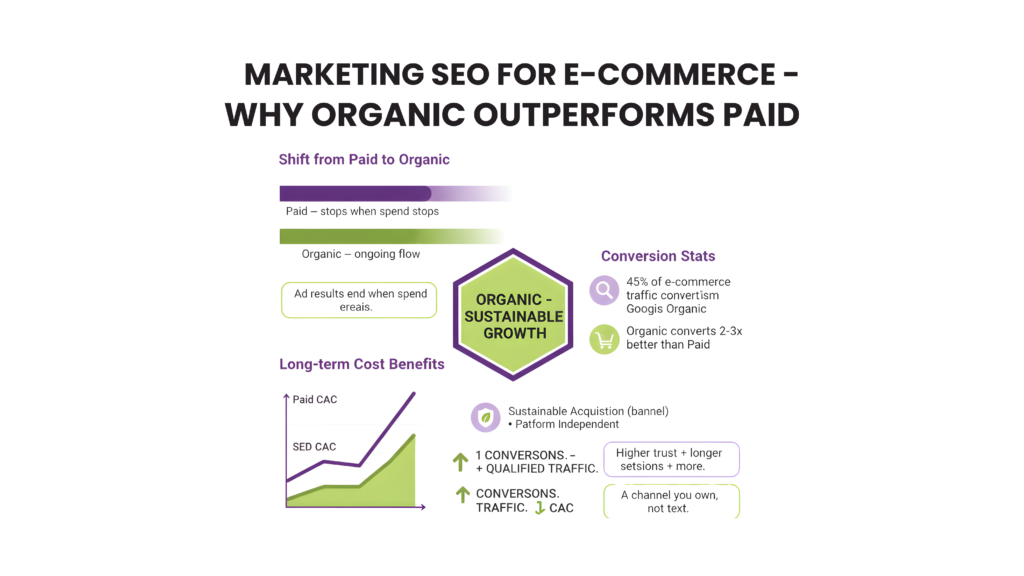
- Cost-effectiveness – Organic traffic keeps bringing visitors without ongoing costs, unlike paid traffic that stops when you stop spending. The cost per lead remains lower with organic traffic compared to paid channels.
- Higher conversion potential – Organic leads convert at an impressive 14.6% on average. This rate triples the industry standard conversion rate of 5%.
- Improved credibility – People trust organic search results more than paid advertisements. Organic searches get clicked 8.5 times more often than paid advertisements.
- Long-term sustainability – The right SEO approach helps your BigCommerce store build compound traffic over time instead of requiring constant investment.
Recent data shows B2B businesses earn twice the revenue from organic search compared to all other digital channels combined. Working with a specialized bigcommerce seo agency isn’t optional anymore—it’s vital to sustainable growth.
How SEO Affects Conversion Rates in Online Stores
SEO does more than attract traffic—it turns visitors into paying customers. Research shows that e-commerce seo services can raise conversion rates by up to 25%. Page speed exemplifies this relationship. mPulse Mobile’s research reveals:
- Pages loading in 2.4 seconds achieved a 1.9% conversion rate
- At 3.3 seconds, conversion rates dropped to 1.5%
- At 4.2 seconds, conversion rates fell below 1%
- At 5.7+ seconds, conversion rates sank to just 0.6%
Small changes create big financial results. Walmart’s conversion rates grew 2% for every second faster their pages loaded. Mobify’s homepage conversions increased 1.11% for every 100ms improvement in load time.

Technical SEO elements like page structure optimization and site architecture keep visitors engaged. Quick access to desired products reduces bounce rates and creates more conversion opportunities. Good broken link management prevents customers from hitting dead ends while shopping.
On-page SEO goes beyond keyword placement. Every element needs optimization to give users a better experience. A well-laid-out site helps customers find products easily, which cuts bounce rates and boosts sales. Mobile optimization has become essential now that more people shop on their phones.
Page Structure Optimization for Better Rankings
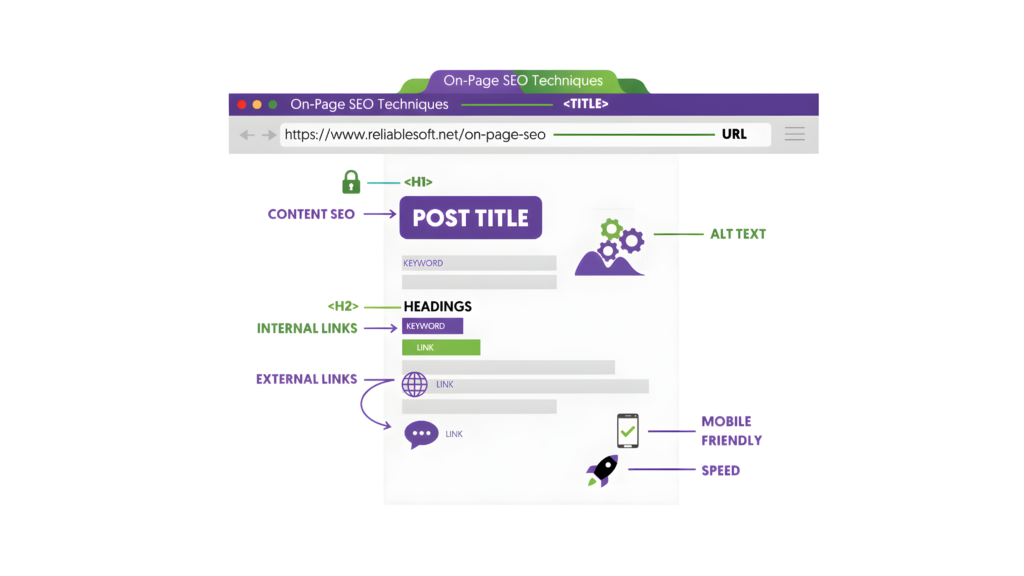
A well-laid-out page architecture is the foundation of page structure optimization that users and search engines can understand easily. Your BigCommerce store must focus on crawlability so search engines can find, understand, and index your content quickly.
Optimizing URLs and Breadcrumbs for Crawlability
Your URL structure directly affects how search engines crawl and index your BigCommerce store. Web crawlers mimic search engine behavior to determine how Google and other search engines will see your site. A thoughtful URL structure helps Google find and retrieve your web pages efficiently.
Here’s how to optimize your URLs for better crawlability:
- Keep URLs descriptive yet concise – Use relevant keywords that describe the page content instead of long ID numbers. /product/black-t-shirt-with-white-collar works better than /product/3243.
- Use hyphens between words – Separate words with hyphens (-) not underscores (_), spaces, or other characters. Search engines identify concepts within the URL better this way.
- Maintain a logical hierarchy – BigCommerce stores should use structures like domain.com/category-name/product-name to show relationships between pages clearly. This flat site architecture makes product pages available within three clicks from the homepage.
- Eliminate duplicate content issues – Each product needs one unique URL. Duplicate content confuses users and search engines, which leads to lower rankings and fewer conversions.
Breadcrumbs are crucial to boost your store’s crawlability. These navigation aids show users their location on your site and help Google understand your site structure. Properly implemented breadcrumbs show up in search results and give users a clear overview of a page’s location on your site.
Breadcrumbs also help visitors quickly find their way around your website, which ends up improving your SEO performance. They give search engines extra context about your content organization.
Using H1-H3 Tags Strategically on Product Pages
Header tags work as structural markers that create a clear content hierarchy on product pages. Each tag serves a specific purpose:
- H1 tags work as the page’s main focus—the title of the page. Use just one H1 tag per page with your main product name and primary keywords.
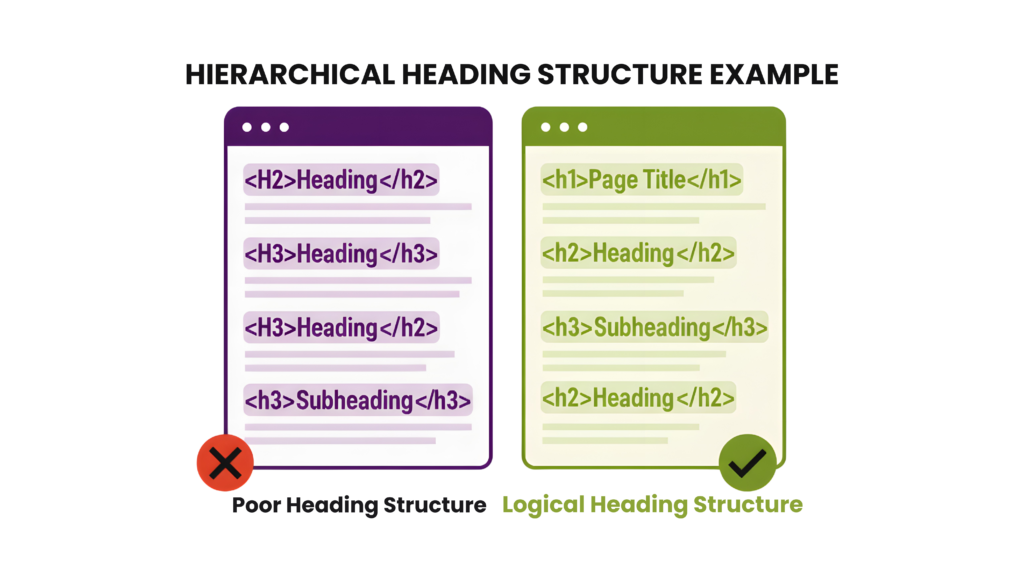
- H2 tags split content into major sections like product descriptions, features, or specifications. They act as chapter headings that outline the main themes in different page sections.
- H3 tags break down information under H2 sections with more detail. An H2 “Product Features” section might have H3 tags for “Material,” “Dimensions,” and “Care Instructions.”
Header tags bring several benefits to your BigCommerce store. They make content easier to scan. Research shows that articles with good heading structure keep readers interested longer and have lower bounce rates. Header tags also let search engines understand your content’s structure better, as Google uses them to make sense of your pages.
Add relevant keywords naturally when optimizing header tags. Product pages should have the product name in H1s, major features in H2s, and specific details shoppers want in H3s.
A bigcommerce seo agency knows these technical details and can set up proper page structure optimization throughout your store. Good URL architecture and header tags create better search visibility and user experience—key factors that drive more conversions.
Mobile Optimization and Core Web Vitals
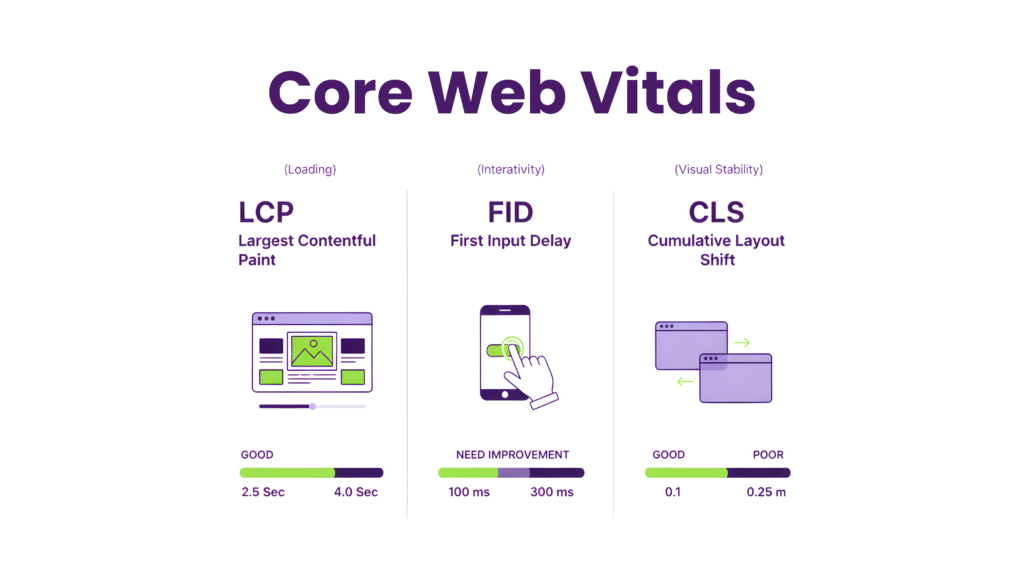
Your ecommerce store’s performance on smartphones and tablets affects your revenue in today’s mobile-first world. Mobile devices now make up 53% of all e-commerce traffic. Making your store work well on mobile isn’t a choice – it’s crucial to stay in business.
Testing Mobile Responsive Ecommerce Layouts
Your BigCommerce store might frustrate mobile users even with a beautiful desktop experience if you don’t test it properly. Emulators and simulators help with the original testing, but can’t match ground conditions that affect user experience.
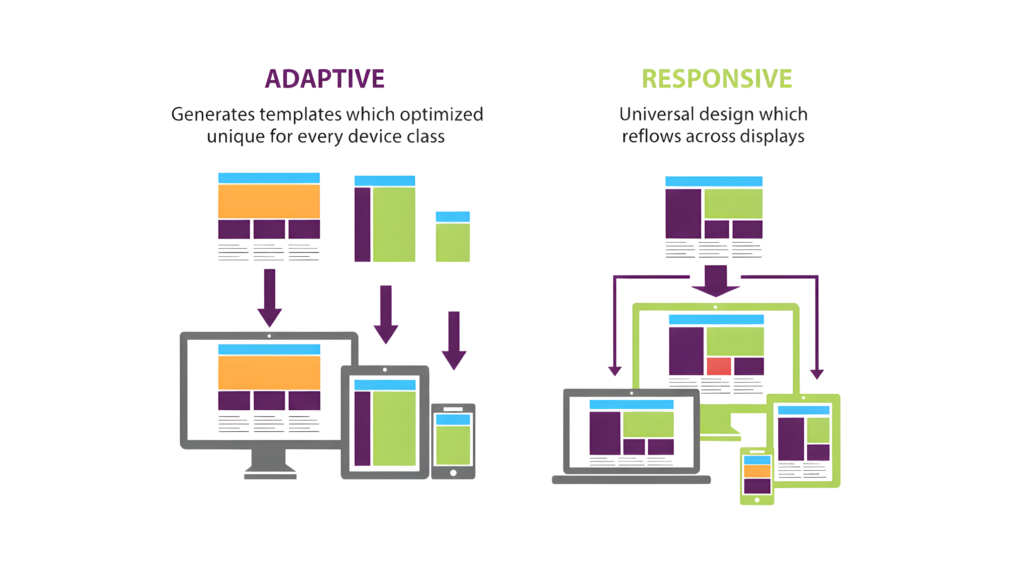
When you test your mobile-responsive ecommerce store on actual devices, you’ll find critical issues that simulators miss:
- Touch interactions – How buttons and menus respond to different finger gestures
- Hardware variations – Performance across different processors and screen sizes
- Network fluctuations – Load times under varying connection strengths
- Browser inconsistencies – Rendering differences between Safari, Chrome, and other mobile browsers
You should test your responsive design on multiple devices and operating systems before launching store changes. This gives you a full picture of problems like slow load times, distorted layouts, or broken navigation that might not show up during desktop development.
Note that mobile users are nowhere near as patient as desktop users. About 53% of mobile visitors will leave your site if pages take more than 3 seconds to load. Each second of delay cuts your chance of conversion, which makes mobile speed a direct factor in revenue.
Improving First Input Delay and CLS Scores
Core Web Vitals affect both your search rankings and user experience. Two metrics matter most for mobile users: First Input Delay (FID) and Cumulative Layout Shift (CLS).
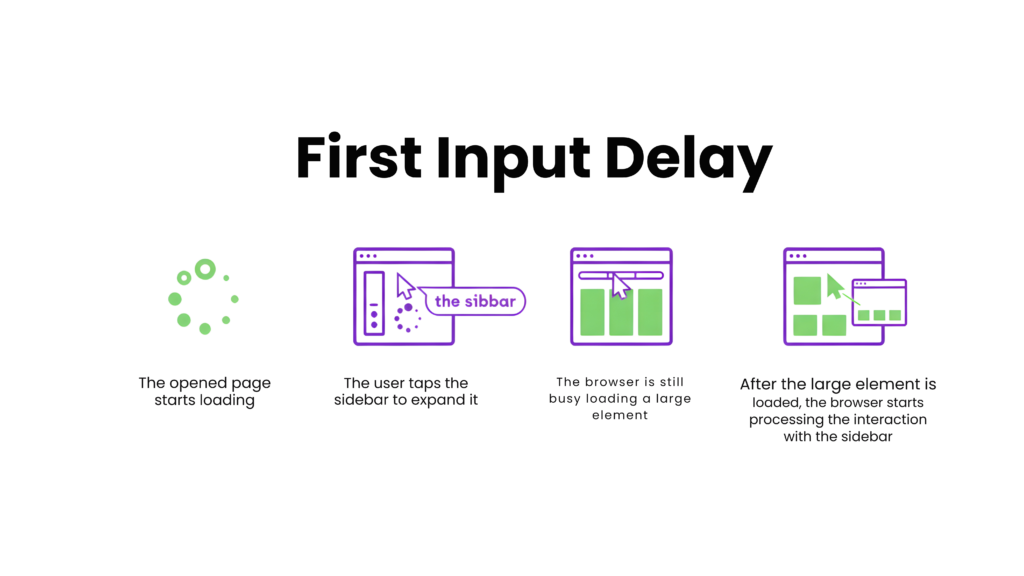
First Input Delay shows how fast your site responds when users click buttons or tap links. Your FID should stay under 100ms for at least 75% of page loads. Long JavaScript tasks often cause bad FID scores by blocking the main thread, which stops it from handling user input quickly.
Here’s how to boost your FID scores:
- Delay or remove non-critical third-party scripts that block the main thread
- Use web workers to run scripts in the background
- Use “idle until urgent” approaches for non-essential code
- Minify and compress your JavaScript and CSS files
- Cut unused CSS that blocks rendering
CLS measures visual stability—how much content moves unexpectedly during page load. A good CLS score stays below 0.1. Content often shifts because of missing image dimensions, ads, embeds, iframes without set sizes, dynamic content, and web fonts.
You can reduce layout shifts by:
- Adding width and height attributes to all images and videos
- Saving space for ads and late-loading content
- Putting dynamically loaded content lower in the viewport
- Loading web fonts efficiently to prevent text movement
Layout shifts during user interactions (within 500ms) don’t hurt your CLS score – they’re expected. But shifts from lazy-loaded content or transitions longer than 500ms will count against you.
A bigcommerce seo agency knows these technical details and can optimize your entire store for mobile. Good testing and Core Web Vitals improvements create better search visibility and user experience, which leads to more conversions.
Google puts more weight on these metrics for ranking sites. Working with experts who understand both technical performance and intuitive design helps you stay ahead in the digital world.
Content That Converts: SEO Meets UX
Content that compels readers serves as a vital bridge between technical SEO excellence and revenue-generating conversions. You need a strategic approach to create content that ranks well and persuades visitors to buy. This approach must satisfy both search engines and human shoppers.
Writing Product Descriptions That Rank and Sell
The right product description can make or break a sale. Many store owners don’t realize how much these matter and just use generic manufacturer copy. This creates two problems: duplicate content hurts SEO, and you miss chances to connect with customers.
Product descriptions work best when they balance benefits with features. Features tell what a product does or how it works, while benefits show how it makes your customers’ lives better. This difference matters because buyers care more about what your product will do for them than its specifications.
To make your product descriptions better:
- Lead with benefits, then back them up with features
- Work relevant keywords naturally into the first few sentences
- Make descriptions easy to scan with bullet points and short paragraphs
- Match length to buyer awareness—complex products need more details
Research shows 87% of consumers think product content is very important when making purchase decisions. High-quality photos next to optimized descriptions can increase conversions, as 70% of shoppers want to see at least three product images before they buy.
Using FAQ Pages to Capture Informational Queries
FAQ pages work as powerful SEO assets that make the user experience better. These pages answer what people want to know while bringing in valuable organic search traffic.
Self-service has become the preferred customer support channel, with 73% of people choosing digital channels over phone calls. A complete FAQ section lets customers find answers on their own at any point in their buying process.
FAQ pages do more than help customers. They target long-tail keywords naturally through questions and answers, and often show up as featured snippets or AI Overviews in search results. Well-laid-out FAQs can also reduce basic support tickets, which lessens the load on your support team.
Creating Comparison Posts and Buying Guides
Comparison content helps shoppers who are trying to decide what to buy. Episerver found that 92% of first-time visitors to a brand’s website aren’t ready to purchase—they want to compare products, features, and prices.
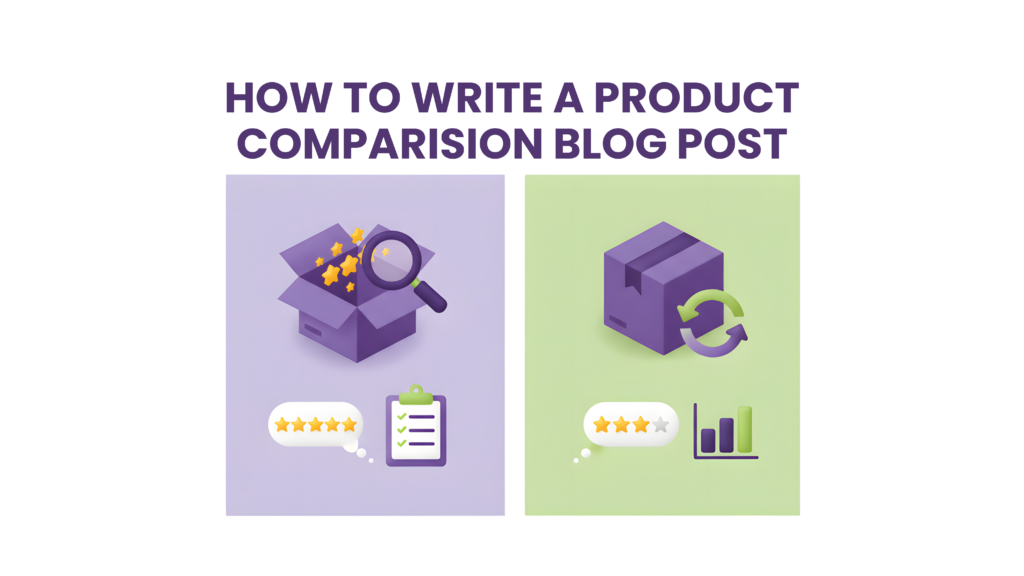
Good comparison posts should have:
- Product comparison tables that show key features side-by-side
- Headers that put the most important details first
- Eye-catching elements with high-quality product images
- Products arranged logically (like least to most expensive)
Buying guides bring in high-intent traffic by answering specific “X vs Y” search queries. These pages convert better than regular blog posts because they target shoppers who are close to making a purchase.
A skilled bigcommerce seo agency knows how to write product descriptions, FAQs, and comparison content that naturally combines seo for e commerce best practices with persuasive writing. This approach not only improves your rankings but also increases your store’s ability to convert visitors into buyers.
Backlink Building and Digital PR Tactics
BigCommerce stores that excel at getting strategic backlinks stand out from their competition. Quality content and technical optimization are the foundations, but backlinks still rank as one of Google’s strongest ranking signals in 2025. The best backlink strategy blends active outreach with passive link acquisition methods.
Reverse Engineering Competitor Backlinks
Looking at your competitors’ backlink profiles helps you spot great opportunities you might miss. This smart approach includes:
- Finding link goldmines – Look for content on competitor websites that got the most backlinks. These “link magnets” show what works in your niche.
- Creating superior assets – Once you find these goldmines, build content that works better with fresh data, better visuals, or new views.
- Tactical outreach – Reach out to websites that link to your competitors and give them solid reasons to link to your improved content.
You won’t succeed by simply copying your competitors’ link building. Quality matters more than quantity – five authoritative, relevant links will boost your rankings more than many low-quality ones.
Using Evergreen Content for Passive Link Acquisition
Evergreen content works as a powerful tool to get links year-round. Unlike time-sensitive content, evergreen pieces:
- Keep bringing traffic, authority, and leads long after you publish them
- Attract links naturally once they become visible enough
- Help your backlink profile grow steadily without constant outreach

Publishers like to link to resources that stay relevant because they often check their content and remove links that no longer add value. Creating truly useful evergreen resources makes your content impossible to ignore.
Collaborating with Influencers for Linkable Assets
Influencer partnerships do more than just get social media mentions – they’re great for building links. These approaches work well:
- Product reviews – Send samples to bloggers or YouTubers in your niche to earn backlinks when they feature your products.
- Co-created content – Work with influencers to create downloadable guides, templates, or studies that people love to share and link to.
- Guest contributions – Ask industry experts to write for your blog, and they’ll likely share and link to their posts.
Pick your influencers carefully, and focus on those who have their own websites or blogs that can give you permanent backlinks. A specialized bigcommerce seo agency like Rankfast can develop detailed e commerce seo services that combine all these backlink strategies smoothly to maximize results.
Tracking SEO Performance with the Right Tools
Measurement is the lifeblood of successful SEO implementation. Your sophisticated optimization strategies will operate blindly without proper tracking tools. This makes it impossible to show ROI or find areas that need improvement.
Using Google Analytics 4 and Search Console
GA4 and Search Console work together as complementary tools for complete performance analysis. GA4 shows how users interact with your site. Search Console reveals how Google sees your pages in search results.
Search Console helps you:
- Learn about search queries that bring traffic to your BigCommerce store
- See impressions, clicks, and position metrics for each keyword
- Find index coverage issues that need fixing
- Check Core Web Vitals performance on mobile and desktop
You can tap into even greater analytical potential by connecting GA4 with Search Console. This shows keywords Google usually hides (up to 46% of your traffic) plus volume and traffic estimates. The integration shows performance improvements across devices and traffic segments.
Monitoring Keyword Rankings with Ahrefs
Ahrefs Rank Tracker shows keyword movements and competitor positions clearly. The advanced features let you:
- See rankings on mobile and desktop devices
- Check performance from the country level to specific ZIP codes
- Find keywords that show up in AI Overviews
- See ranking stability and seasonal patterns
The platform’s competitor analysis features are especially valuable. You can measure against 10 competitors at once and spot new players gaining ground in your niche.
Setting Up Conversion Goals and Funnels
Conversion tracking turns raw traffic data into applicable business information. Your GA4 goals should match your ecommerce objectives.
Start by identifying actions that truly matter to your business—purchases, lead form submissions, or email signups. These actions become your conversion goals. Well-configured goals help you:
- Find marketing channels that bring the most valuable traffic
- Spot funnel abandonment points that need improvement
- Get accurate ROI calculations from SEO efforts
A specialized bigcommerce seo agency can set up complete tracking solutions that link SEO efforts directly to revenue generation. This proves the value of your investment in e-commerce seo services.
Why Choose Rankfast for BigCommerce SEO Services
The right BigCommerce SEO agency can transform moderate growth into exceptional results. Rankfast stands out as a bigcommerce seo agency that knows the challenges ecommerce businesses face.
Dedicated SEO Specialists for BigCommerce Stores
Rankfast creates custom strategies for your BigCommerce platform, unlike general SEO firms. Their experts bring deep business marketing knowledge to each project. They understand that seo for e-commerce needs unique solutions. Your store gets optimization techniques that work with BigCommerce’s ecosystem rather than generic approaches.
Full-Service SEO from Technical to Content
Rankfast provides detailed solutions that cover your page structure optimization needs:
- Technical audits find and fix broken link management issues
- Mobile-responsive ecommerce implementation creates an optimal user experience
- Content creation strategies boost rankings and conversions
- Site architecture refinement improves crawlability
Their transparent, custom approach matches strategies to your store’s industry and goals—not a one-size-fits-all plan.
Global Client Success Stories and Case Studies
Results tell the real story. A B2B SaaS client saw a 226 percent increase in traffic and gained 100 new keyword rankings, with 20+ in the top 10. This expertise has helped businesses on platforms of all types achieve remarkable growth. Rankfast as a BigCommerce SEO agency deliver noticeable improvements within 30–60 days, much faster than industry standards.
Rankfast’s tested strategies will give great returns on investment. Your marketing budget works better while your BigCommerce store climbs rankings and turns more visitors into customers.
Conclusion
SEO is the lifeblood of e-commerce success for your BigCommerce store. This piece shows how specialized SEO strategies can affect your conversion rates and potentially double your store’s performance. The statistics tell the story—43% of e-commerce traffic comes from organic search. Most users don’t scroll past the first page of results. Your visibility directly relates to your profitability.
Your foundation for success starts with technical optimization. A crawlable, user-friendly site architecture emerges from proper page structure, strategic H-tags, optimized URLs, and breadcrumbs. Mobile responsiveness isn’t optional anymore since 53% of e-commerce traffic comes from mobile devices.
Want to change your BigCommerce store’s performance? Rankfast is the best BigCommerce SEO agency that has specialized expertise to put these proven strategies to work. The team’s focused approach to BigCommerce SEO and e-commerce PPC delivers measurable results in just 30-60 days. You need a partner who knows your platform’s unique challenges and delivers economical solutions from technical audits to conversion-focused content.
Take action today—your competitors definitely will. Partner with Rankfast and watch your BigCommerce store rise in rankings while turning more visitors into loyal customers.
FAQs
Q1. How does SEO impact conversion rates for BigCommerce stores?
SEO directly influences conversion rates by improving site visibility, user experience, and page load times. Well-optimized stores can see up to a 25% boost in conversions, with even small improvements in page speed leading to significant increases in completed purchases.
Q2. What are some key strategies for optimizing product descriptions?
Effective product descriptions balance benefits with features, incorporate relevant keywords naturally, use scannable formats like bullet points, and adjust length based on product complexity. High-quality photos alongside optimized descriptions can significantly boost conversions.
Q3. How important is mobile optimization for e-commerce SEO?
Mobile optimization is crucial, as over 50% of e-commerce traffic comes from mobile devices. Responsive design, fast load times, and optimized Core Web Vitals (especially First Input Delay and Cumulative Layout Shift) are essential for both user experience and search rankings.
Q4. What role do backlinks play in e-commerce SEO?
Backlinks remain one of Google’s strongest ranking signals. Effective strategies include reverse-engineering competitor backlinks, creating evergreen content for passive link acquisition, and collaborating with influencers to create linkable assets.
Q5. How can I track the success of my BigCommerce store’s SEO efforts?
Use tools like Google Analytics 4 and Search Console to monitor traffic, keyword performance, and technical issues. Ahrefs can help track keyword rankings and competitor analysis. Set up conversion goals and funnels to measure the direct impact of SEO on your store’s revenue.
Leave a Reply