
AI meta descriptions are changing the SEO world with impressive results. Recent data shows AI-generated headlines have boosted click-through rates by 59%, performing better than traditional approaches. We have a long way to go, but we can build on this progress – 46% of respondents report improved page rankings with AI, while 36% see no change, and 10% notice decreased rankings.
Many businesses wonder if AI meta descriptions present a chance or risk to their operations. Reality exists somewhere between these extremes. AI content automation tools excel at generating ideas and brainstorming, but raw AI-generated content rarely meets quality standards. Strong titles and meta descriptions remain essential to grab attention, demonstrate relevance, and attract users to your site.
Here, we will examine the risks and rewards of AI-generated meta descriptions, the right time to use them, their limitations, and ways to implement them in your SEO strategy. You will find practical ways to combine AI efficiency with human creativity to achieve the best results.
The Risks Of Relying Solely On AI For Meta Descriptions
Your SEO strategy faces the most important risks when you let AI tools handle meta descriptions without supervision. AI brings efficiency, but studies show potential pitfalls that could harm your brand’s reputation, create legal issues, and spread wrong information to your audience.
Brand Safety And Tone Mismatch
AI-generated meta descriptions can’t capture your brand’s unique voice. These tools use pattern recognition that creates generic, bland writing styles. They lack the creativity and intuition needed to connect with readers. This becomes a real challenge for B2B companies that have strict brand guidelines.
AI content might sound authoritative, but it fails to line up with your company’s tone. This can undo years of careful brand building. On top of that, AI tools trained on general datasets can’t fully represent your users’ priorities and values. This limits their ability to create tailored content that matches individual brand expectations.
You should watch out for AI-generated content that produces inappropriate or off-brand descriptions. Without proper review, these mismatches could damage your brand’s reputation with current and future clients.
Legal And Copyright Concerns
The legal rules for AI-generated content remain unclear. Your company takes a risk of copyright infringement when using AI to generate meta descriptions. AI systems learn from millions of copyrighted works, which means descriptions might copy existing material.
Not knowing about the original work won’t protect you from copyright infringement claims. The consequences hit hard:
- Federal copyright infringement lawsuits could cost up to $150,000 per work
- Courts can order immediate content removal
- Attorney fees and litigation costs might reach hundreds of thousands of dollars
The ownership of AI-generated content raises questions, too. U.S. copyright law only protects works created by humans. Your marketing team’s meta descriptions might not qualify for copyright protection if they rely too much on AI. This leaves your content open to competitors.
Bias And Misinformation Risks
AI’s tendency to produce biased or wrong content raises serious concerns. Studies clearly show bias in content from leading AI models. These biases mirror society’s prejudices about gender, race, and culture found in training data.
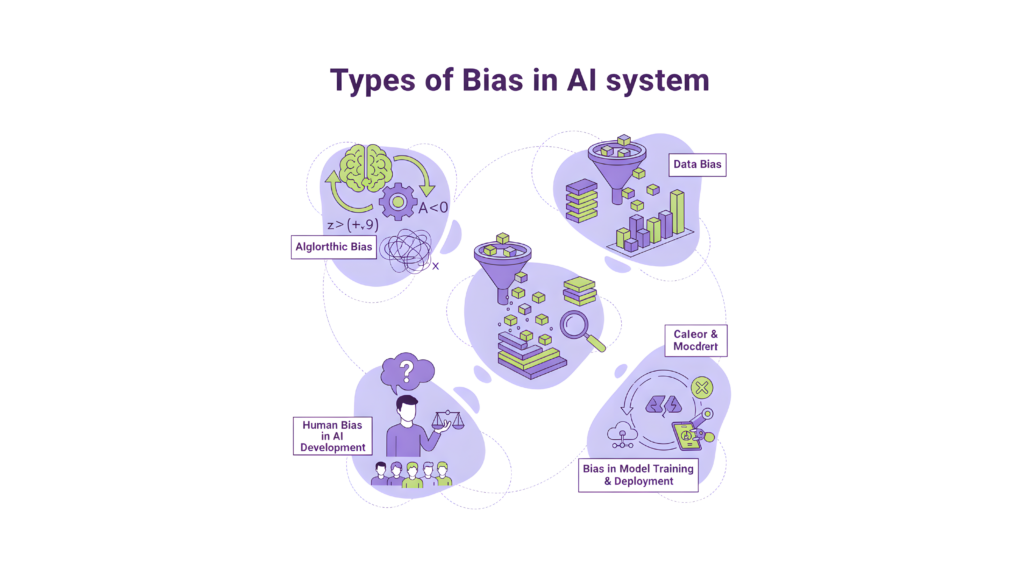
Research reveals AI systems often gave more prestigious jobs to men in generated content. Women ended up in traditionally undervalued roles. The models also showed bias levels when creating content about different ethnicities.
AI systems often generate wrong information with complete confidence – experts call this “hallucinations”. Meta admits their AI tools “have the potential to generate fictional responses or make worse the stereotypes it may learn from its training data”.
These AI hallucinations create real legal and reputation risks for businesses. Your company becomes responsible when AI-generated meta descriptions contain wrong information. No one will accept “the AI made a mistake” as an excuse for misleading content.
Where AI Meta Descriptions Shine
AI has its limits, but it shines in specific areas when creating meta descriptions. Let’s look at three areas where these tools really stand out.
Generating Ideas At Scale
Writing unique meta descriptions by hand becomes impossible for websites with thousands of pages. AI meta description tools solve this by creating hundreds of descriptions in minutes instead of months. E-commerce sites, content libraries, and businesses of all sizes find this particularly valuable.
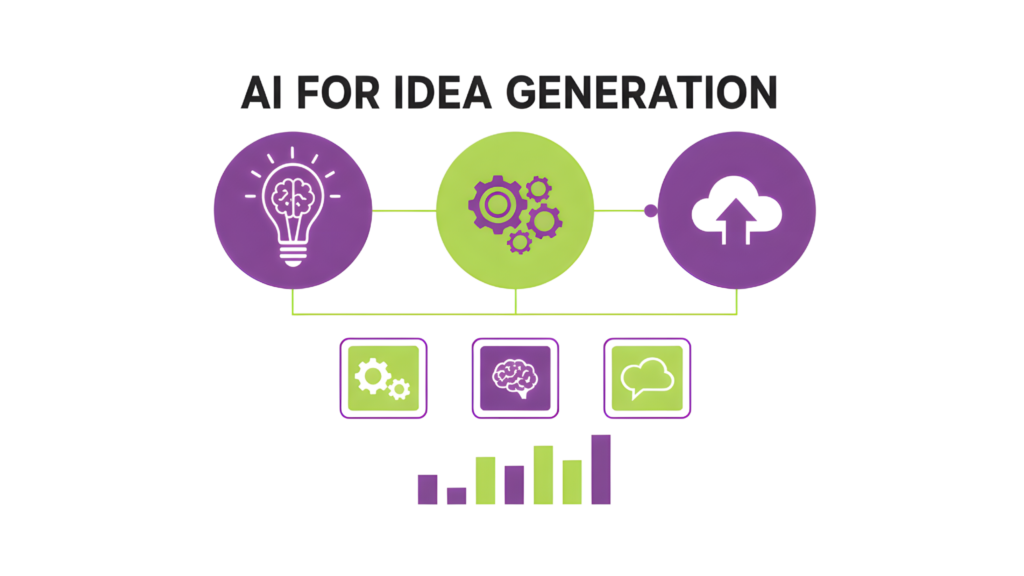
Tools like ChatGPT, Jasper, Writesonic, and Surfer SEO now analyze big datasets of high-performing SEO content to create meta descriptions that:
- Summarize complex content well
- Stay within length limits
- Add keywords naturally
- Match different tones (professional, casual, persuasive)
This saves time and scales quality content creation. Tests show that AI-powered metadata generation works well: processing 100 serial issues takes just 8.5 minutes. This cuts staff time and lowers costs substantially.
Speeding Up Metadata Creation
The biggest problem in SEO implementation is time. AI meta description generators speed up your work by automating what used to be manual work.
The Center for Research Libraries found that their AI-supported metadata generation created item-level metadata up to 60 times faster than old methods. This lets your core team focus on strategic tasks instead of repetitive metadata work.
Rankfast’s AI meta description checker helps you create, review, and export better descriptions. You can track their success through click-through rates and engagement metrics. The process is simple:
- Input your content or URL
- Generate AI-powered descriptions
- Edit for brand voice and accuracy
- Implement across your site
A metadata specialist shared their ground experience: “I built an AI tagging system trained on our brand guidelines to enrich large volumes of creative assets. The automation shaved days off the manual process”.
Supporting Multilingual SEO Efforts
Taking your business global needs content that strikes a chord with audiences speaking different languages. Before, companies had to hire translators and local SEO experts for each market, which was expensive.
AI meta description tools now work in multiple languages, making your descriptions better for global audiences. The AI finds terms that matter to local audiences instead of just translating keywords, adapting to how people search in different regions.
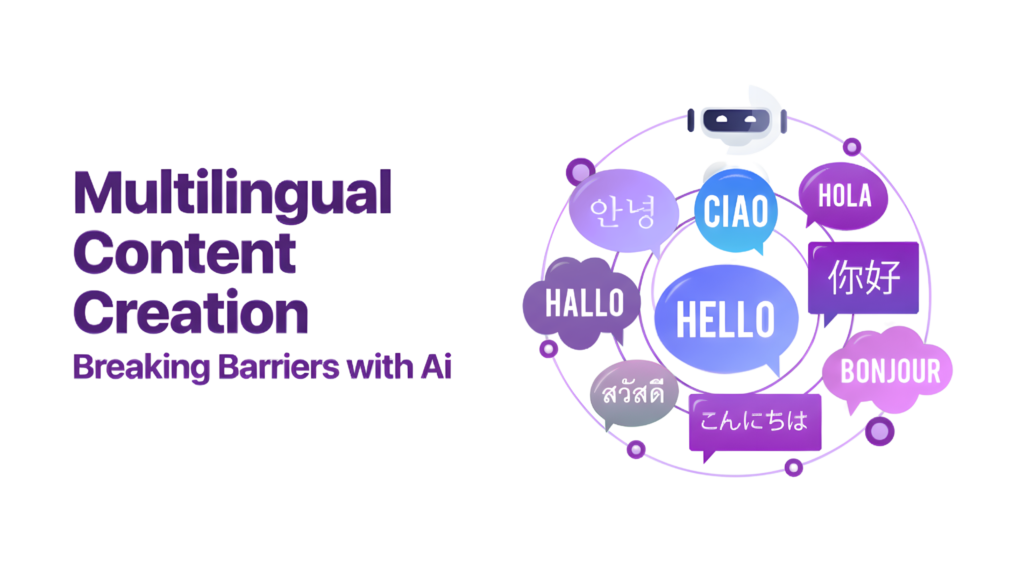
An e-commerce site used AI with human oversight for 15 languages and saw organic traffic grow by 27%. A travel booking platform that used AI-driven meta tag translation in 20 languages saw click-through rates jump 15%.
This language feature doesn’t just translate—it adapts to local culture. Your meta descriptions connect with audiences in different countries naturally. This used to need big teams of translators and marketers, but AI makes it faster and more available.
What AI Can’t Replace in SEO?
AI tools have growing capabilities, but some SEO aspects still need a human touch. AI can create content fast, but it can’t replace these vital human elements.
Human Creativity And Storytelling
Creative storytelling needs more than mechanical keyword insertion to make meta descriptions that strike a chord with readers emotionally. AI systems are great at spotting patterns, but can’t create stories that truly connect with your audience.
People naturally know which emotional triggers will work with different audience groups—be it curiosity, urgency, or empathy. This emotional intelligence helps you write meta descriptions that don’t just inform but drive action. A human copywriter can create a meta description that speaks to a reader’s dreams instead of just listing features.
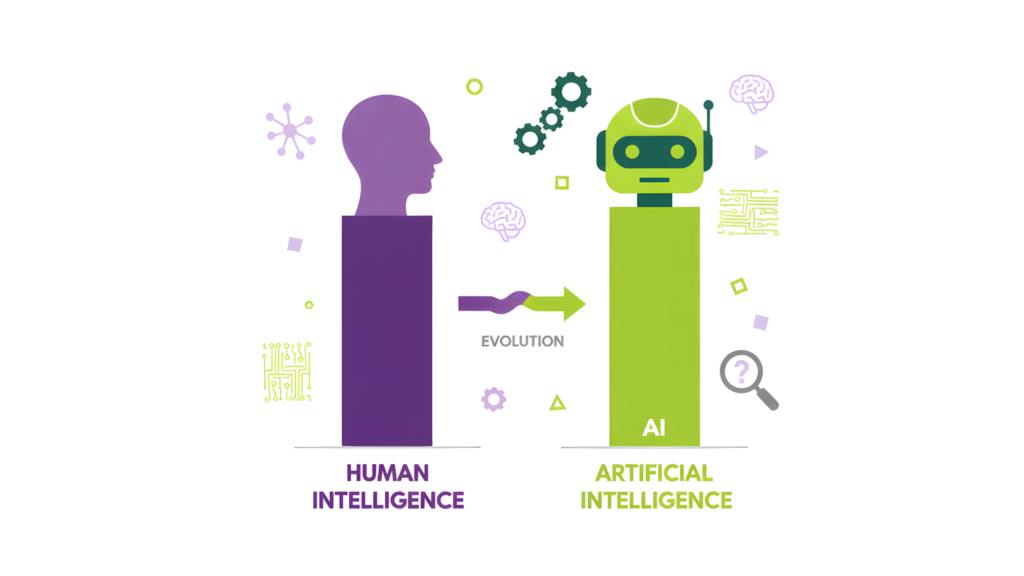
Your unique brand voice needs the human element. The subtle touches that make your brand yours—whether it’s authoritative, playful, caring, or bold—come naturally from human writers. No AI system can capture these fine details that set your brand apart.
Contextual Understanding Of User Intent
Users’ search queries don’t tell the whole story. People have a natural grasp of context that AI just can’t match.
Human SEO experts see past the keywords. They know someone looking for “office chairs” might really want solutions for back pain or stylish pieces for their home office. This deeper understanding helps create meta descriptions that solve users’ real problems—not just match their search terms.
People understand cultural references, seasonal patterns, and current events that affect how users search. This ability to spot these contextual changes gives you a big edge over AI-only methods.
Strategic Alignment With Business Goals
AI can’t grasp your specific business aims beyond simple metrics. People must decide how meta descriptions support broader marketing goals spatially in technical SEO for Ecommerce.
Meta descriptions should match specific conversion targets—like getting leads, selling products, or building brand awareness. You know which messages work best at different sales funnel stages and can adjust descriptions to fit.

It also helps that humans can position content strategically against competitors based on real market insights. You know your industry’s competitive landscape and can highlight your unique benefits in ways AI can’t match.
AI remains a powerful tool, but human expertise must guide the strategy. People who understand both SEO mechanics and business goals will always be essential.
How To Use AI Meta Descriptions The Right Way
Making the most of AI meta descriptions needs a smart mix of automation and human review. Success comes from using AI tools the right way, not just using them.
Crafting Better Prompts For AI Tools
Your AI-generated meta descriptions will only be as good as your prompts. Here’s how to structure your prompts for better results:
- Focus on character count – Request descriptions between 140-160 characters to prevent search engines from truncating your text
- Specify audience intent – State whether users want information, products, or navigation to make descriptions more relevant
- Request action-oriented language – Ask for descriptions with strong verbs that drive user action
AI has its limits. One expert points out, “AI tools can produce content that is inaccurate, misleading, and even completely made up”. Consider AI a starting point rather than a complete solution.
Editing For Clarity, Tone, And Accuracy
AI-generated meta descriptions need review before publication. Check if the description matches your page’s content. Make sure it reads well and stays under 160 characters while delivering your message clearly.
Your brand voice matters most. Yoast SEO suggests, “Review the tone and style of the generated meta description to ensure it lines up with your brand voice and messaging guidelines”. This prevents any mismatch between your meta description and brand identity.
Avoiding Over-Optimization And Keyword Stuffing
Keyword stuffing is outdated SEO practice, yet many AI tools still make this mistake. Search engines now value content that helps users instead of mechanical keyword repetition.
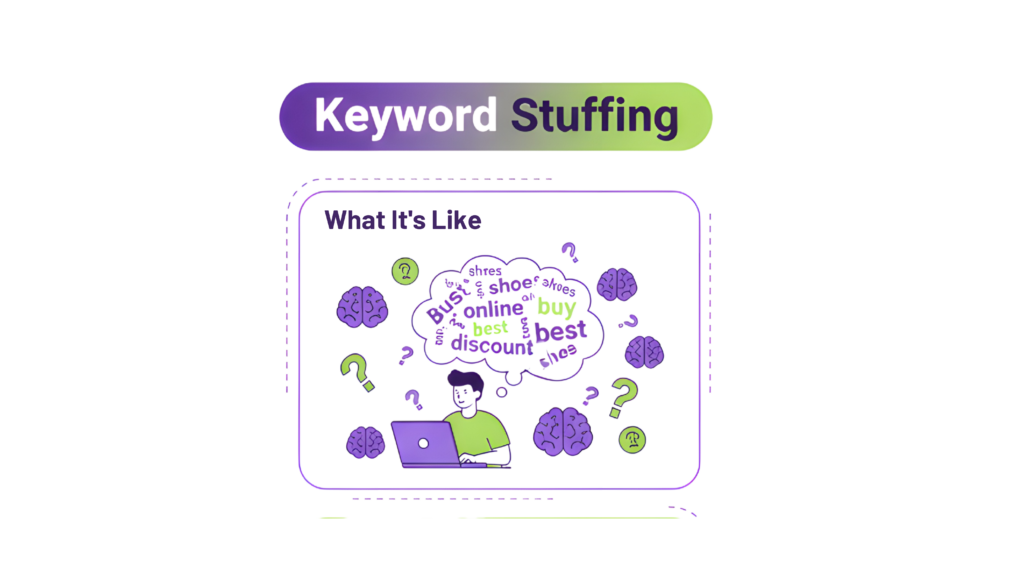
Read your meta description out loud. An awkward or robotic sound means it’s probably over-optimized. Keep keyword density under 2%. Place keywords strategically rather than frequently—they should appear naturally in titles, headings, and opening paragraphs.
Monitoring CTR Impact And Engagement Metrics
Check user engagement metrics after implementation to see what works. Track click-through rates, bounce rates, and time spent on page to measure results. This analytical approach helps you make continuous improvements.
Test different versions of AI-generated descriptions against each other to find what your audience prefers. Low-performing pages might need updated meta descriptions.
The right mix of AI efficiency and human oversight creates meta descriptions that showcase your content and get users to click through. Tools like Rankfast’s meta description checker can help streamline this process without sacrificing quality.
Why Choose RankFast For AI Meta Description Optimization
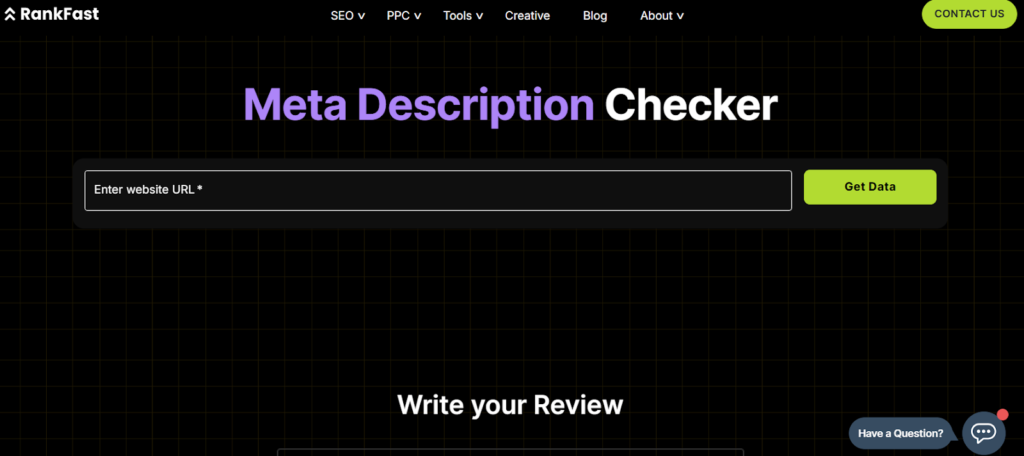
Need a better way to optimize your AI meta descriptions? RankFast has a complete suite of features to improve your metadata strategy.
Built-in AI Meta Description Checker
RankFast‘s built-in checker analyzes meta descriptions instantly. It identifies key themes and keeps an engaging tone while ensuring perfect length. This tool goes beyond simple analysis and gives custom feedback based on your content needs. You can craft descriptions that fit the recommended 150-160 character limit for search results perfectly.
User-Friendly Interface For Marketers
Rankfast’s accessible interface works great even if you don’t have technical SEO expertise. The clean dashboard lets you create, edit, and implement meta descriptions with just a few clicks. Unlike complex SEO suites, Rankfast streamlines your metadata workflow. You can process hundreds of descriptions quickly – just like other leading platforms that handle 100 items in 8.5 minutes.
Real-Time Feedback and SEO Scoring
Your meta descriptions get immediate, informed feedback before publishing. The objective scoring system shows how well your descriptions match target keywords. You can make better decisions to improve search visibility without any guesswork.
Supports Human-AI Collaboration
Rankfast believes in mixing AI efficiency with human creativity. The platform strengthens your writing skills instead of replacing them. It gives you a data-informed framework – the science behind high-performing descriptions. This lets you focus on your unique brand voice and creative elements effectively.
Conclusion
AI-generated meta descriptions offer significant advantages in terms of efficiency and scalability. These benefits come with risks that need careful management. This piece shows how AI excels at generating bulk descriptions, speeds up workflow, and helps with multilingual SEO efforts.
AI cannot match human creativity, understand user intent contextually, or align with your business goals despite its capabilities. You need to blend AI’s efficiency with human oversight to make it work.
AI meta descriptions are powerful tools that require proper handling, rather than viewing them as a chance or threat. You can turn AI from a potential liability into a valuable asset by crafting specific prompts, editing for clarity and brand voice, avoiding over-optimization, and tracking performance metrics.
Meta descriptions create your first impression in search results. Getting them right affects your click-through rates and overall SEO success greatly. RankFast’s meta description checker offers the perfect mix of AI efficiency and human control to create descriptions that appeal to both search engines and users.
Want to enhance your meta descriptions? RankFast’s user-friendly tools combined with your expertise, can boost your search visibility and bring more qualified traffic to your site today.
FAQs
Q1. What are the main benefits of using AI-generated meta descriptions?
AI-generated meta descriptions offer increased efficiency, the ability to generate descriptions at scale, and support for multilingual SEO efforts. They can significantly speed up metadata creation and help businesses expand their global reach.
Q2. What are the potential risks of relying solely on AI for meta descriptions?
Relying solely on AI for meta descriptions can lead to brand safety issues, tone mismatches, legal and copyright concerns, and the potential spread of bias and misinformation. It’s important to maintain human oversight when using AI-generated content.
Q3. How can businesses effectively use AI for meta descriptions?
To use AI meta descriptions effectively, Bigcommerce SEO agency should craft specific prompts, edit AI-generated content for clarity and brand voice, avoid over-optimization, and consistently monitor performance metrics like click-through rates and engagement.
Q4. Can AI completely replace human input in SEO strategies?
No, AI cannot completely replace human input in SEO strategies. Human creativity, contextual understanding of user intent, and strategic alignment with business goals are crucial elements that AI cannot replicate.
Q5. What features should I look for in an AI meta description tool?
Look for an AI meta description tool that offers a built-in checker, a user-friendly interface, real-time feedback and SEO scoring, and supports human-AI collaboration. These features will help you optimize your meta descriptions effectively while maintaining control over your content.
Leave a Reply