If you were online on 18 November 2025, you probably felt it. Pages refused to load. Even major platforms like ChatGPT and X (Twitter) suddenly stopped responding. For a few hours, large sections of the internet went down. The Cloudflare Outage 2025 caused a massive internet disruption, leaving users worldwide confused and frustrated. As the issue grew, searches like “ChatGPT Down Today” exploded across social platforms.
The reason behind this digital standstill? A network-wide failure inside Cloudflare, one of the biggest internet infrastructure companies in the world.
This wasn’t a normal outage. It rolled in fast, created chaos across thousands of websites, and left people wondering what exactly broke. Let’s go through what actually happened: when the disruption began, what users saw, the services hit hardest, and how Cloudflare eventually pulled the internet back on its feet.
What Caused the Cloudflare Network Failure in 2025?
The first signs of trouble appeared around 11:20 UTC. That’s early morning in North America and evening in India. Developers, creators, and everyday users began reporting “internal server errors” on websites that normally load without a hiccup.
At first, it felt random. One refresh worked, the next failed. ChatGPT opened for some users but crashed for others. X loaded a timeline and then locked up seconds later. But the pattern became clear very quickly: anything running behind Cloudflare was struggling. Users across regions reported a major internet outage, thinking their devices or networks were to blame.
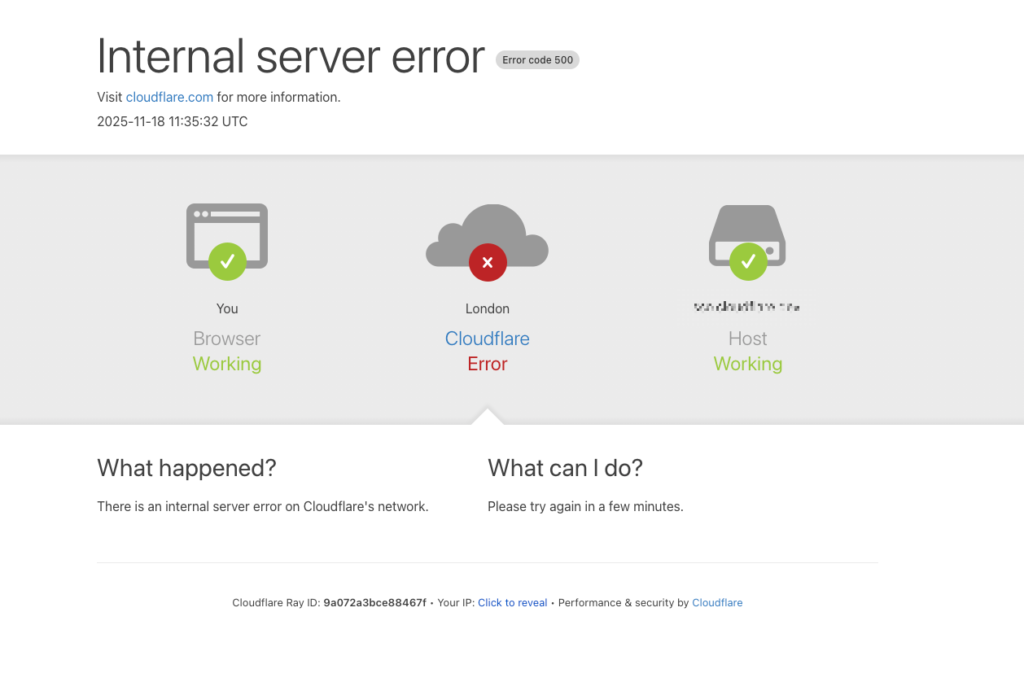
Cloudflare’s engineers noticed surges of HTTP 5xx errors appearing across their global network; errors the company usually sees only during isolated hardware issues or sudden traffic spikes. But this was different. The problem wasn’t regional. It wasn’t a single server. The disruption was sweeping across Cloudflare’s infrastructure, touching data centers around the world.
Within minutes, the issue grew enough to trigger widespread alerts and customer reports. Status dashboards on several websites lit up with red warnings. Some users even found that Cloudflare’s own status page wasn’t loading, which only added to the panic and deepened the “websites not loading issue complaints online.
What Users Saw: Confusing Error Pages Everywhere
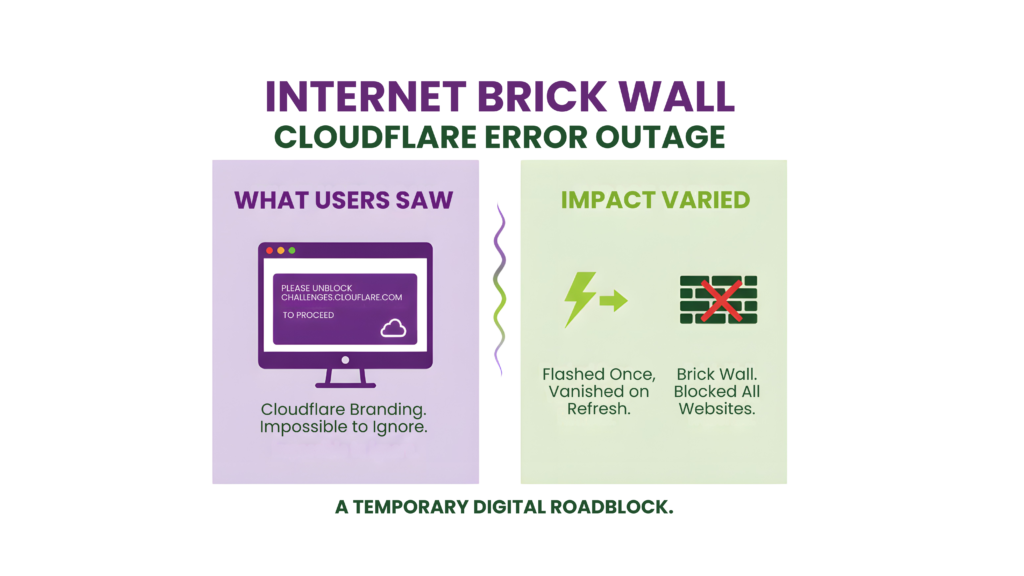
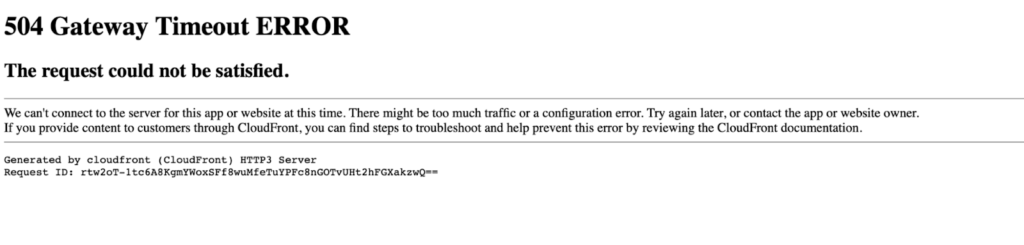
If you were online at the time, you likely saw the message: ‘please unblock challenges.cloudflare.com to proceed’ on the screen. It had Cloudflare branding, which made the issue impossible to ignore.
For some people, the page flashed once and vanished on refresh. For others, it became a brick wall that blocked every attempt to load their favourite websites.
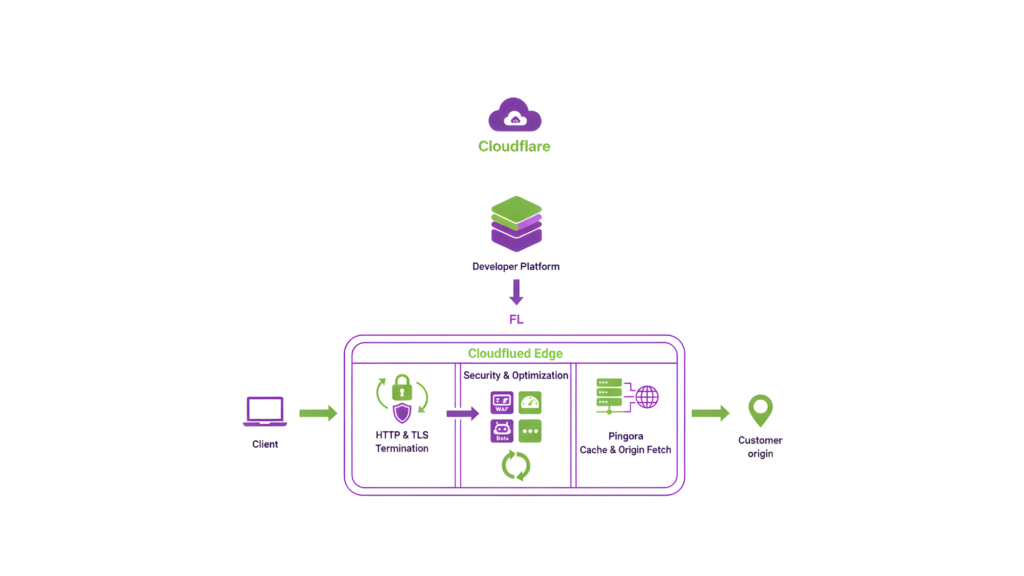
Part of why the outage felt so disruptive is simple: Cloudflare sits between users and a huge part of the internet. When something breaks in the middle, everything behind it becomes unreachable.
Read more in detail now: https://blog.cloudflare.com/18-november-2025-outage/
Why Was ChatGPT Down Today?
Now, here’s where things got intense. Cloudflare isn’t just another hosting service. It handles routing, security, caching, and traffic optimization for millions of sites. When it stopped, major platforms were affected by it. Some of the biggest names affected included:
ChatGPT
Users opened the app and instantly met error pages or complete downtime. For a while, even paid users couldn’t access their chats. Since many companies depend on ChatGPT for customer support, writing tasks, and day-to-day operations, this created a ripple of workplace disruptions. This is why so many people asked, “Why is ChatGPT down today?”
X (Formerly Twitter)
Timelines refused to refresh. For many users, the platform wouldn’t load at all. Large accounts complained publicly, which helped broadcast how widespread the problem was.
Canva
Designers who were in the middle of projects suddenly found themselves locked out. Autosave helped for some, but others lost progress.
Perplexity
The AI search engine struggled to respond to queries and pushed out error messages.
Letterboxd, Grindr, and Regional Transit Websites
Even smaller and regional sites reported trouble. Some transit boards couldn’t display schedules. Local government sites timed out. Retail checkouts stalled mid-payment.
Not every site collapsed completely. Some stayed partially online, depending on how deeply their services used Cloudflare.
What Went Wrong Behind the Scenes?
This is the part many people waited for because early speculation ranged from cyberattacks to datacenter failures. The truth was less dramatic but far more interesting.
According to Cloudflare’s engineering team, the outage traced back to a single internal configuration change tied to their Bot Management system. That system uses a regularly updated “feature file” to help identify suspicious traffic patterns.
Here’s the twist:
A recent internal change made that file balloon in size, more than double its normal weight. That huge file then got distributed across Cloudflare’s global proxy network.
When the newer generation of Cloudflare proxies (called FL2) tried to load the oversized file, it pushed them past their memory limits. Instead of handling the excess gracefully, the system panicked. The internal error logs showed panic events where the software threw up its hands and crashed.
To make things worse, the faulty file didn’t get generated once. It was being regenerated every few minutes. Some copies were big. Others were normal. That caused an inconsistency that made the outage feel unpredictable. One server would run fine. Another would choke. This back-and-forth behavior even led Cloudflare to briefly consider whether they were under attack.
But no, this wasn’t a hack. No threat actor was involved. It was simply a small configuration change with massive unintended consequences.
The Recovery: How Cloudflare Brought the Internet Back
Once engineers pinpointed the bad feature file, everything moved quickly. The first priority was to stop the damage from spreading.
Here’s what Cloudflare did step by step:
- Stopped the bad file from propagating. They froze distribution, so no new proxies picked up the oversized version.
- Replaced it with a known-good configuration. A stable, smaller file was pushed across the network.
- Restarted affected proxy systems. This was necessary because many systems were stuck in a crashed state and needed a clean reboot.
- Rerouted some services temporarily. For example, Cloudflare’s Workers KV and other internal services were reconfigured to reduce pressure on the broken systems.
- Managed the massive surge of returning traffic. This part often gets overlooked. When a large provider goes down, everything tries to reconnect at once when it returns. That flood can overload systems. Cloudflare had to stabilize traffic and keep retry storms under control.
According to their own timeline, the majority of traffic began flowing normally again by 14:30 UTC. By 17:06 UTC, error levels had dropped back to normal, and services around the world began reporting “all clear.”
Some apps took longer to appear stable, but the backbone of the internet was back.
Why Did This Outage Scare So Many People?
Cloudflare outages aren’t unheard of, but this one hit harder for a few reasons.
1. Cloudflare Is Practically Part of the Internet
So many websites rely on it: sometimes without users even knowing. When it falters, it feels like the internet itself is stuttering.
If a single bank fails, people notice. When the clearinghouse fails, the entire financial system feels it. Cloudflare plays a similar “internet clearinghouse” role for web traffic.
2. The Errors Looked Random
One refresh worked. Another didn’t. Some apps loaded half a page and then froze. That inconsistency made users wonder whether their devices were failing.
3. Cloudflare’s Status Page Also Glitched
When a status page goes down during an outage, users assume the worst. It’s like calling emergency services and getting a busy tone.
4. Essential Workflows Paused
Teams that rely on ChatGPT for writing or research hit a sudden wall. Designers on Canva froze mid-project. Even transit systems and retail checkouts took a blow.
Outages aren’t just technical failures anymore: they disrupt real work, real money, and real communication.
Summing Up
The November 2025 Cloudflare outage will be remembered as one of those moments when the internet held its breath. For a few hours, people realized how much of their daily digital life depends on invisible infrastructure working quietly in the background.
Cloudflare’s engineers owned the issue, explained it, and fixed it fast. But the event still left a mark. It exposed how interconnected everything is, how a tiny internal error can knock out major platforms, and how much trust we place in the backbone of the web.
Outages happen. They always will. What matters is how quickly companies respond, how transparently they explain themselves, and what they learn afterward. In this case, the internet took a hard hit, but it also got a clearer picture of what needs to change to keep future disruptions from spiraling this far.
FAQs
1. Why Was ChatGPT Down Today?
ChatGPT went down because Cloudflare’s network failure blocked traffic from reaching OpenAI’s servers. Since all requests passed through Cloudflare’s proxy layer, the crash created widespread downtime, leaving users unable to open conversations, send prompts, or access saved chats.
2. What Caused the Cloudflare Network Failure?
The outage began when an internal Cloudflare file doubled in size and overloaded the newer FL2 proxy engine. That oversized file caused repeated crashes, which triggered a major internet outage affecting millions of users and thousands of websites worldwide.
3. Why Were Websites Not Loading During the Outage?
Most affected websites depend on Cloudflare for routing, DNS, and security. When Cloudflare’s proxies failed, the connection path between users and these sites broke instantly, creating widespread issues with websites, apps, dashboards, and online services not loading.
4. How Long Did the Cloudflare Outage 2025 Last?
The main disruption lasted a few hours, starting around 11:20 UTC and stabilizing by late afternoon. While core systems recovered quickly, some platforms experienced slower performance and delayed load times as traffic surged back online.
5. Could the Cloudflare Outage 2025 Happen Again?
While similar failures are possible, Cloudflare stated it’s adding better validation rules, file-size checks, and safer rollout procedures. These changes are meant to prevent oversized configuration files from triggering another large-scale Cloudflare network failure in the future.
Leave a Reply