Your CTR AI search strategy might not deliver the expected results anymore. Traditional click-through rate metrics that marketers relied on for decades are becoming less relevant faster in today’s AI-driven search world.
Search engines now evolve toward providing immediate answers through AI overviews. This makes engagement metrics more valuable indicators of success. Your visibility gets affected by clickless results, so you need to look beyond just clicks. Businesses in competitive industries, including those working with a real estate SEO company, must adopt new approaches to measurement and optimization. The best SEO company for real estate knows that AI answer optimization needs metrics beyond the traditional ones. Your strategy must adapt to this new reality since CTR AI search engine optimization now prioritizes content that search results can parse and present directly.
This piece will help you find why CTR keeps declining, which metrics matter in AI search environments, and how to optimize your content. These insights become crucial when users no longer need to click through to your website.
Why CTR No Longer Reflects Success in AI Search
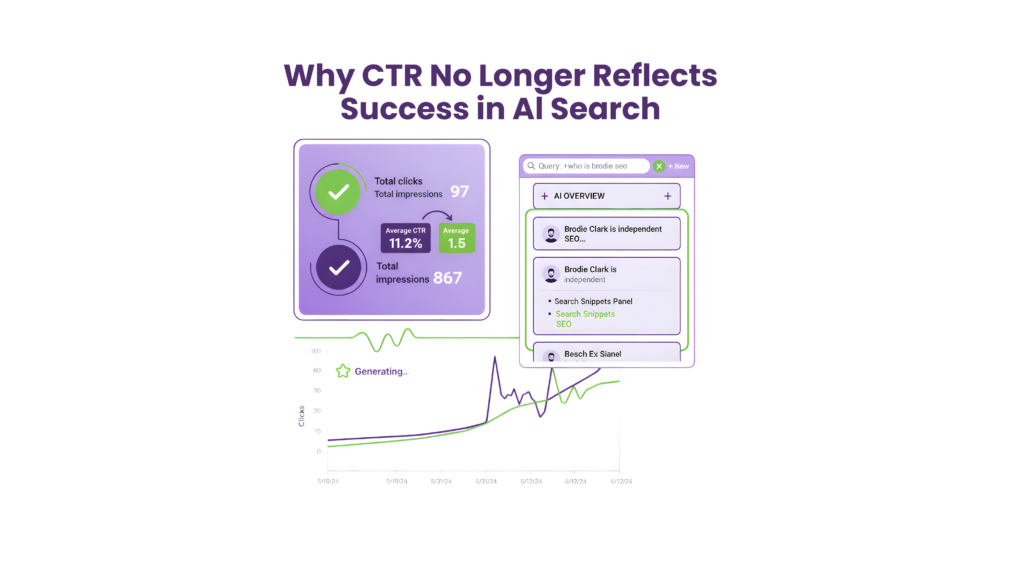
The numbers tell a clear story: traditional CTR metrics no longer reliably show search success. Latest data shows how users are interacting with search results differently, especially as AI features become common.
CTR Drop in AI Overviews: 2024–2025 Data Trends
AI Overviews have drastically affected click-through rates. Since mid-2024, organic CTRs for informational queries with Google AI Overviews dropped by 61%. Paid CTRs on these same queries saw a 68% decline. Users behave differently now – even queries without AI Overviews saw organic CTRs fall by 41%.
Several studies back up this downward trend:
- Position #1 CTRs fell from 28% to 19% (a 32% decline) after AI Overview launch
- Position #2 took a bigger hit with CTRs falling by 39% from 20.83% to 12.60%
- AI Overviews cause organic CTR to drop from 2.94% to just 0.84%
These changes mean your top-ranking page that used to get nearly three clicks per 100 searchers now gets nowhere near one. This drop aligns with Google’s rapid expansion of AI Overviews. They showed up for just 10,000 keywords in August 2024 but grew to over 172,000 by May 2025.
Clickless Results and the Rise of Zero-Click SERPs
Zero-click searches pose the biggest challenge to measuring success through CTR. During 2024, 58.5% of U.S. searches and 59.7% of E.U. searches ended without any clicks. The future looks more challenging – zero-click searches might exceed 70% by 2025.
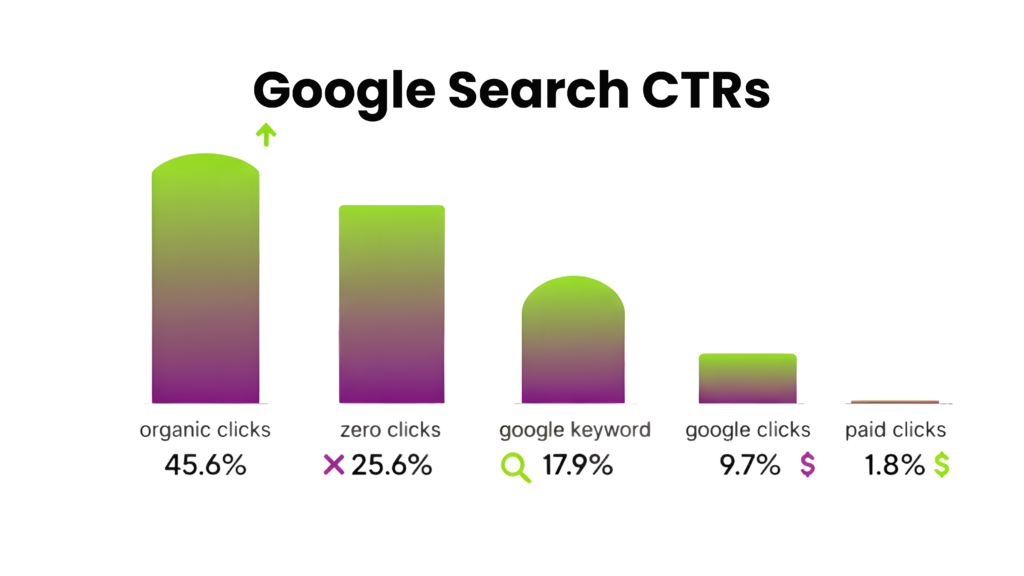
AI Overviews were triggered on 13.14% of queries in March 2025, up from 6.49% in January 2025. More searches will likely end without clicks as these AI features grow.
A Pew Research Center study of 900 U.S. adults found something interesting. People who saw an AI summary clicked search results only 8% of the time. Those without AI summaries clicked 15% of the time. Links within summaries got even fewer clicks – just 1% of visits.
Search Engine Land calls this an “attribution nightmare.” Your content powers AI responses, but proving it led to conversions becomes impossible. The gap between being seen and getting measurable traffic keeps growing.
How AI Overviews Reshape User Behavior
Users act differently with AI Overviews. Pew Research shows that 26% of people end their search after seeing a page with an AI summary. Only 16% do the same with traditional results. AI-generated answers satisfy what users want without extra clicking.
Questions see the biggest effect. About 60% of searches starting with “who,” “what,” “when,” or “why” get an AI summary. Longer searches and those with both nouns and verbs also trigger AI summaries more often.
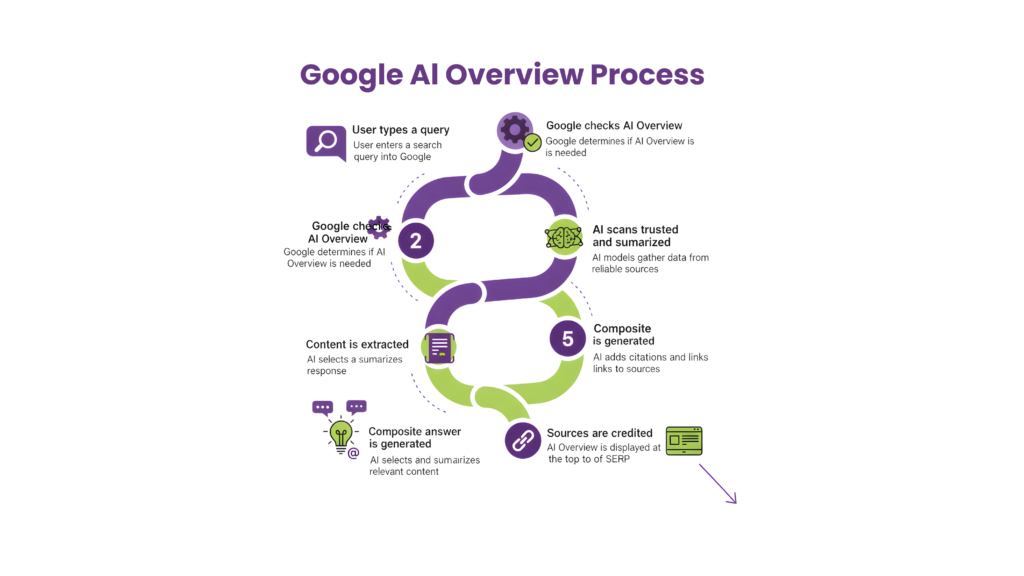
Your business faces a tough choice. You can accept less traffic but be more visible, or watch others dominate AI Overviews while you stick to old metrics. The decision gets trickier because users who click through from AI search often show more interest—they’ve read the summary and still want more details.
Success needs a new definition. One SEO expert noticed something telling—impressions went up, but CTR went down. They explained, “Google now shows your content inside AI answers. So impressions go up (more people see your content). But clicks go down (because users get their answer right there).”
How AI Search Engines Evaluate Content Today
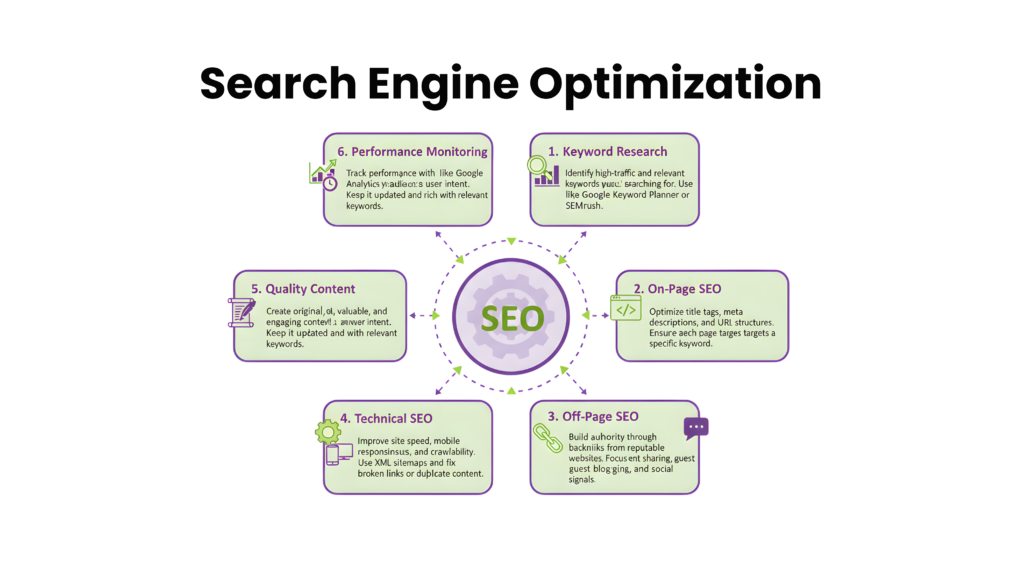
AI search engines process and assess content in fundamentally different ways than we might expect. Modern search technologies don’t just rely on keywords anymore. They use sophisticated systems that understand language just like humans do.
Natural Language Understanding in AI Search
Advanced Natural Language Processing (NLP) and Natural Language Understanding (NLU) technologies power every AI search query. These systems break down grammar, structure, and tone through techniques like tokenization, part-of-speech tagging, and dependency parsing to figure out what users really want. The technology goes beyond matching keywords to decode the actual meaning of queries.
Modern search engines employ a multi-layered approach:
- Machine Learning Models learn from billions of searches to predict intent and show relevant results—even without perfect keyword matches
- Deep Learning algorithms use neural networks that copy human understanding, with BERT (Bidirectional Encoder Representations from Transformers) serving as the foundation of Google’s search engine
- Vector Search turns words and phrases into high-dimensional vectors based on meaning, letting engines find related pages, whatever the exact keywords might be.
Your website content needs to satisfy user intent rather than just pack in keywords. AI now looks at quality in a whole new way. You need detailed content that covers all aspects of what users are asking.
Entity Recognition and Semantic Relevance
Entity recognition is the lifeblood of AI search assessment. This process spots and labels specific elements in content—people, places, organizations, quantities, dates, and more. Search engines use this to build a better understanding of context.

Named Entity Recognition (NER) looks at word structure and relationships to pull out meaningful information. Let’s say someone searches for “best real estate agent in Chicago.” AI doesn’t just see random words. It knows “Chicago” is a location and “real estate agent” means a professional service.
AI search engines look at semantic relevance—how content and queries relate conceptually. They assess:
- Co-occurrence and Latent Semantics—Algorithms spot hidden relationships by seeing which terms show up together often
- Knowledge Graphs—These connect different pieces of information, helping AI understand broader concepts
- On-Topic Rate—This shows how much of your content actually relates to what someone’s looking for, whatever the keywords
The “on-topic” score isn’t just about matching words. It shows how well your content connects with what the searcher wants to know. That’s why your pages might show up in search results even without exact keyword matches.
Structured Data and Schema.org for AI Parsing
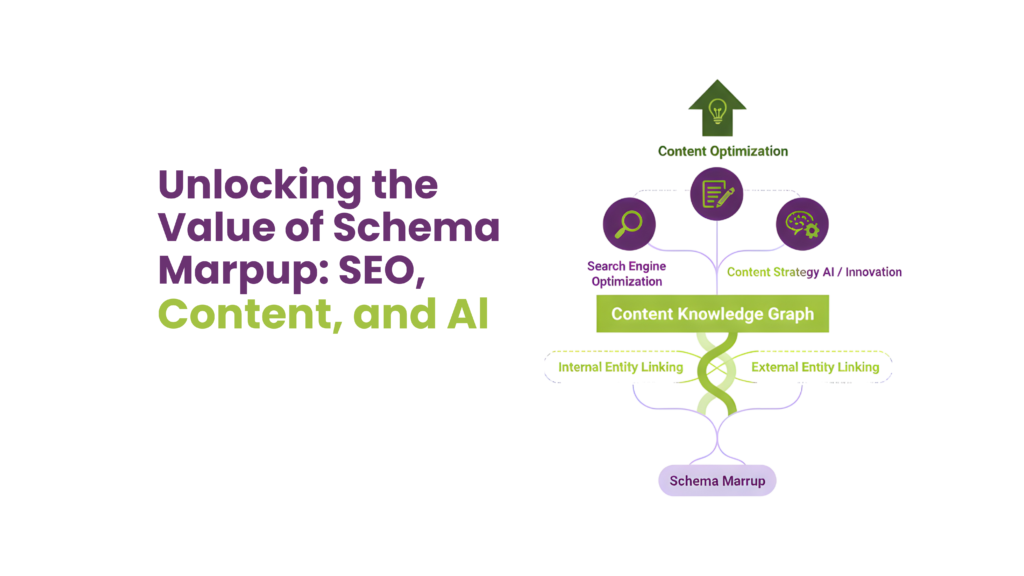
Structured data has grown from a simple SEO trick into something AI really needs to assess content. Schema.org markup tells search engines exactly what your content means instead of letting algorithms guess.
This format organizes information in a way that machines can understand clearly. Google calls structured data “a standardized format for providing information about a page and classifying the page content.”
Google says you don’t need special markup for AI Overviews, but structured data substantially helps AI systems understand your content. Pages with proper schema:
- Make it easier for AI to understand
- Get interpreted correctly for context and meaning
- Fit better into knowledge graphs that power AI responses
JSON-LD (Google’s favorite format) helps search crawlers identify each content element. FAQ and HowTo schemas work really well for AI visibility because they give direct answers—perfect for how people talk to AI search.
Your site becomes a machine-readable knowledge graph when you use structured data correctly. Future AI tools will depend more and more on this to answer questions accurately.
A specialized real estate SEO company can help set up these technical pieces correctly. They’ll make sure AI search engines understand what your content is saying.
Optimizing for AI Overviews and Generative Results
Success in the AI search environment depends on strategic optimization techniques that line up with how these systems process and display content. You now know how AI assesses your information, so let’s apply specific formatting methods to boost your visibility in AI-generated results.
Using FAQPage and HowTo Schema for Better Inclusion
Schema markup serves as a translation layer between your content and AI systems. JSON-LD format structured data tells search engines what your content means instead of leaving interpretation to algorithms alone. AI can confidently identify your content as products, reviews, FAQs, or events through this standardized code.
These schema types deliver exceptional performance for AI Overviews:
- FAQPage schema—Perfect for question-based content that helps AI match user queries with your precise answers
- HowTo schema – Works best for tutorial-style content and step-by-step guides
Well-laid-out Q&A content remains vital for AI retrieval despite Google’s reduction of FAQ rich results visibility. Your implementation should:
- Create dedicated FAQ pages around single topics with complete question-answer sets
- Craft responses that are concise, factual, and use natural language
- Verify your markup with Google’s Rich Results Test
AI Overviews appear among other SERP features 99.25% of the time, and People Also Ask sections show up in 98.54% of these results. Your content visibility improves substantially when you format it to match these feature types.
Text Fragments and Highlighted Snippets in Google
Text Fragments let you specify exact text snippets within URL fragments. Browsers automatically emphasize the relevant text when users access these URLs. AI systems and users can focus on precise content sections through this technology.
The format uses the syntax #:~:text= followed by the selected text. For example: https://example.com/page#:~:text=specific%20text%20to%20highlight
AI increasingly cites specific passages rather than entire pages, making this capability valuable. Text Fragments also:
- Give visitors direct access to exact information
- Lower bounce rates by meeting user intent quickly
- Boost your content’s chances for Featured Snippets selection
The “Link to Text Fragment” browser extension makes creating these specialized links easier.
Formatting for Voice Search and Conversational Queries
Natural conversation patterns drive voice search optimization. Voice searches use complete sentences or questions instead of keyword fragments, so your content structure matters.
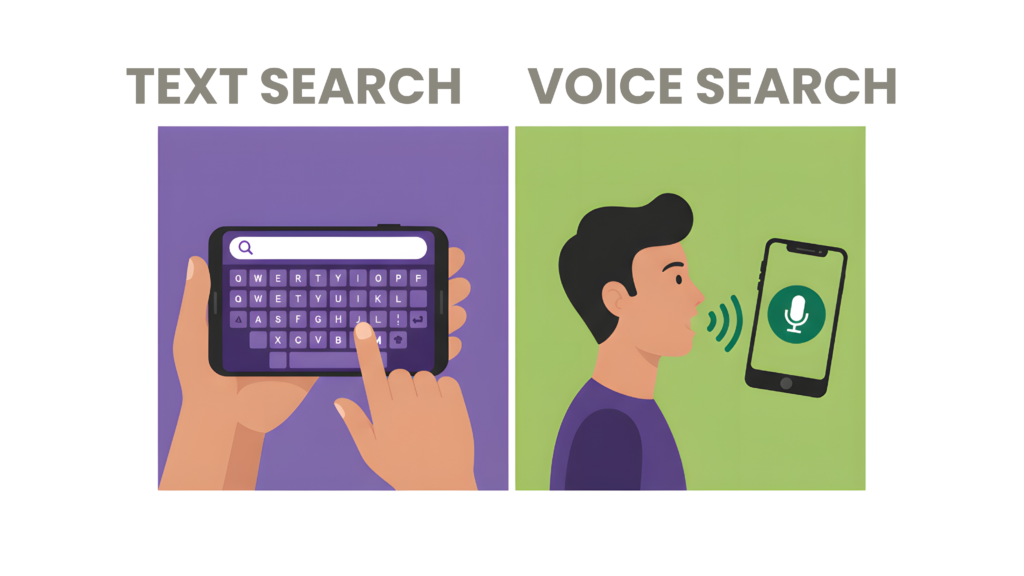
Your voice search and conversational AI optimization should:
- Use natural language patterns – Write in everyday language that matches voice queries
- Incorporate question-based headings – Create headers that mirror natural search phrases like “What is…” or “Why does…”
- Create concise answers – Give one to two-sentence responses that address questions directly
- Implement conversational keywords – Use phrases that reflect natural speech patterns
FAQ sections on key pages create multiple opportunities for voice assistant selection. Google’s Speakable Schema (currently in beta) marks text sections specifically optimized for voice assistants.
Voice searches focus more on local and immediate needs. Real estate SEO companies should optimize for location-specific questions that potential clients ask through voice interfaces.
These optimization techniques position your content for AI Overviews and voice search results while maintaining visibility despite declining traditional CTR metrics. A skilled AI search engine optimization partner like RankFast helps your real estate marketing stay prominent in these evolving search environments.
New Engagement Metrics That Matter More Than CTR
Traditional clicks no longer tell the whole story about performance in AI search environments. Recent studies show nearly 60% of Google searches in 2024 ended without a single click. This means you need new ways to measure success.
Brand Mentions in AI Summaries
Your brand’s presence in AI-generated responses is a vital metric today. This shows whether AI systems see your content as trustworthy. Ahrefs research shows brand mentions relate to better AI search rankings. The data reveals an impressive correlation coefficient of 0.67 between branded web mentions and AI visibility.
Here’s how to boost your mentions:
- Write authoritative content that answers user questions completely
- Get featured on sites that AI systems often quote, like review platforms and YouTube
- Use structured data to make your content AI-friendly
One marketing expert puts it perfectly: “Citations are the new backlinks for the AI search era”. This shows how these mentions matter more than old engagement metrics.
Branded Search Volume and Direct Visits
AI search means fewer direct website visits, making branded search volume more important. Good content builds brand awareness that leads people to search for you later. This helps track how AI exposure affects your brand, even without immediate clicks.
About 80% of consumers use ‘zero-click’ results at least 40% of the time. Looking at direct traffic and branded search patterns shows if people remember your brand despite fewer clicks. Users who see your brand through AI often look you up later or visit your site directly.
Time on Page and Scroll Depth in AI Contexts
Quality matters more than quantity for visitors who find you through AI content. Time on page (or average engagement time in GA4) shows how long people stay. Scroll depth tells you how much content they read.
These numbers matter more now that AI search brings more focused visitors. Hubspot research shows readers spend about 54 seconds on a page. This number goes up when content strikes a chord with visitors. AI Overviews see just 30% median scroll depth, showing how hard it is to keep attention.
Different topics get different levels of engagement. Health and financial content sees deeper reading at 52% and 46% average scroll depths. Promotional content gets just 34%. Real estate SEO companies can use these patterns to create content that works for both AI and human readers.
These metrics give you a better picture of how your content performs in today’s digital world than just looking at clicks.
Content Strategies That AI Can’t Easily Summarize
Your website traffic depends on creating content that AI cannot easily summarize. Yes, it is possible to make users visit your site directly with certain types of content. This preserves traditional participation metrics while CTR AI search keeps evolving.
Original Research and Proprietary Data
Exclusive data helps you bypass AI overviews most effectively. Your brand gets direct attribution from AI systems when you publish unique statistics, surveys, or industry analyzes. This strategy works well because:
- Original research helps you retain control in the real estate sector
- Data-driven content naturally attracts backlinks and citations
- Proprietary information needs attribution, which secures brand mentions
Real estate businesses can include market trend analyzes, neighborhood price comparisons, or buyer sentiment surveys. Original research creates essential resources that AI snippets cannot easily condense.
First-Person Case Studies and Real-Life Examples
AI summarization algorithms struggle with narrative-based content. Personal experiences and detailed case studies have subtle information that loses value when condensed. Success stories from your real estate clients should include:
- Their specific property challenges
- Your company’s unique solution
- Measurable results with timeline and context
These elements create valuable content that works best when read completely. AI overviews cannot copy the emotional connection that storytelling creates. This makes users click through despite available summaries.
Expert Quotes and Authoritative Commentary
Expert commentary brings unique viewpoints that resist condensation. Industry specialists add credibility and insight that readers can only appreciate with full context. This works especially when you have:
- Market predictions from prominent real estate authorities
- Detailed analysis of regulatory changes in property markets
- Controversial or contrasting viewpoints on industry developments
Users are more likely to read complete content with expert commentary rather than simplified AI-generated summaries. This helps preserve traditional traffic metrics alongside AI visibility.
These strategies in your content plan create resources that are a great way to get direct traffic while positioning your brand as an authority worthy of AI citation. The best AI search engine optimization approaches combine visibility in AI results with content that just needs direct participation.
Why Choose RankFast for AI Search Optimization
The right partner can make all the difference as you navigate today’s evolving CTR AI search landscape. Your business needs expertise that goes beyond simple optimization techniques.
Real Estate SEO Company Expertise
RankFast excels with specialized knowledge in real estate digital marketing. Their social-first approach helps real estate companies of all sizes boost their web presence and attract quality leads. The company’s methodical strategy optimizes websites to draw prospective consumers through targeted keywords, whether you sell luxury estates or manage industrial properties. This sector-specific expertise will give a perfect match between properties and the right audience.
Custom AI Search Engine Optimization Plans
AI optimization doesn’t follow a one-size-fits-all approach. RankFast delivers customized marketing plans tailored to your specific business needs. Their detailed approach has:
- 360° analysis across all digital channels
- Identification of gaps and opportunities
- Optimization of key website elements, including product pages and content
RankFast proves to be an ideal partner for both immediate results and long-term growth, as most clients see noticeable improvements within the first 30 days.
Transparent Reporting with AI-Centric KPIs
RankFast provides clear visibility into performance throughout your partnership. Based on your priorities, they deliver live daily updates, weekly reports, or monthly summaries. Their commitment to transparency includes 24/7 customer support to answer questions about your AI search optimization progress.
Conclusion
AI search is revolutionizing digital visibility, and success now depends on measuring performance beyond traditional click-through rates. AI Overviews have reduced CTRs but created new opportunities for brand exposure. Your content can still deliver business value when you optimize it for AI interpretation.
Your marketing team must adapt to this move from traditional search to AI-powered results. You just need a partner who understands this development and can help your business grow in these ever-changing visibility patterns. RankFast’s specialized real estate marketing expertise helps you optimize your digital presence for AI search environments. Your properties will appear in front of ideal prospects, whichever way they consume information.
Without doubt, CTR no longer reveals your complete search performance. A well-laid-out measurement framework and optimization strategy can turn AI search into a powerful advantage for your business. Companies that adopt these changes rather than resist them will own the future.
FAQs
Q1. How has AI search impacted traditional click-through rates (CTR)?
AI-powered search features like Google’s AI Overviews have significantly reduced CTRs. Recent data shows organic CTRs for informational queries with AI Overviews dropped by 61% since mid-2024, while even queries without AI Overviews saw a 41% decline in organic CTRs.
Q2. What are some new metrics to focus on instead of CTR AI search environments?
Key metrics to consider include brand mentions in AI summaries, branded search volume, direct website visits, time on page, and scroll depth. These indicators better reflect content performance and brand visibility in AI-driven search results.
Q3. How can websites optimize their content for CTR AI search engines?
Implementing structured data (especially FAQPage and HowTo schema), using natural language in content, creating concise answers to common questions, and formatting for voice search are effective strategies. Additionally, focusing on semantic relevance and entity recognition can improve AI visibility.
Q4. What types of content are less likely to be summarized by AI?
Original research, proprietary data, first-person case studies, and expert commentary are content types that AI struggles to summarize effectively. These formats often require users to visit the website directly for full context and value.
Q5. Why is structured data important for AI search optimization?
Structured data helps AI systems better understand and interpret website content. It provides explicit signals about the meaning of information, making it easier for AI to parse and potentially include in generated responses or knowledge graphs.
Leave a Reply