The emerging AI search is reshaping SEO – are you prepared? AI summaries now appear in 50 percent of Google searches, and experts predict this number will exceed 75 percent by 2028. Your current SEO strategies might become outdated soon.
This change is occurring faster than expected. AI-powered search engines will process $750 billion in US revenue by 2028. Gartner predicts search volume will drop 25% by 2026 as people switch from typing to chatbot interactions. The landscape has changed dramatically, yet only 16 percent of brands track their AI search performance systematically. Your competitors who use generative AI are advancing rapidly – nearly 95% of B2B buyers will adopt this technology next year.
Your business needs to track AI performance, conduct search experiments, and optimize for AI search engines this quarter. AI-driven search could bring 20% of organic traffic by 2025. Brands that don’t adapt may see their traffic drop between 20 to 50 percent. You must learn these crucial AI search features now, or risk falling behind your competition.
AI Overview Tracking and Visibility Metrics

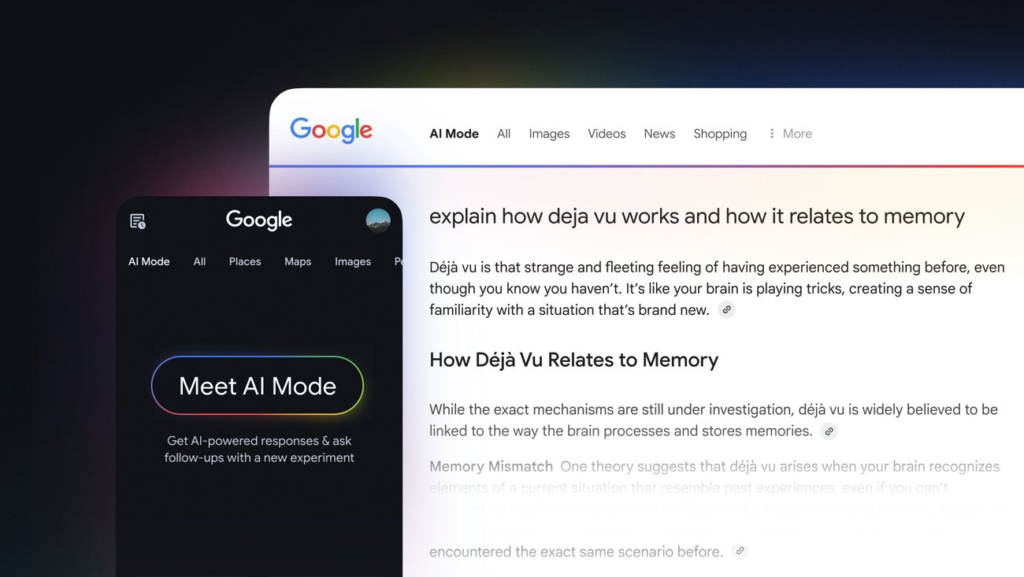
New metrics and methods are essential to track your presence in AI-generated search results. Traditional SEO uses rankings as clear visibility indicators, but AI overview tracking looks at how your brand shows up in AI-generated summaries. This transformation calls for new ways to measure and stay competitive in today’s search world.
AI Overview Tracking Explained
AI overview tracking shows how your brand and content appear in AI responses on platforms like ChatGPT, Google AI Overviews, Gemini, and Perplexity. You’re not looking at fixed rankings anymore. Instead, you track whether AI-generated content mentions, cites, or links to your business.
This measurement model is different from traditional SEO because of three main challenges:
- LLMs don’t publish query frequency data like search volume
- Responses change for similar queries due to probabilistic decoding
- Hidden contextual features (user history, embeddings) shape results
A polling-based approach inspired by election forecasting helps overcome these challenges. This method samples 250-500 high-intent queries about your brand or category and runs them regularly (daily or weekly). It captures repeated samples from the LLM responses. Regular sampling turns seemingly random data into meaningful patterns.
Share of AI Voice (SAIV) emerges as the key metric from this tracking. It shows how often your brand appears in AI-generated results. The metric tells you your brand’s frequency in AI summaries for specific keywords in your target area.
Why AI Overview Tracking Matters For SEO
AI visibility has become crucial. Users get answers straight from AI Overviews without clicking through to websites, leading to more zero-click searches. A 2024 Ahrefs report shows that AI Overviews are linked to a 34.5% lower average click-through rate for top-ranking pages compared to keywords without an overview.
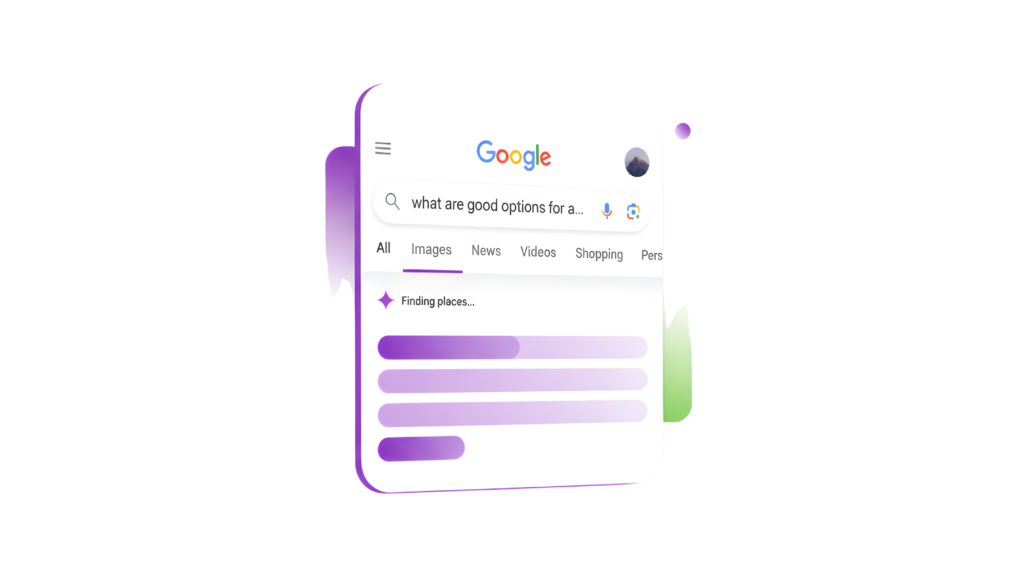
AI-driven traffic grows faster than ever. Backlinko saw their LLM-driven traffic jump 800% in one year. Companies that don’t track this risk losing leads, traffic, and brand authority to competitors who optimize for AI engines.
Success in traditional SEO doesn’t guarantee AI visibility. Many commercial brands with strong traditional SEO barely show up in AI-generated responses. This gap between traditional SEO and AI visibility directly affects business results.
AI visibility shapes purchase decisions without generating click-through attribution. It works more like brand awareness than direct response marketing. SparkToro’s research shows that 58% of Google searches now end without clicks, and AI Overviews show up in 47% of searches.
How to Monitor AI Visibility Metrics
Your AI visibility tracking should include these key metrics:
- Share of Voice (SOV): Track your brand’s mentions and citations across important queries
- Citation frequency: See which sources AI uses when discussing your business
- Brand mentions: Keep tabs on AI platforms’ references to your brand
- Competitive citation share: See how your visibility compares to competitors in AI responses
- Source URL tracking: Find your most frequently cited content
The best tracking combines multiple signals. Use SOV tracking with GA4 referral tracking and watch branded homepage traffic in Google Search Console. Users often find brands through LLM responses before searching on Google to learn more – a two-step pattern worth monitoring.
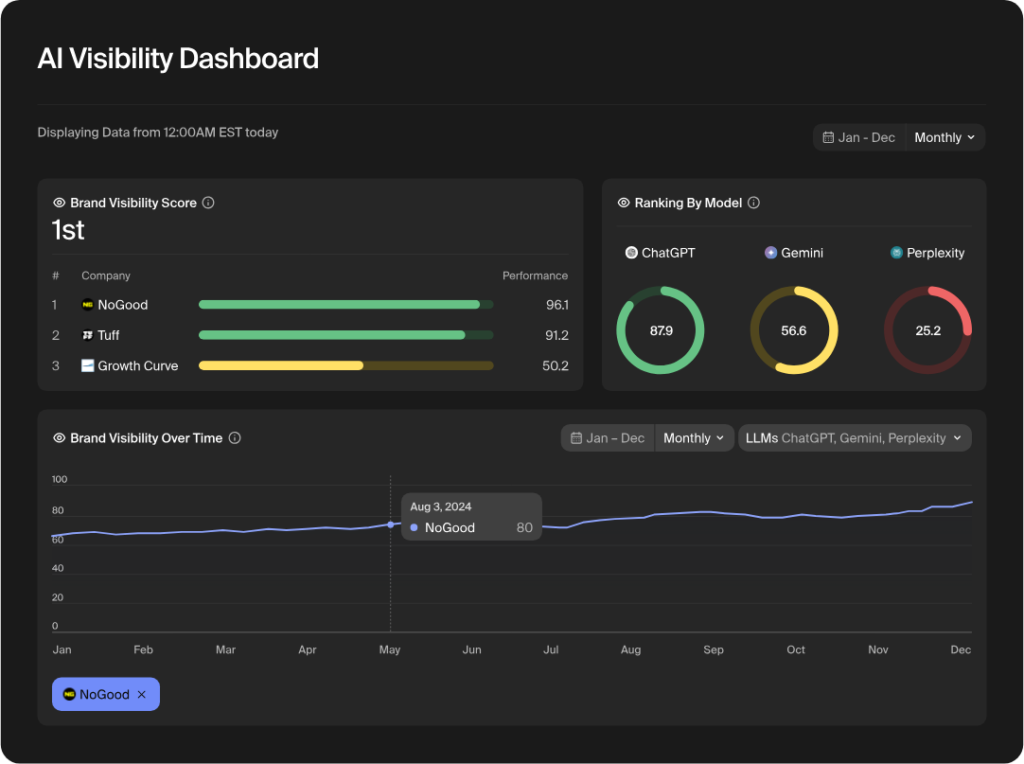
Several tools can help track AI visibility. Conductor offers complete tracking across multiple AI engines with up-to-the-minute monitoring and analytical insights. Semrush, Ahrefs, and specialized platforms like Local Falcon or Backlinko’s tools focus on AI visibility.
A good AI visibility tracking tool should have:
- Coverage across multiple AI platforms (ChatGPT, Perplexity, Google AI Overviews)
- Ways to measure citation frequency over time
- Competitive intelligence capabilities
- Coverage of relevant query categories
- Integration with existing analytics
Search Console reports AI Overviews and AI Mode traffic within the ‘Web’ search type in the Performance report. This shows only part of the picture since it misses brand mentions without clicks.
Note that AI visibility tracking technology keeps evolving. Today’s best tracking solutions serve as guides – helpful for decisions but not definitive. Better tracking and data will gradually turn gut feelings into science as this field grows.
Starting a comprehensive AI overview tracking now helps you spot what works and build strategies for growth in an AI search landscape where traditional ranking systems take a back seat.
Generative AI in Content Creation
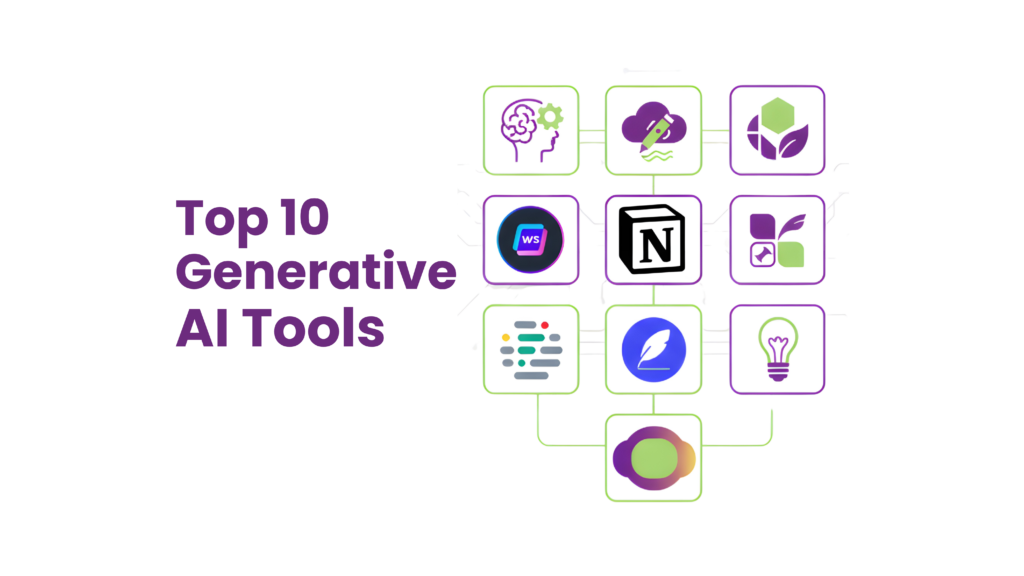
Generative AI changes how SEO professionals create content. It provides new ways to work efficiently and build better strategies. The digital world keeps changing, and SEO professionals must master these AI tools to stay visible as AI search grows.
Generative AI Tools For SEO Content
AI tools can enhance your SEO content creation. Recent studies show 86.07% of SEO professionals now use AI in their work. They mostly use it to optimize content, research keywords, and generate new material.
ChatGPT and similar large language models (LLMs) help you generate topic ideas quickly. You can create outlines and draft content based on your target keywords. These tools look through massive amounts of data from search engines and online forums. They find trending topics and common questions in your field.
Writesonic lets you pick your tone of voice, set word count, and add target keywords. Their “10-step AI article writer” helps you control content creation from start to finish.
Surfer SEO makes your existing content better. It compares your work to competitors and suggests keywords, structure changes, and internal links. The Coverage Booster shows you important facts from top-ranking posts.
Tools like Koala AI, SEOpital, and Search Atlas offer complete SEO content solutions. They help with keyword grouping, content research, and optimization. These tools handle routine SEO tasks so you can focus on strategy.
Benefits of Generative AI for Marketers
Adding generative AI to your content strategy brings many benefits. It saves time by handling keyword research, content analysis, and optimization. Your team can spend more time planning instead of doing repetitive work.
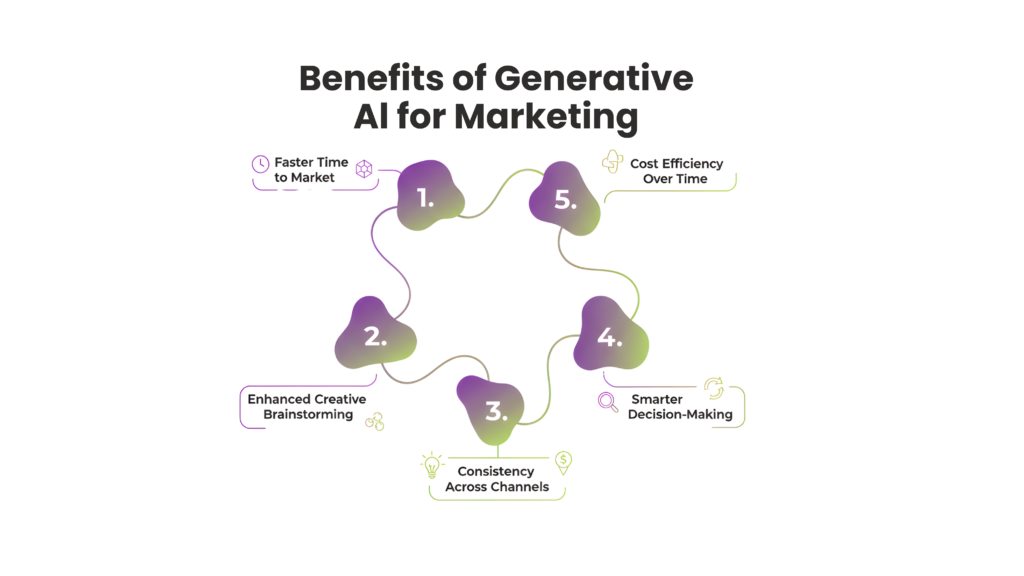
SEO professionals report these improvements from AI:
- Greater productivity: 93% of marketers report AI tools save weekly time
- Enhanced content quality: 67% of businesses see better content with AI
- Higher ROI: 68% of organizations get better content marketing returns through AI
- Better scalability: AI helps create more content without adding staff
AI tools spot opportunities humans might miss. They excel at finding secondary keywords that help your content rank for related terms.
The technology personalizes content for different audiences well. AI-powered recommendation engines adapt suggestions based on users’ past actions. This creates an experience that leads to more conversions.
Best Practices For Using Generative AI
Generative AI works wonders, but you need good practices to use it right. Human review of AI-generated content matters most. Only 7% of companies using AI in marketing have proper oversight systems. Quality control remains vital.
Your organization needs a clear AI policy that covers:
- How to review AI content
- When to tell users about AI use
- How to protect company information
- Which AI tools to use and who can access them
Quality beats quantity. Google might flag your site if you use AI just to make lots of pages. Google’s rules say AI content must meet Search Essentials standards and avoid mass content creation.
E-E-A-T principles (Experience, Expertise, Authoritativeness, Trustworthiness) still matter. Add these elements to build trust:
- Share real experiences through personal examples
- Back claims with solid data
- Add expert quotes from your team or field experts
- Write detailed author bios showing qualifications
Check all facts and sources carefully. Even the best AI tools sometimes get things wrong. One expert says, “It can be easy to fall into the trap of believing AI-generated content is good because it reads well”. Review everything before publishing.
AI works best for ideas, not final content. Let it suggest topics and structure, but add your own touch for quality and uniqueness. This balanced approach uses AI’s strengths while keeping the human element that search engines and readers value.
A smart AI strategy makes it a powerful SEO tool. You can create better content faster while meeting the quality standards needed for success in today’s emerging AI search world.
Search Experiments and Real-Time Testing
The digital world today needs a new approach to SEO. AI search responses give us insights that regular SEO metrics can’t show. You need to test and measure how AI systems view your content. The way people search keeps changing faster than ever, so running structured tests helps you stay ahead.
What Are AI Search Experiments?
AI search experiments are structured tests that review how AI systems respond to questions about your brand or industry. These tests help you understand what makes your content visible to AI platforms like ChatGPT, Claude, and Google Gemini.
Unlike regular SEO tests that look at keyword rankings, AI search experiments focus on:
- How often do you show up in AI responses
- How many times have AI systems cited you
- Your visibility across different AI platforms
- How responses change over time
A real-life example comes from a recent test about Adobe Content Supply Chain experts across multiple AI platforms. The results showed big differences: ChatGPT listed the tested company right away alongside major consultancies, while Claude and Gemini missed it at first. The platforms only included the company after more specific questions.
This test revealed three key points about AI search visibility:
- Being well-known doesn’t guarantee you’ll show up—even trusted companies might not appear in the first response
- Asking follow-up questions often gets you included
- Authority signals like partner status and specializations help you appear in AI answers
How To Run Effective Search Experiments
You need a systematic approach to test AI search results. The core team should use AI as a helpful tool rather than replacing human expertise. This partnership lets you move ahead while you retain control over quality.
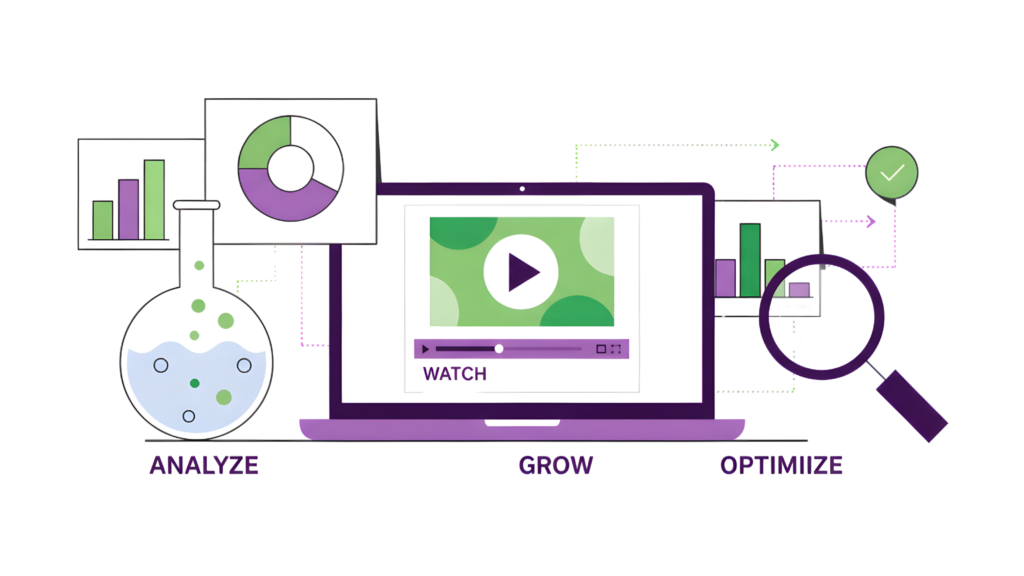
Here’s how to run productive AI search experiments:
- Define clear hypotheses: Create specific questions about what affects your AI visibility
- Establish measurement baselines: Track how often you appear in AI responses before making changes
- Create controlled variables: Check one thing at a time (content format, structure, schema, etc.)
- Execute consistently: Run tests regularly because AI responses change
- Document all results: Save both what works and what doesn’t
- Analyze patterns: Find common factors that lead to positive responses
AI can help with your testing process. A recent experiment used Claude 3.7 to compare navigation bar designs without extra work from developers. The AI checked current and new designs, found their strengths and weaknesses, and predicted user engagement before any changes went live.
There’s another reason to try AI experiments. Gemini’s Deep Research helped review top-ranking pages, find successful content formats, and spot patterns that work well in AI results. This made content easier to read through better structure and clearer sections, which increased views within two weeks.
Tools To Support Real-Time SEO Testing
Good tools work like a lab for your AI search tests. Several specialized solutions help track and analyze how your content works with AI.

Here are the main types of tools to consider:
AI Response Monitoring Tools: ChatGPT’s Advanced Data Analysis can find patterns in thousands of data points. It spots issues like orphan pages, crawl budget problems, and slow loading times. This creates a priority list of technical issues that would take hours to find by hand.
Competitive Intelligence Tools: Gemini can extract and summarize how often competitors publish content, setting a standard for content speed. This shows whether you’re publishing faster or slower than industry leaders.
Real-Time Testing Platforms: SE Ranking’s AI Results Tracker watches if specific keywords trigger AI Overviews and if AI systems cite your content. One test showed AI Overviews appeared for five out of six tracked keywords, with four articles cited as sources.
Performance Tracking Solutions: Search Console now shows AI Overviews and AI Mode traffic in Performance reports. This gives you a basic view of how users find your content through AI.
Experimental tools that analyze crawling patterns are great for ongoing technical SEO monitoring. Using AI with crawl data helps you quickly spot unusual patterns or issues that might affect how AI search engines read your site.
Regular testing and the right tools help you understand what drives visibility in new AI search systems. This knowledge goes beyond what traditional SEO metrics can tell you.
Technical SEO for AI Search Engines
AI search engines work differently from traditional search, making technical foundations vital. Your content’s visibility to AI crawlers depends on technical aspects that used to be secondary in traditional SEO. These new bots aren’t as advanced as their older counterparts.
Technical SEO essentials for AI search engines
Traditional search crawlers and AI crawlers differ in how they process information. AI crawlers from ChatGPT, Claude, and Perplexity cannot process JavaScript. Your content stays invisible to these systems if it relies too much on JavaScript, no matter how good or relevant it is.
Here’s how to deal with this limitation:
- Serve critical content in HTML format so all crawlers can see it
- Use server-side rendering for dynamic content
- Make your content available even if scripts fail through progressive enhancement
- Check how your site looks with JavaScript turned off
Page performance matters more than ever because it directly affects how AI crawlers behave. AI crawlers typically have tight timeouts (1-5 seconds) to get content. They might skip pages that load slowly, which means your content won’t make it into AI systems.
Security features send trust signals to AI systems. HTTPS, valid SSL certificates, and security headers help AI systems decide whether to cite your content. These technical elements build the trust AI systems need to reference your website.
Structured Data And Schema Optimization
Schema markup is a vital bridge between your content and AI systems. Large language models might misinterpret or miss valuable content without proper schema markup.
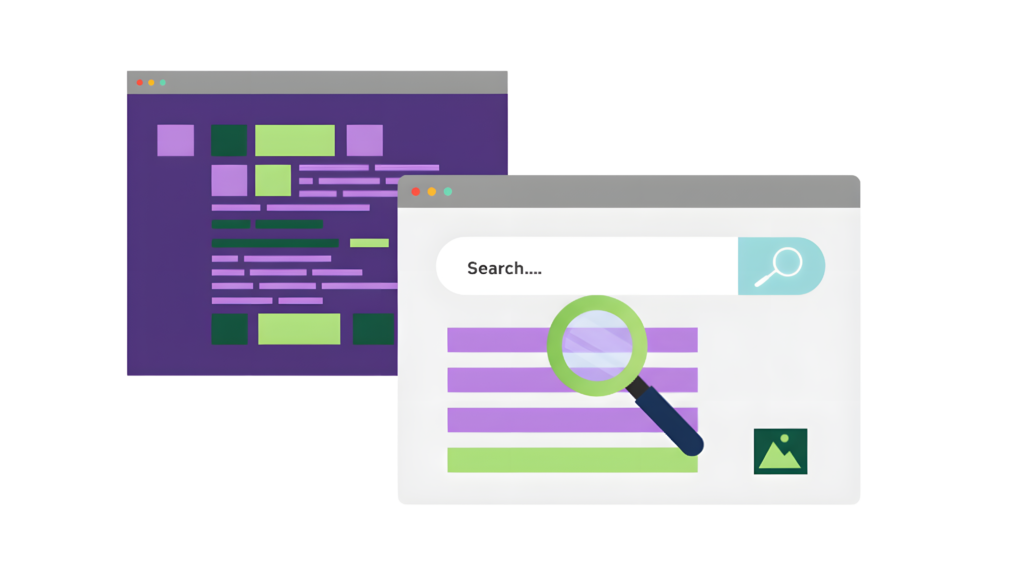
AI-generated summaries and citations are 36% more likely to include pages with detailed schema markup. This makes schema one of the best ways to show up in new AI search results.
Your AI search optimization should focus on these schema types:
- FAQPage: This schema is “HUGELY important for both SEO and GSO” because it matches natural queries perfectly
- HowTo: Helps AI tools break down each step in instructions
- Article/Blog Posting: Shows your content type and who wrote it
- Product/Service: Lists specifications, pricing, and availability
- Organization: Shows your brand’s authority
- Review/AggregateRating: Gives AI engines trust signals they value
Put your schema markup in JSON-LD format (Google’s preferred method) in the <head> or <body> of your HTML. This makes updates easier and won’t mess with how your site looks.
Connected schema works better than a simple schema because it shows relationships between entities. One expert says, “When you implement connected Schema Markup across your site, you are essentially building a knowledge graph.” This approach makes your web data “AI-ready” and helps search engines learn new things from your content.
Improving Crawlability And Indexation
Your robots.txt file needs the right settings for AI crawlers to find and process your content. Many websites block these new crawlers by accident and stay hidden from AI search.
Add these AI crawlers to your robots.txt permissions:
- OpenAI: GPTBot, OAI-SearchBot, ChatGPT-User
- Perplexity: PerplexityBot
- Anthropic: ClaudeBot
- Google: Google-Extended (controls AI use)
A clean URL structure helps AI crawl your site better. Google won’t index pages with URLs repeated three times, thinking they’re stuck in a loop. Skip links with endless hashes can create millions of fake URLs, wasting your crawl budget and blocking proper indexation.
Make indexation work better by:
- Building a logical site structure with categories
- Putting important pages close to the homepage
- Using detailed XML sitemaps with lastmod tags
- Using IndexNow for live URL updates, which is “increasingly adopted by Bing and AI-first engines.”
- Getting rid of redirect chains that slow everything down
Watching technical SEO matters more with AI search engines. Use live monitoring tools to spot AI crawler activity, since “user-agents are new, varied, and often missed by standard analytics.” This helps you fix problems before they hurt your AI visibility.
A strong technical foundation helps both traditional and AI search engines find and understand your website correctly. This groundwork sets you up for success as AI search grows.
Off-Page Signals and Entity Recognition
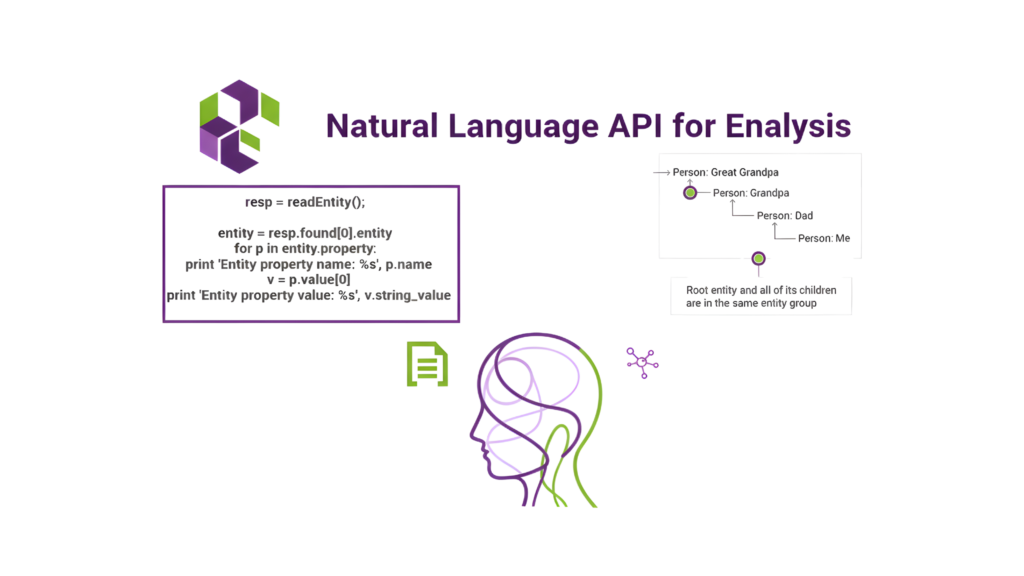
AI search engines now look at off-page factors in a new way to review your website’s credibility. The old SEO world revolved around backlinks, but AI systems now put more weight on entity recognition, brand mentions, and trust signals that show your authority across digital platforms.
Why Off-Page Signals Matter In AI SEO
AI search gives special attention to off-page signals that validate your brand’s credibility. These signals tell AI systems if your content deserves a spot in generated responses. The interesting part is that AI doesn’t just look at hyperlinks—it sees unlinked brand mentions in context as strong proof of credibility and relevance.
The landscape has changed quite a bit: Google’s stance on links has moved from “an important factor” to just “a factor” in deciding relevancy. Platforms like ChatGPT, Gemini, and Perplexity now prefer sources that trusted domains mention often.
Your brand’s recognition in trusted, AI-visible spaces makes all the difference. A legal tech startup mentioned on Law.com without a backlink might appear more often in AI summaries than competitors who have many low-quality links. Authority signals now go beyond your website—brand mentions on various platforms boost your standing with AI systems.
The sort of thing I love is that the three most cited sites in major LLMs are Wikipedia, Quora, and Reddit. Mainstream press coverage can boost your visibility a lot because AI engines prefer “non-commercial sources” over promotional content.
Building Brand Authority Through Citations
You need a smart strategy to build authority for AI visibility that focuses on quality mentions. An AI citation shows both machines and users that your website can be trusted.
Here are some proven ways to build this authority:
- Share valuable insights on platforms like Reddit, which AI systems often cite
- Build citation networks where authoritative publications reference your research or content
- Use review platforms since AI engines value local, experiential information
- Make authentic content that helps real people solve real problems, which AI systems prefer
Your chances of appearing in ChatGPT, Google’s Gemini, Perplexity, and Google’s AI Overviews depend on mentions in content they trust. ChatGPT users should focus on building authority through Wikipedia presence and mentions in major blogs and news reports.
Good organic search rankings often lead to AI citations. Brands that rank well because of solid SEO basics (quality content, authority, backlinks, E-E-A-T signals) have better chances of being considered. It’s worth mentioning that Google cares more about source quality for AI citations than just ranking position.
Entity Recognition And Trust Signals
Entity recognition (ER) is the foundation of how AI search systems understand your brand. ER helps stabilize meaning in multimodal queries, guides processing, shapes retrieval and re-ranking, and powers results display.
Pages that link entities to public IDs (schema.org sameAs/@id, organization identifiers, Wikidata, or product identifiers) help search and LLM features understand your brand better. This approach helps combine related pages and attribute sentiment more accurately. LLMs can then summarize your content with better precision.
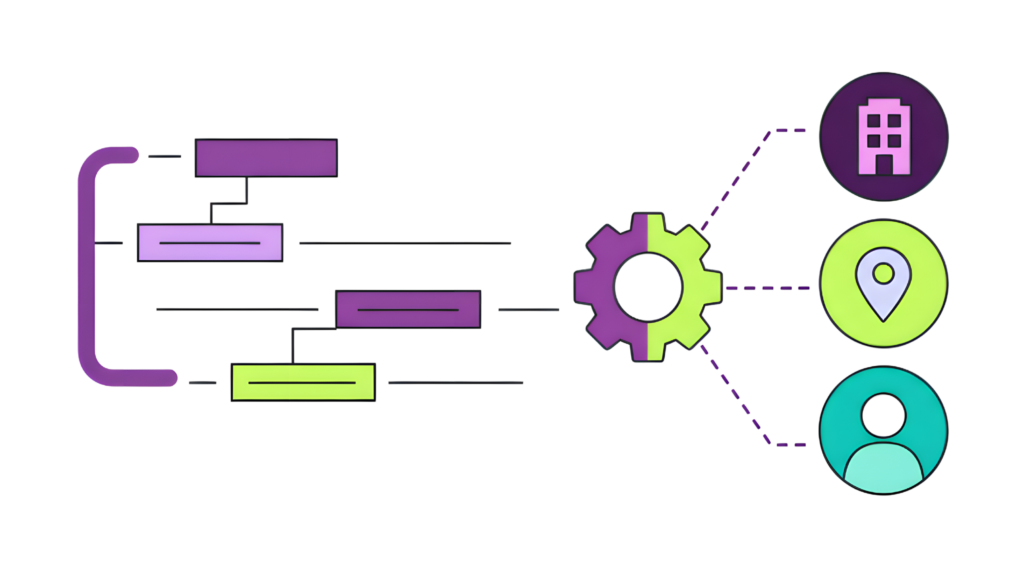
Canonical entity identifiers are vital for connecting terms to concepts. They help remove duplicate synonyms, work across languages, and track all mentions beyond exact matches.
These trust signals help with effective entity recognition:
- Experience indicators: Professional credentials and market-specific knowledge
- Expertise signals: Published content, speaking engagements, and media mentions
- Authoritativeness markers: Awards, industry recognition, and professional citations
- Trustworthiness factors: Client testimonials, review ratings, and third-party validation
Case studies with measurable results perform 37% better in engagement than generic claims. Pages with specific creator credentials get 31% more backlinks from industry sources than those with generic credentials, according to a 2024 study.
Ecommerce and BigCommerce SEO company need consistent business listings. A reliable infrastructure with fixed listings, schema markup for products, and current business data improves AI citation chances.
Comparison Table
| Feature | Key Components | Main Benefits | Tools/Metrics | How to Implement |
| AI Overview Tracking | – AI Voice Share (SAIV) tracking- Citation monitoring- Brand mention analysis | – Shows AI visibility- Tracks market position- Reveals content success | – Conductor- Semrush- Ahrefs- Search Console | – Sample 250-500 queries- Monitor daily/weekly- Track across platforms |
| Generative AI Content | – Content refinement- Keyword research- Content creation | – Saves 93% time- Boosts content quality by 67%- Delivers 68% higher ROI | – ChatGPT- Writesonic- Surfer SEO- Koala AI | – Human review- E-E-A-T guidelines- Fact-checking |
| Search Experiments | – Response pattern analysis- Platform comparison- Visibility tests | – Up-to-the-minute insights- Platform-specific data- Performance tracking | – ChatGPT- Claude- Gemini- SE Ranking | – Control variables- Test at set intervals- Keep records |
| Technical SEO | – Crawler optimization- Schema markup- Site structure | – Better AI crawling- Clearer content signals- Faster indexing | – XML sitemaps- IndexNow- Live monitoring tools | – Handle JavaScript limits- Core Web Vitals- Security features |
| Off-Page Signals | – Entity recognition- Brand mentions- Trust indicators | – Builds credibility- More AI citations- Higher visibility | – Wikipedia- Quora- Reddit | – Quality references- Citation networks- Entity markers |
Conclusion
Your brand needs to adapt to the emerging AI search as traditional SEO practices become less effective. Success in this quarter depends on how well you handle these new AI search features. You need to track how your brand shows up in AI-generated summaries. AI tools can help create content that works well for both users and AI systems. These search tests give you insights that old metrics just can’t match.
The numbers tell a clear story. AI-driven search could bring in up to 20% of organic traffic by 2025. Brands that aren’t ready could see their traffic drop by 20-50%. These strategies might look overwhelming at first, but taking them on one by one will help your brand succeed in this new search landscape.
You need an SEO partner who knows both old-school search and new AI tech. RankFast’s SEO services blend technical know-how with AI optimization to help you keep up with these quick changes. Their team can help with SEO content optimization or total search visibility as you move into the AI search era before competitors pass you by.
FAQs
Q1. How is AI changing the SEO landscape?
AI is dramatically transforming SEO by introducing new search features like AI-generated summaries and overviews. This shift is leading to changes in how content is discovered, ranked, and presented to users, requiring SEO professionals to adapt their strategies accordingly.
Q2. What are some key metrics for tracking AI search visibility?
Important metrics for tracking AI search visibility include Share of AI Voice (SAIV), citation frequency, brand mentions, and competitive citation share. These metrics help measure how often your brand appears in AI-generated responses and compare your visibility against competitors.
Q3. How can generative AI tools improve SEO content creation?
Generative AI tools can enhance SEO content creation by streamlining keyword research, generating topic ideas, creating content outlines, and optimizing existing content. These tools can significantly improve productivity and content quality when used in conjunction with human oversight.
Q4. Why are technical SEO for e-commerce aspects crucial for AI search engines?
Technical SEO is vital for AI search engines because many AI crawlers have limitations, such as an inability to process JavaScript. Proper technical optimization ensures that your content is discoverable, crawlable, and interpretable by AI systems, which is essential for visibility in AI-generated responses.
Q5. How do off-page signals impact AI search visibility?
Off-page signals like brand mentions, citations, and entity recognition play a crucial role in establishing credibility and authority for AI search engines. These signals help AI systems determine whether your content is trustworthy enough to be cited in generated responses, even without traditional backlinks.
Leave a Reply