SEO for real estate agents delivers the highest return on investment among all marketing channels, according to half of contractors. Your digital presence has become essential since 97% of homebuyers begin their search online.
The data tells a compelling story. Real estate agents who use proper SEO techniques see their sales grow almost twice as fast as their competitors and boost their sold listings by 6%. Property listings with virtual tour SEO get 403% more asks. Neighborhood keyword research helps target 70% of page views from long-tail searches. Google’s Local Pack appears as the top result in 93% of local searches. Your digital strategy needs a complete overhaul for 2025 to stay competitive.
The numbers get even better. Real estate agents using CRM systems boost their lead conversions by 41%. Homes sell 30% faster and receive nearly triple the asks when professional photography combines with digital strategy. Yet many agents still find it hard to create SEO strategies that convert.
This piece outlines the top conversion triggers that will propel development for your real estate business in 2025. You’ll find what works in today’s competitive digital world, from hyperlocal targeting to AI-powered personalization.
Hyperlocal Keyword Targeting
The real estate market’s fierce competition has made hyperlocal keyword targeting a breakthrough strategy that helps agents shine online. This technique targets specific neighborhoods and micro-communities instead of using broad SEO approaches. It connects you with buyers and sellers who are ready to act.
What Is Hyperlocal Keyword Targeting?
Hyperlocal keyword targeting narrows down to very specific areas—sometimes just individual neighborhoods or particular streets—rather than entire cities or regions. The strategy uses location-specific keywords such as “Brooklyn brownstone for sale” or “waterfront properties in Miami Beach.” These keywords help you reach local buyers who know their exact requirements.
This SEO approach lets you target local markets to boost your visibility and generate leads. Rather than competing for general terms like “real estate agent” or “homes for sale,” you focus on specific phrases that show clear buying intent.
Why Hyperlocal Keyword Targeting Works
Around 70% of Google searches are long-tail keywords—this is where you’ll find the best chances. A search for “Single family homes in the north Burbank area” shows more intent than just “homes for sale”. By mid-2025, hyper-local searches has make up 40% of all Google searches.
Long-tail keywords are vital to real estate SEO. They match specific search queries and lead to much better conversion rates. Today’s buyers know exactly where they want to live, especially with high interest rates and limited inventory.
National real estate websites can’t match genuine local expertise. This gives you a chance to show off knowledge that only a true local expert would have.
How To Implement Hyperlocal Keyword Targeting
These proven strategies will help you implement hyperlocal keyword targeting:
- Create dedicated neighborhood pages: Build specific pages for each area you serve with details about median listing prices, market conditions, schools, and amenities
- Optimize for long-tail keywords: Use phrases like “Victorian homes in [Neighborhood]” or “best restaurants in [City]” throughout your content
- Build location-specific landing pages: Create virtual neighborhood tours that give potential clients an insider’s look
- Use structured data markup: Add JSON-LD structured data to mark up neighborhoods served
- Interlink your pages: Link your neighborhood pages to improve SEO and user experience
Your headings, meta descriptions, and body text should include these keywords naturally to improve visibility. The right tools will help you identify valuable hyperlocal search terms.
Tools To Use For Neighborhood Keyword Research
Several tools can help you find the most valuable hyperlocal keywords:
Google Keyword Planner gives you a free start to find location-based search terms with volume data. Term Explorer and WordStream help find long-tail keywords—just enter some geographical and real estate-related keywords to get many useful suggestions.
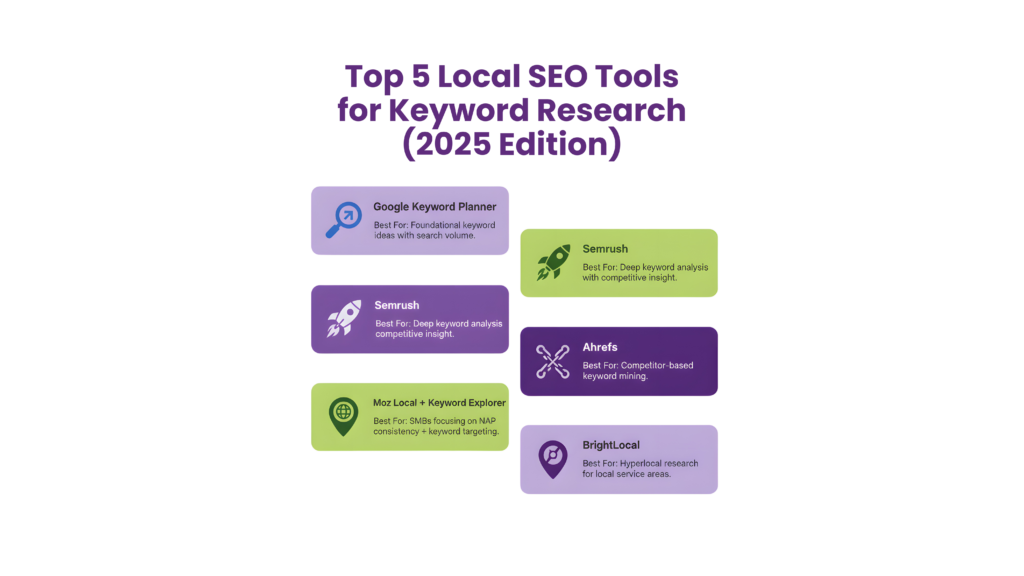
Ahrefs, SEMrush, or Moz Local provide deeper insights into top-performing hyper-local search terms with data on search volume and keyword difficulty. Google Search results pages show related terms people look for at the bottom.
Real Estate Seo Impact Of Hyperlocal Targeting
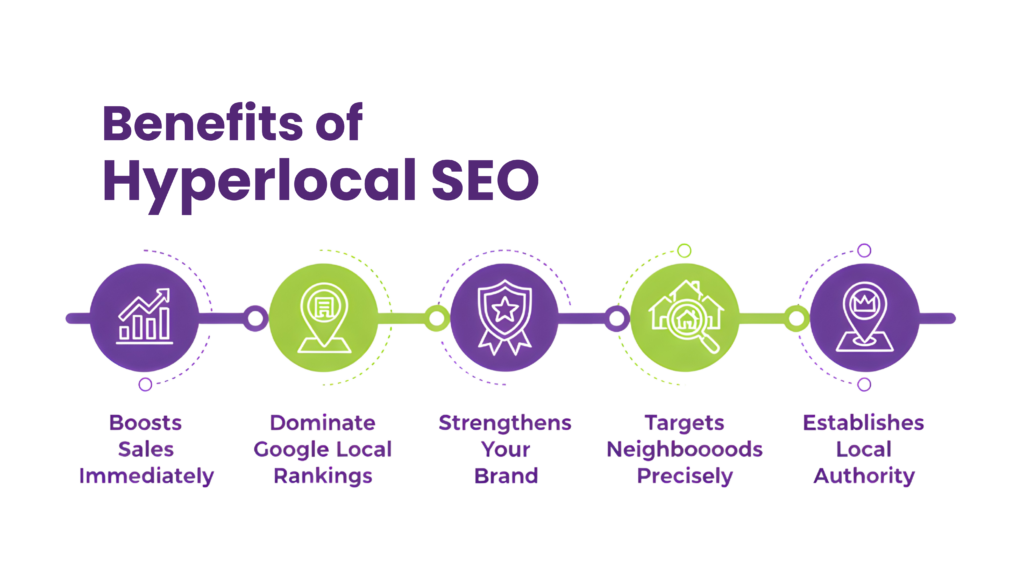
Hyperlocal targeting can transform your real estate business. Well-optimized content helps you appear in searches about specific neighborhoods. This helps potential clients find properties in less visible areas.
Your business becomes THE local authority instead of just another real estate website. Your Google Business Profile, neighborhood guides, and local market insights help you connect with motivated buyers and sellers in your community.
Hyperlocal SEO lets you own your specific market without spending too much. Neighborhood-focused content and local expertise attract the right clients—people who want to buy or sell in your area.
Cost Considerations For Hyperlocal SEO
Hyperlocal campaigns are cost-effective and give quick returns on investment. Traditional real estate lead generation services cost between $30-$400 per lead. Their closing ratios range from 1 in 30 (best case) to 1 in 100 (more common).
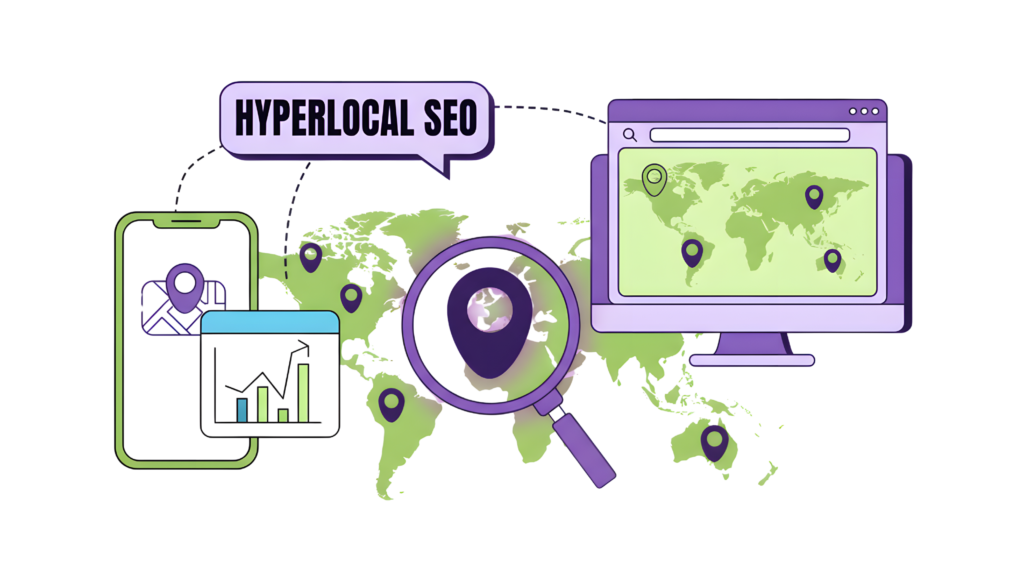
Well-executed inbound marketing strategies with hyperlocal SEO produce 300-1000% better results on average. Real estate SEO services range from a few hundred dollars monthly for basic packages to several thousand for detailed services. The targeted nature of hyperlocal SEO often brings better returns than broader approaches.
The digital world keeps changing, and hyperlocal keyword targeting remains one of the most cost-effective ways for real estate agents to grow their business in 2025.
Virtual Tour SEO Optimization
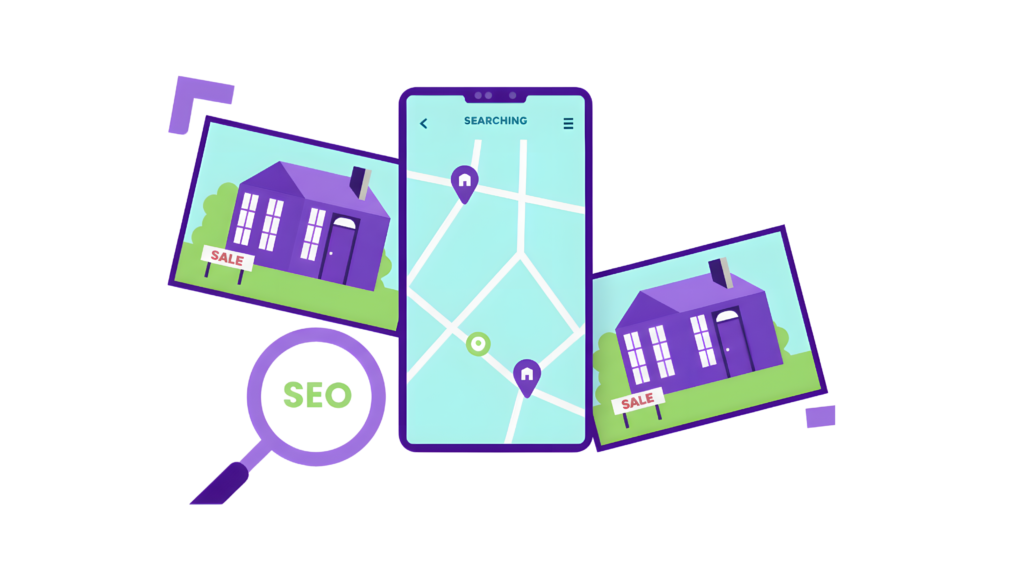
Virtual tours have changed how buyers look at properties online. Recent data shows real estate websites with virtual tours get 4 times more clicks and keep viewers engaged 5 times longer than those without. Real estate agents need to know how to optimize virtual tour SEO to stay ahead.
What Is Virtual Tour SEO
Virtual tour SEO makes immersive 3D and 360° property walkthroughs more visible to search engines and brings in quality traffic. Unlike regular property listings, virtual tour SEO puts strategic keywords right into tour elements while creating interactive content. Search engines see this as valuable user experience, which helps your website rank better.
This type of optimization puts relevant keywords into virtual tour components like Mattertags, creates backlinks to trusted websites, and makes sure everything works right technically. The end goal? Your virtual property experiences should be easy to find for your ideal clients.
Why Virtual Tour SEO Drives Conversions
Numbers tell the story—virtual tours help real estate websites perform better in searches. Some properties see up to a 90% boost in exposure and get over 40% more clicks compared to listings without tours.
Virtual tours turn visitors into buyers because:
- They give an honest, immersive look that builds trust with buyers
- People spend more time on websites with virtual tours, which helps SEO rankings
- Buyers can view properties anytime, from anywhere
- They help identify serious buyers and save time on showings
Yes, it is true that 39% of buyers use virtual tours to search for properties, and younger buyers use them even more. This convenience becomes more valuable as interest rates change and fewer properties are on the market.
How to Implement Virtual Tour SEO
Here are proven ways to make virtual tour SEO work:
Put keywords into Mattertags and navigation elements in your virtual tour. A case study of SOUTH (a Philadelphia jazz bar) shows how they ranked for competitive terms like “Jazz bar in Philadelphia” just by adding keywords to Mattertags and getting good backlinks.
Write descriptions for your virtual tours that search engines love. Keep them short but packed with details about key property features.
Embed your virtual tour directly on your website using iFrame code instead of linking to it. This makes things better for users and helps with SEO. On top of that, it helps to add captions and audio descriptions—these features make tours more user-friendly and reach more people.
Build links from respected websites with high Domain Authority (DA) and Page Authority (PA) to boost rankings. This works really well for competitive keywords.
Best Tools For Virtual Tour SEO
These tools can help create and optimize virtual tours for better SEO:
Matterport leads the market in 3D technology, with great quality and proven SEO benefits. You can easily add keywords, and they show you how long people spend looking at your tours.
CloudPano gives you a budget-friendly option with good SEO features, including easy embedding and keyword optimization. Agents who want to create their own virtual tours find this platform easy to use.
Momentum Virtual Tours offers complete solutions from creation to SEO optimization, helping real estate pros rank higher with better virtual experiences.
Real Estate SEO Impact Of Immersive Content
Optimized virtual tours do way more than just get views. One study showed a single optimized tour got over 28,000 impressions, 24,000 website visits, 15,000 unique visitors, and still gets more than 1,600 views every month.
Good virtual tours keep more visitors on your site longer. Search engines see this as a sign you’re giving users what they want, which helps your rankings.
These interactive tours help with marketing beyond just local listings, giving you more reasons to add them to your digital strategy.
Pricing For Virtual Tour Production And SEO
Virtual tour SEO costs vary by service level and property size. Simple Google virtual tours start at $150 for 8-10 HDR photos with editing and Google Maps integration. Better options cost around $399 and include branded interactive tours with 16 HDR photos, aerial shots, hotspots, and website code optimized for SEO.
Commercial property tours usually cost about $0.10/sq ft, starting at $399 minimum. Extra features cost more: aerial-to-aerial links ($10 each), street/building labels ($10), extra hotspots ($10 each), and 360° photos ($25 per photo).
The return on investment makes sense—optimized tours can bring thousands of impressions and website visits each month. These tools are worth the money when used as part of your real estate SEO plan.
Map Pack Optimization for Local Visibility

The Google Map Pack is prime digital space for agents who want to attract local clients. A spot at the top of search results will boost your visibility and bring qualified leads right to your business.
What is Map Pack Optimization
Map Pack optimization uses specific techniques to get your real estate business into Google’s Local Pack—a section that shows three local businesses above regular search results. This feature shows a map with location pins, business names, ratings, hours, and quick links to websites or directions. Mobile users usually see just two listings before they need to expand. This makes getting into these spots even more valuable.
Why Map Pack Optimization Boosts Local Leads
Nearly half of Google searches look for local information, and 78% of people who search locally on their phones end up making purchases offline. Getting into the Map Pack directly affects how many leads you can generate. The top spot gets 17% of clicks, second place gets about 12%, and third place receives just under 3%. Businesses that rank well here and in regular search results can attract almost half of all local search traffic.
How To Optimize For Google Map Pack
Here’s what you need to do to rank better in the Map Pack:
- Complete your Google Business Profile – Full profiles get 7 times more clicks and people trust them 2.7 times more
- Focus on proximity, relevance, and prominence – Google uses these three main factors to rank local results
- Take care of your reviews – Each new review can bring about 80 website visits, 63 requests for directions, and 16 phone calls
- Post updates weekly – Keep your profile active by sharing new listings, market updates, or open houses
- Add geo-tagged photos – Upload pictures tagged with your neighborhoods and service areas
Your profile information should match across all online platforms. NAP (Name, Address, Phone) consistency plays a big role in your local rankings.
Tools To Manage Local Listings And Reviews
You can use several tools to handle your local listings better. Listing management software lets you create, update, and maintain your business information across many online directories from one dashboard. This helps keep your NAP data consistent, which you need for local SEO success.
Look for review management platforms that can handle bulk updates, catch errors, and stop duplicates. RightChoice helps real estate professionals manage their Google Business listings, watch their rankings, respond to reviews, and get performance reports.
Real Estate SEO Impact Of Map Pack Visibility
A spot in the Map Pack shows potential clients that your real estate business is a local authority they can trust. People often see Map Pack listings as Google’s seal of approval. Businesses that rank well locally get more profile views, website clicks, direction requests, and phone calls.
Good monthly numbers to aim for include 1-3 new reviews, 15-25 calls, 75-100+ profile views, 300+ photo views, and 40-50+ website clicks. These numbers show you have a strong local presence that attracts new leads.
Cost of Local SEO Services
Local SEO services cost between $100 and $3,000 monthly, depending on your locations, strategy, and how aggressive your campaign is. Real estate professionals focusing on specific markets should plan to spend $200 to $400 monthly for targeted local SEO services.
Some agencies charge by project for tasks like setting up Google Business Profiles or cleaning up citations. These projects usually cost $300 to $3,000 based on how complex they are. Local SEO specialists charge $50 to $150 per hour, with real estate experts asking around $80 or more.
This investment might seem high, but good local SEO gets 300-1000% better results than traditional lead generation methods. This makes it one of the most affordable ways for real estate agents to grow their business in 2025.
Property Page Enhancements for Better UX

Property page design affects conversion rates for real estate agents beyond keywords and visibility. Google now tracks how users experience your site to rank it, as UX design and SEO have become closely connected in 2025.
What Are Property Page Enhancements
Property page enhancements are strategic improvements to real estate listings that boost both user experience and search engine visibility. Visual upgrades, structural improvements, and interactive elements make property information more available and conversion-friendly for potential buyers.
Good enhancements include simple navigation systems, responsive designs that work naturally across devices, compressed high-quality images, clear call-to-action buttons, and interactive elements like mortgage calculators or neighborhood information.
Why Enhanced Property Pages Convert Better
Enhanced property pages and conversion rates have a clear connection. Research shows that a well-designed user interface can increase website conversion rates by up to 200%. Many real estate websites still use outdated property listing methods that don’t give visitors the information they want.
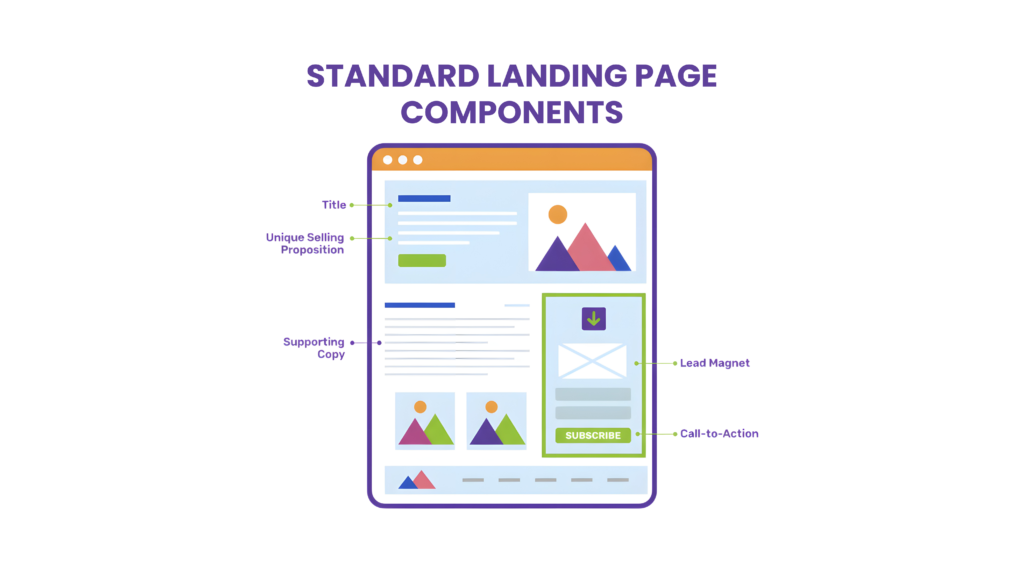
Today’s buyers expect property pages to be local guides. They should provide detailed answers about neighborhoods, facilities, pricing, and nearby amenities. Google’s E-E-A-T and Helpful Content System updates rank pages higher when they offer useful, honest, and user-focused information.
Key elements that boost conversions include:
- Clear, benefit-focused headlines
- Local trust signals (e.g., “Serving families in [City] since 2010”)
- Simple breakdown of your buying/selling process
- Strategic calls-to-action like “Book a Free Home Tour”
- High-resolution images and virtual tours
How To Optimize Property Pages For SEO
Your property pages need both technical and content optimization. Studies reveal that 97% of homebuyers start their search online, making your digital presence vital.
Mobile responsiveness comes first. Mobile devices drove 59.7% of global website traffic in April 2025. A responsive design that adjusts to different screen sizes naturally is a must.
Page speed matters just as much. More than half (53%) of users leave a page that takes over three seconds to load. Tools like TinyPNG help compress images and reduce bulky elements to keep your site fast.
Real estate schema markup helps with content optimization. You can use RealEstateListing (property details, bedrooms, price), RealEstateAgent (contact information, areas served), and LocalBusiness (business details, hours).
Tools For Property Page Optimization
Several tools can help improve your property pages. Outranking offers keyword suggestions, content optimization recommendations, and performance metrics for a detailed SEO content strategy.
WordPress users benefit from Yoast SEO for Real Estate, a powerful plugin that optimizes property listings with on-page and off-page website features.
Nitropack for WordPress can boost page speed—a key factor for SEO and user experience. It optimizes various website elements including images, plugins, and hosting configurations.
Real Estate SEO Impact of UX Improvements
UX improvements bring SEO benefits beyond looks. Search algorithms now favor sites that provide great user experiences. Websites with user satisfaction, interactivity, and smooth navigation rank higher, perform better in SEO, and keep users engaged.

Better user engagement metrics send positive signals to search engines. Sites with longer dwell times, lower bounce rates, and more pages per session rank better. SEMrush’s study shows top-ranking content averages 1,890 words, proving that detailed, user-focused content works better.
Cost of Upgrading Property Pages
Property page enhancement costs vary with scope and needs. Simple website updates cost from a few hundred dollars for template changes to several thousand for custom designs.
Custom-designed websites provide a tailored experience focused on user behavior and conversion optimization. They cost more upfront than templates but often deliver better ROI by turning more visitors into leads.
Real estate professionals can start with budget-friendly solutions. Adding better navigation, compressed images, and strategic calls-to-action can boost performance without rebuilding the entire website.
AI-Powered Lead Tracking and Personalization
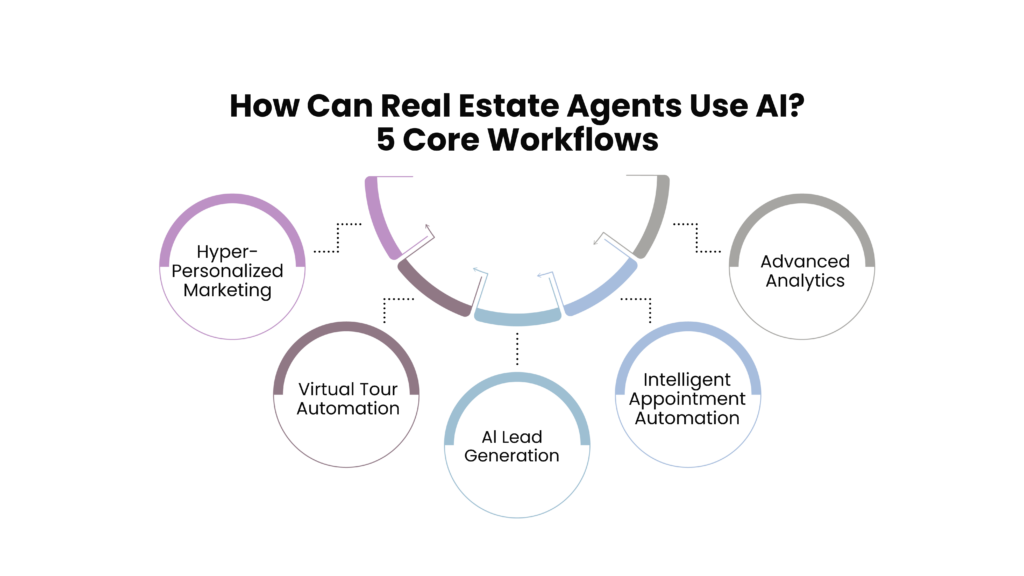
Image Source: GPTBots.ai
AI technologies help turn random website visitors into qualified leads in today’s evidence-based real estate world. Smart agents can improve their conversion rates by customizing each interaction based on how users behave on their websites.
What is AI-powered Lead Tracking
AI-powered lead tracking uses advanced algorithms that monitor, analyze and respond to potential clients’ online behavior. These systems automatically qualify prospects, prioritize high-value leads and deliver individual-specific follow-up based on specific property interests and search patterns. The technology also enriches lead data with valuable information about their current homes, such as bedroom count and ownership duration.
Why AI Personalization Increases Conversions
Personalization is the life-blood of effective marketing—nothing converts better than making someone feel a message was created just for them. AI-powered chatbots can qualify website visitors live, schedule appointments and nurture leads long-term to automate critical follow-up processes.
Speed matters greatly in lead conversion. AI will give immediate response even when you’re unavailable, and some systems send individual-specific text messages within five minutes of original contact. These tools can smartly sort leads into new, active and old categories to maintain meaningful connections while you focus on closing deals.
How to Implement AI in Real Estate SEO
Your real estate SEO strategy should:
- Connect your content with lead generation systems through IDX integration, neighborhood-specific lead magnets, and AI-powered chatbots
- Track behavior to trigger targeted outreach when someone views multiple properties in specific neighborhoods
- Create location-specific calls-to-action that feel natural rather than sales-focused
- Make use of information to monitor both traditional SEO metrics (organic traffic, keyword rankings) and newer indicators like featured snippet captures and voice search rankings
Top CRM and AI Tools For Real Estate A
Several powerful AI tools are now available for SEO for real estate agents:
CINC excels at lead scoring and prioritization and has automated follow-up campaigns and individual-specific property recommendations. Formerly Chime, Lofty’s AI Assistant qualifies and converts leads while setting and showing appointments. Top Producer combines AI with farming tools to identify potential sellers through predictive analytics. It also supercharges email marketing with AI-generated content suggestions and smart automation through Rezora.
Real Estate SEO Impact of AI Integration
AI integration reshapes the scene of how your SEO efforts convert to business results. Modern CRM systems automatically tag leads based on which SEO content brought them to your site to enable highly individual-specific follow-up sequences. A lead from luxury property pages receives different nurturing than first-time buyer content visitors, while neighborhood-specific questions get local market updates.
Pricing for AI and CRM Tools
AI and CRM solutions come with varying costs. Simple packages typically offer free versions, while complete solutions need monthly subscriptions. Top Producer’s Pro + Smart Targeting plan, which has predictive farming insights and automated multi-channel marketing, requires contacting for custom pricing. Their Pro + Farming CRM with AI-powered farming starts from $599 per month, and costs vary based on farm size.
Why Choose Rankfast For Real Estate Marketing
You might wonder which partner can best put these effective real estate marketing strategies to work after reviewing them. Rankfast has proven itself as a specialized real estate marketing agency. They deliver measurable results for agents across the nation.
Rankfast stands apart from typical SEO companies through its deep grasp of real estate’s unique challenges. Their team blends hyperlocal keyword expertise with virtual tour optimization techniques. This positioning gives your properties maximum visibility.
Your success depends on working with specialists who know both search algorithms and homebuyer psychology. Rankfast’s real estate marketing services offer custom solutions that tackle your specific market challenges instead of generic SEO tactics.
Many agents don’t deal very well with map pack visibility or need property page improvements that turn browsers into buyers. Rankfast’s analytical approach will give every marketing dollar measurable returns. Their specialized real estate SEO services provide the technical expertise and industry knowledge agents need to succeed in competitive local markets.
Comparison Table
| Conversion Trigger | Key Benefits | Implementation Methods | Recommended Tools | Cost Range | Impact Metrics |
| Hyperlocal Keyword Targeting | – Targets specific neighborhoods and streets- Better conversion rates- Reduced competition | – Build dedicated neighborhood pages- Focus on long-tail keywords- Create location-specific landing pages | – Google Keyword Planner- Ahrefs- SEMrush- Moz Local | $300-$1000+ monthly | – 70% of searches are long-tail keywords– Results 300-1000% better than traditional approaches |
| Virtual Tour SEO | – Gets 4x more clicks- Viewers stay 5x longer- Available round the clock | – Add keywords to Mattertags- Create SEO-friendly descriptions- Use iFrame embedding | – Matterport- CloudPano- Momentum Virtual Tours | $150-$399 per tour | – More than 28,000 impressions- Over 24,000 website visits- Above 1,600 monthly views |
| Map Pack Optimization | – Stands out in local searches- Generates leads directly- Dominates mobile results | – Set up Google Business Profile- Handle customer reviews- Share weekly updates- Add geo-tagged photos | – RightChoice- Listings management software | $100-$3,000 monthly | – 17% click-through rate at top position- Each review brings 80+ website visits |
| Property Page Enhancements | – Better visitor experience- Higher search rankings- More visitor interaction | – Make pages mobile-friendly- Speed up load times- Add schema markup | – Outranking- Yoast SEO- Nitropack | Custom design costs from hundreds to thousands | – Conversion rates jump up to 200%- Slow pages lose 53% of visitors |
| AI-Powered Lead Tracking | – Qualifies leads automatically- Follows up with tailored messages- Responds in real time | – Connect IDX systems- Track visitor behavior- Send automated messages | – CINC- Lofty- Top Producer | Starting at $599 monthly | – Responds within 5 minutes- Scores and sorts leads automatically |
Conclusion
These five conversion triggers can revolutionize your real estate marketing results. Hyperlocal keyword targeting helps you reach high-intent buyers searching in specific neighborhoods. Properly optimized virtual tours get 4x more clicks and keep visitors engaged longer. Map Pack optimization makes your business visible in local searches. Property page improvements boost conversion rates by up to 200%. AI-powered lead tracking creates tailored experiences that turn casual browsers into serious clients.
Do you need help with these conversion triggers? Rankfast’s real estate marketing services provide specialized solutions to help agents dominate their local markets. Their core team blends deep industry knowledge with proven SEO strategies that show measurable results.
Numbers tell the story. Agents who use these digital strategies sell properties almost twice as fast and increase sold listings by 6%. Your digital presence needs an upgrade now. These proven conversion triggers will help you reach the 97% of homebuyers who start their search online.
FAQs
Q1. What are the key strategies for SEO for real estate agents in 2025?
The top SEO strategies for real estate agents in 2025 include hyperlocal keyword targeting, virtual tour optimization, Google Map Pack optimization, property page enhancements for better user experience, and AI-powered lead tracking and personalization.
Q2. How effective are virtual tours for real estate marketing?
Virtual tours are highly effective for real estate marketing. Websites with virtual tours generate 4 times more clicks and 5 times longer viewing times compared to those without. They also provide 24/7 availability and help pre-qualify serious buyers.
Q3. What is hyperlocal keyword targeting and why is it important?
Hyperlocal keyword targeting focuses on extremely specific geographic areas, often as small as individual neighborhoods or streets. It’s important because it connects agents directly with high-intent buyers and sellers in specific locations, leading to higher conversion rates and less competition.
Q4. How can AI improve lead generation for real estate agents?
AI can improve lead generation by automatically qualifying prospects, prioritizing high-value leads, and delivering personalized follow-up based on specific property interests and search patterns. It can also enrich lead data with valuable information about potential clients’ current homes.
Q5. What are the benefits of optimizing for Google’s Map Pack?
Optimizing for Google’s Map Pack can significantly increase local visibility and drive qualified leads. Businesses in the top position receive over 17% of clicks, and when combined with top organic rankings, can capture nearly half of all local search traffic.
Leave a Reply