The numbers are striking – 46% of voice searches have local intent. Users make almost half of their verbal queries to find businesses near them. Small business owners face both challenges and chances in this scenario. People make over 1 billion voice searches monthly. Experts predict more than 8 billion voice assistants will be used worldwide by 2025. Your local SEO services must adapt to voice search – it’s not an option anymore.
Traditional SEO methods alone won’t cut it anymore – you could miss valuable customer connections. Voice search needs its own strategy that works with conversational queries, question formats, and local intent.
This piece shows you the quickest way to combine smooth voice search optimization with your local SEO strategy. Your small business can stay competitive in 2025 and beyond. We’ll cover everything from long-tail keywords to optimizing your Google Business Profile. These tips will help you capture those significant “near me” searches and convert them into real customers.
Understanding Voice Search and Local SEO in 2025
Voice technology is changing faster than ever in how customers find local businesses in 2025. Over 1 billion voice searches happen monthly. Numbers suggest more than 8 billion voice assistants will be used worldwide by 2025. Your business success depends on understanding this technology.
What is Voice Search Optimization?
Voice search optimization helps your website and content show up when people speak their searches instead of typing them. People use more natural, conversational language and often ask questions when they use voice search compared to typing.
Your content needs to match how people talk to voice assistants like Google Assistant, Siri, and Alexa. This means you should focus on:
- Using conversational language instead of keywords
- Creating content that answers questions clearly
- Writing sentences the way people speak
- Including complete phrases people actually say
By 2025, voice searches will make up over 50% of all online searches. This will change how your customers find local businesses. Studies show 71% of people would rather speak their searches than type them. Your business strategy needs to include this now.
How Local SEO and Voice Search Work Together
Local SEO and voice search go hand in hand. Research shows 58% of people use voice search to find information about local businesses. This means businesses with strong local SEO have better chances of showing up in voice search results.
Most voice searches look for something nearby. People often say things like “near me,” “open now,” or mention specific neighborhoods. Voice searches are three times more likely to ask about locations than text searches. This makes local SEO vital to voice search success.
When someone asks “Where’s the best pizza place near me?” or “Is there a plumber in my area?”, voice assistants usually look in three places:
- Google’s Search Engine Results Pages (SERPs)
- Local business directories like Google Business Profile
- Business websites optimized for local SEO
Your local SEO work directly helps people find you through voice search. These two work together to help more customers reach you.
Why Local SEO Services For Small Business Must Adapt Now
Small businesses can see real benefits from voice search right away. This is especially true when you have a small business competing with bigger companies by focusing on local customers and specific needs.
Industry data shows voice commerce will grow a lot by 2028. About 48% of people prefer voice search over other ways to look things up online. Businesses that don’t use voice search optimization might not show up in results at all, even if they offer great products or services.
Voice search optimization gives small businesses several advantages:
- Better local visibility: You can reach the 58% of people who use voice search to find local information.
- More mobile connections: Half of all online traffic comes from mobile devices. Most voice searches happen on smartphones, so you’ll connect with customers where they already are.
- Edge over competition: Many small businesses haven’t started using voice search yet. This gives you a head start in your local market.
- Better customer experience: Voice search helps you answer customer questions clearly, which makes them happier overall.
This change to voice search isn’t just another trend. It’s a basic change in how customers behave, and smart small businesses need to keep up.
How Voice Search Changes Local Search Behavior
The digital world has changed a lot as mobile devices have become our main gateway to information. Mobile devices now generate 64% of global web traffic, which has changed how your customers look for local businesses.
Rise of Mobile Search Behavior
Mobile search now leads the way in helping people find local businesses. About 58% of searches now come from mobile devices, which has changed by a lot how customers use search engines. Yes, it is this change that creates new chances for small businesses that get these new patterns.
These numbers tell the story clearly:
- “Near me” searches and quick answers happen twice as often on mobile
- Website clicks from mobile searches went up 7.4% even though Maps views dropped a bit
- Business phone calls from mobile searches grew 5.1% compared to last year
Voice search makes this mobile trend even stronger because most people use their smartphones for voice searches. Small business owners should know that about 55% of people talk to voice assistants on their phones. This shows where your customers look for information.
The Move To Conversational And Question-Based Searches
People who use voice search talk differently than those who type. Text searches usually have 2-3 keywords, but voice searches are longer with 29 words on average. This matches how we naturally talk.
People now talk to search engines like they would to a real person:
- “Where’s the best Thai food near me that’s open now?” instead of “Thai restaurant NYC”
- “Who is the best-rated dentist in Seattle that’s open on Saturdays?” rather than “best dentist Seattle”
Question-based searches have changed everything. Voice users start their searches with “who,” “what,” “where,” “when,” “why,” and “how”. They want specific answers instead of just looking around. This gives small businesses a chance to match their content with how customers actually talk.
The Vital Role Of ‘Near Me’ Optimization
Local businesses should pay attention to “near me” searches—they’ve grown 500% faster than all mobile searches. This isn’t just a trend but has become the standard way people search locally in 2025.

People look for locations in many ways beyond just saying “near me”:
- “Close to me”
- “In my area”
- “Within walking distance”
- “Near the mall” or “by the train station”
These searches happen because people need answers fast. Voice search users often do other things—driving, cooking, or walking—when they search. That’s why voice searches lead to more direct business actions.
Small businesses must optimize for these high-intent moments because voice searches show local results three times more often than typed searches. Getting these voice-driven “near me” searches right can boost your local visibility and bring more customers to your door.
Steps to Optimize Local SEO for Voice Search

Making your small business stand out in voice search results needs specific optimization methods. Here are six proven ways to boost your visibility and capture all but one of these vital “near me” moments.
Use Long-Tail And Conversational Keywords
People use voice search differently than typed searches. Their queries are longer and follow natural speech patterns. They often ask complete questions. Think about someone looking for pizza – instead of typing “pizza delivery NYC,” they might ask “Where can I find the best pizza delivery in New York City?”
To get this traffic, you should:
- Find question-based keywords that start with who, what, where, why, and how
- Look up conversational phrases with tools like AnswerThePublic
- Use natural language that matches how your customers talk
Create FAQ-style Content With FAQ Schema
FAQ pages work perfectly with voice search because they give direct answers to specific questions. More than half of voice searches look for specific information, which makes FAQs perfect for capturing this traffic.
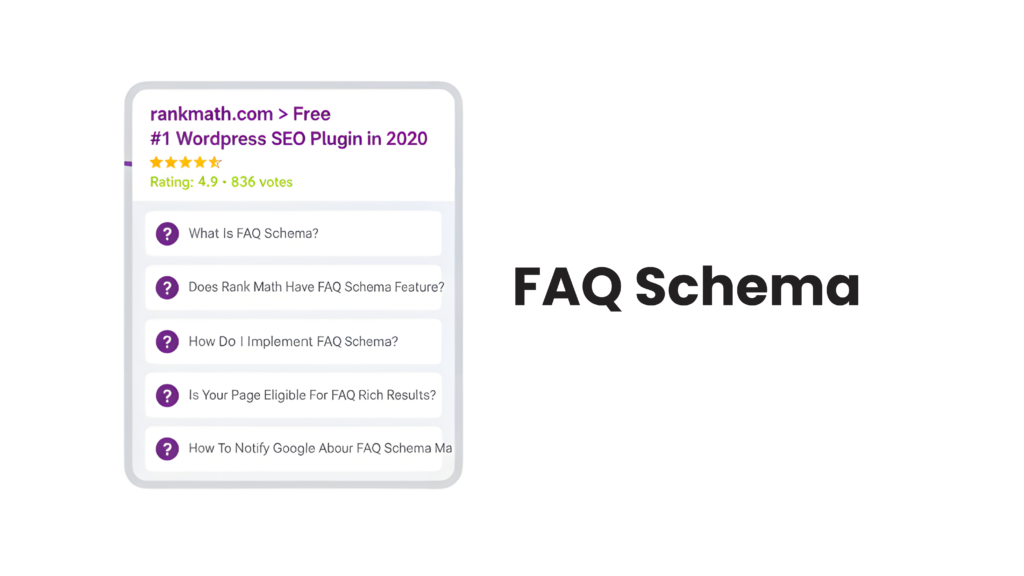
Your FAQ content should:
- Frame questions as complete sentences that people naturally ask
- Give brief, clear answers (40-60 words works best)
- Use proper FAQ schema markup so search engines understand your content format
The FAQ schema only works for pages where each question has one answer. This organization helps voice assistants find and prioritize your content.
Target Featured Snippets And People Also Ask
Voice assistants love to pull answers from featured snippets. 40.7% of voice search results come from these position-zero results. The People Also Ask (PAA) section shows up prominently—usually above organic results.
Your content should:
- Give direct answers right at the start
- Use clear formatting with lists, bullet points, and tables
- Focus on questions from your industry’s PAA section
Ensure Mobile-First Design And Fast Load Times
Mobile devices dominate voice searches, so your site must work well on phones. Google’s mobile-first indexing means mobile-friendly sites rank better for voice queries.
Your site needs:
- A responsive design that works on all devices
- Pages that load in under 2 seconds (voice search pages average 4.6 seconds)
- Simple navigation with easy-to-tap buttons
Add Structured Data With Local Business Schema
Search engines understand your content better with structured data. Local business schema gives them important details about your location, services, and hours—information voice assistants need.
Your schema markup should include:
- Business name, address, phone number, and hours
- Services and service areas
- Customer ratings and reviews
Update And Optimize Your Google Business Profile
Local voice searches depend heavily on your Google Business Profile. Local intent drives over half of voice searches, so your profile must shine.
Make sure to:
- Fill out your profile with accurate business information
- Add quality photos and service descriptions
- Update your hours and respond to reviews quickly
- Include location-specific keywords in your description
These six optimization steps will help your small business capture valuable voice search traffic. You’ll gain an edge over competitors who haven’t adapted to this growing search trend.
Voice Search Tools and Techniques for Small Businesses
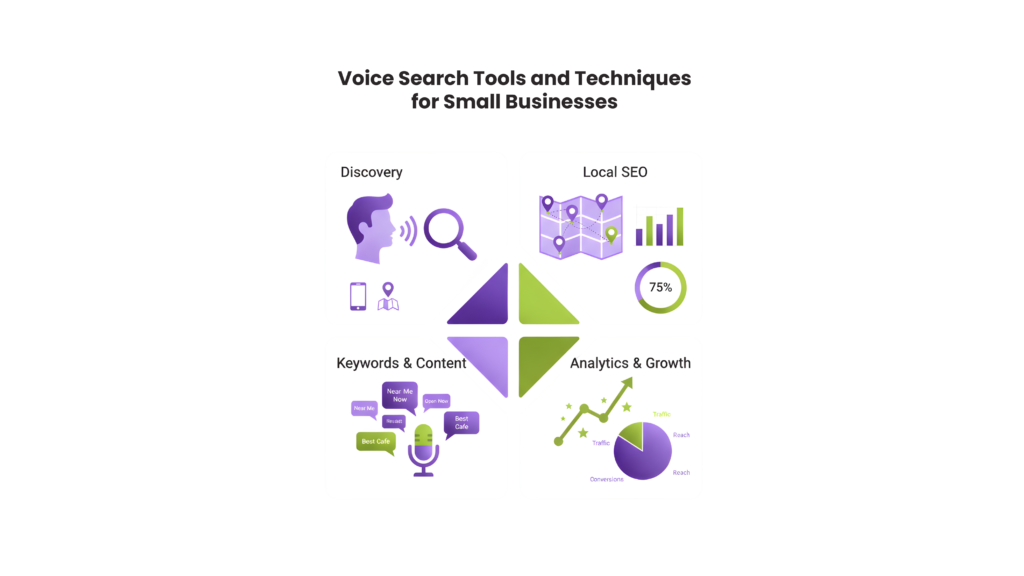
Your small business needs specialized tools to optimize voice search effectively. The right tools make implementation easier and more straightforward.
Keyword Research Tools For Voice Search Queries
You need the right tools to find conversational keywords that work. AnswerThePublic helps you visualize common questions about your keywords. Just type in a keyword and you’ll see suggestions grouped by question types (what, where, why, how). This shows exactly how your customers phrase their voice searches.
LowFruits gives you a different way to find voice-friendly keywords. The tool looks at long-tail phrases and shows both search volume and difficulty scores. This helps you spot high-volume keywords that aren’t too competitive.
On top of that, Ubersuggest lets you filter keyword ideas to focus on question words. This makes it a perfect fit to research voice queries.
Schema Generators And SEO Plugins
All In One SEO comes with a next-generation Schema Generator that helps search engines understand your content better – no coding needed. The plugin makes FAQ schema setup simple, which is vital since FAQ formats match voice search patterns perfectly.

Rank Math PRO includes Speakable Schema markup that helps you pick specific content for Google to read aloud. This guides voice assistants straight to your most important information.
Tracking Voice Search Performance In Google Search Console
Google Search Console is the foundation to monitor how well your voice search works. You can see which conversational queries bring traffic to your site and spot mobile usability problems that might affect voice performance.
The Performance report shows which queries display your site in results, where your traffic comes from, and your most frequent search terms. You can filter long-tail, question-based queries to see voice search patterns and make your optimization better.
Why Choose Rankfast for Voice-First Local SEO
Your business’s visibility in today’s search results depends on picking the right partner for your voice search trip. Rankfast has emerged as a specialized agency that knows the unique challenges small businesses face in the voice-first world.
Tailored Strategies For Small Business Growth
Rankfast believes each business is unique. The core team creates customized marketing plans that arrange with your specific needs. Your small business needs strategies crafted just for your market positioning and growth objectives.
- The team studies your local competition’s voice search presence to help you outrank them
- Their SEO experts create voice-optimized content that captures both traditional and voice search traffic
- You get flexible strategies that adapt to changing voice search behaviors
Expertise In Voice Search And Local SEO Integration
Rankfast excels where voice search meets local SEO. Research shows 55% of consumers use voice search to find local businesses. This expertise helps target high-conversion audiences effectively.
The team combines conversational keyword targeting with strong local signals. They implement FAQ schema and local business markup to provide structured data that voice assistants need to understand and prioritize your content.
Proven Results With Mobile And Voice-First Campaigns
Rankfast delivers real results beyond theoretical knowledge. Their mobile-first strategy recognizes that smartphones dominate voice searches, giving clients a natural edge. Experience shows businesses that optimize for local voice searches see significant increases in foot traffic.
The team uses analytical insights to track voice search metrics and provides clear reports on how voice optimization helps your business grow.
Conclusion
Voice search optimization has become crucial for small businesses to succeed in local SEO. Your business’s success in 2025 and beyond depends on how well you adapt to this technology, which will greatly affect your visibility and customer acquisition. The numbers tell an interesting story – 46% of voice searches have local intent while 50% target local businesses specifically. This presents a huge chance that no business should miss.
Small businesses face a defining moment right now. Taking action on these strategies will put you ahead of competitors who stick to traditional SEO methods. Voice queries are different from typed searches – they sound more natural, focus on questions, and often include location terms like “near me.”
Success requires a strategy that fits your business perfectly. You’ll see the best results by acting now, whether you handle the optimizations yourself or work with experts. Your voice search strategy should enhance your current local SEO while tackling the unique elements of conversational search.
Want to reshape your local SEO strategy with voice search optimization? Rankfast’s local SEO services give you the expertise to capture those valuable “near me” searches and convert them into loyal customers. Your business can thrive in the voice-first future of search.
FAQs
Q1. How does voice search impact local SEO for small businesses?
Voice search significantly affects local SEO as 46% of voice searches have local intent. It changes how customers find businesses, emphasizing conversational queries and “near me” searches. Small businesses that optimize for voice search can increase their visibility and capture more local customers.
Q2. What are the key steps to optimize a website for voice search?
To optimize for voice search, focus on using long-tail and conversational keywords, create FAQ-style content with proper schema markup, target featured snippets, ensure mobile-first design with fast load times, implement local business schema, and keep your Google Business Profile updated and optimized.
Q3. How can small businesses adapt their content for voice search queries?
Small businesses should create content that mirrors natural speech patterns, focusing on question-based keywords and conversational phrases. Develop FAQ pages that directly answer specific questions, and structure your content to provide concise, direct answers that voice assistants can easily pull and read aloud.
Q4. What tools are useful for voice search optimization?
Useful tools for voice search optimization include AnswerThePublic and LowFruits for keyword research, All In One SEO and Rank Math PRO for schema implementation, and Google Search Console for tracking performance. These tools help identify voice-oriented keywords, implement proper markup, and monitor the effectiveness of your optimization efforts.
Q5. Why is mobile optimization crucial for voice search success?
Mobile optimization is essential because most voice searches occur on mobile devices. With Google’s mobile-first indexing, websites that aren’t mobile-friendly are less likely to rank well in voice search results. Ensuring responsive design, fast load times, and clear navigation on mobile devices is crucial for capturing voice search traffic.
Leave a Reply